Around 1 in 3 seniors aged between 65 and 74 years have hearing loss, but 80% of those who could benefit from a hearing aid don’t use one. This gap between need and usage highlights a common challenge many people face when considering hearing assistance.
Selecting the right hearing aid can feel daunting. With prices ranging from about $1,000 to several thousand dollars, multiple hearing aid types available, and various features to evaluate, finding the right match for your daily life requires careful research. Hearing aids for seniors need to balance practical functionality with comfort, particularly since these devices improve hearing by making sounds louder rather than restoring full hearing.
Adults in the U.S. age 18 and older with mild to moderate hearing loss can now get hearing aids without a prescription. Modern hearing aid styles offer options that connect to smartphones using Bluetooth technology and include rechargeable batteries. Your specific degree of hearing loss determines the right hearing aid option, with levels ranging from mild (26–40 decibels) to profound (90 decibels or higher).
This guide covers what you need to know about choosing a hearing aid that fits your lifestyle, budget, and hearing needs. You’ll learn about different types, key features, and practical considerations that make the selection process clearer and more manageable.
Understanding Hearing Loss and How Hearing Aids Help
Hearing loss affects approximately 6.4% of the world’s population, yet only 1 in 3 people who have hearing loss actually use hearing aids. Understanding what causes hearing loss, how hearing aids can help, and when to consider getting one helps you make better decisions about hearing solutions.
What causes hearing loss
Hearing loss stems from various factors that affect different parts of the ear. Generally, it falls into several categories: conductive, sensorineural, mixed, and central hearing loss.
Sensorineural hearing loss, the most common type, occurs when the inner ear or auditory nerve becomes damaged. This typically happens due to:
- Aging (presbycusis): About 1 in 3 people between 65-74 have hearing loss
- Loud noise exposure: Both prolonged exposure and sudden loud blasts can damage inner ear hair cells
- Medications: Certain antibiotics, cancer treatments, and high doses of aspirin can affect hearing
- Genetic factors: Some hearing loss is hereditary
- Medical conditions: Including Meniere’s disease and otosclerosis
Conductive hearing loss occurs when sound waves cannot properly travel through the outer and middle ear, often due to earwax buildup, ear infections, or eardrum damage. Men are nearly three times more likely to develop noise-induced hearing loss than women.
How hearing aids improve hearing
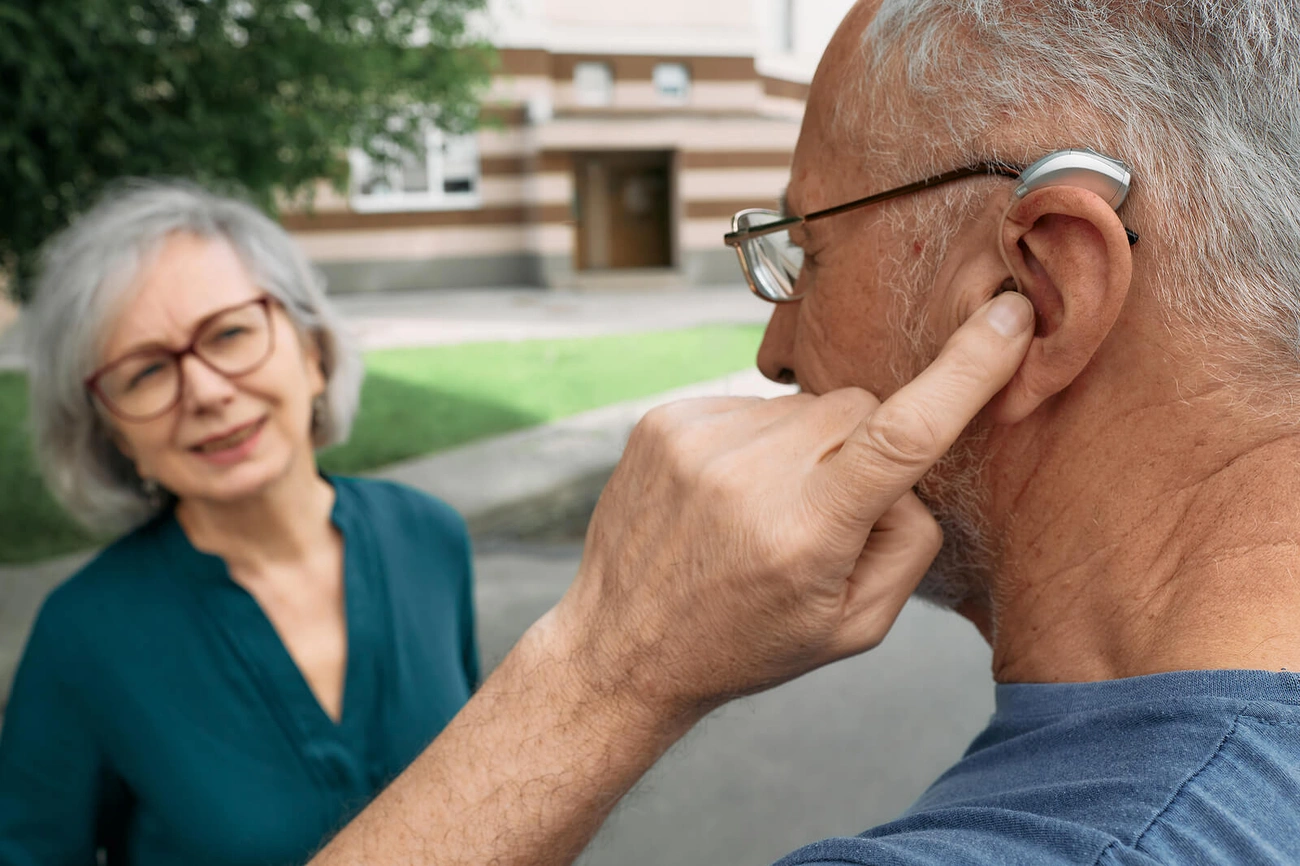
Hearing aids improve hearing by amplifying sounds rather than restoring full hearing. These devices typically include a microphone to collect sounds, an amplifier to increase their volume, and a speaker to deliver the enhanced sounds to your ear.
Regular use of hearing aids offers benefits beyond better hearing. Studies show hearing aid users experience a 19% reduction in cognitive decline. Individuals wearing hearing aids have a 24% lower risk of early death compared to those who never use them.
Hearing aids also reduce the brain’s effort to understand sounds, freeing mental capacity for other functions like memory and attention. Users report improved communication abilities, enhanced social engagement, and reduced feelings of isolation and depression.
Additional benefits include:
- Better safety awareness through detection of environmental sounds
- Reduced risk of falls and accidents
- Improved confidence and independence in daily activities
- Enhanced work performance and productivity
When to consider getting a hearing aid
Many people delay getting hearing aids for about 10 years after first experiencing hearing loss. This delay can be detrimental, as early intervention promotes better long-term outcomes.
You should consider getting your hearing checked if you notice these signs:
- Frequently asking people to repeat themselves
- Feeling like people mumble or speak too quietly
- Turning up the volume on devices higher than others prefer
- Struggling to follow conversations in group settings
- Difficulty understanding speech without seeing faces
If left untreated, hearing loss can lead to social withdrawal, increased cognitive load, and even accelerated cognitive decline. Studies have found that untreated hearing loss is associated with a higher risk of dementia, with hearing loss causing approximately 8% of dementia cases.
Addressing hearing loss promptly with appropriate hearing aids not only improves communication but also contributes to better overall health, cognitive function, and quality of life.
Types of Hearing Aids Available
Selecting the right hearing aid style affects your comfort, daily functionality, and overall satisfaction with the device. Modern hearing aids come in various designs, each offering distinct advantages based on your specific hearing needs and lifestyle preferences.
Behind-the-ear (BTE)
BTE hearing aids rest behind your ear with a clear tube connecting to an earmold that fits in your ear canal. These devices work for almost all types of hearing loss, from mild to profound. BTE aids offer powerful amplification with several practical advantages. Their larger size accommodates bigger batteries for extended life and provides space for advanced features like directional microphones and Bluetooth connectivity.
If you have dexterity challenges, BTE aids are easier to handle and adjust. They’re also more durable and less susceptible to moisture damage. However, BTE aids may pick up more wind noise than other styles and remain more visible, though modern versions are considerably smaller than earlier generations.
Receiver-in-canal (RIC)
RIC devices represent the most popular hearing aid style today. Unlike BTE models, the speaker (receiver) sits directly in your ear canal while the processor remains behind the ear, connected by a thin wire rather than a tube. This design reduces feedback and improves sound quality.
RIC hearing aids provide several benefits for users:
- Small, discreet design that’s less noticeable than traditional BTE models
- Natural sound quality with reduced occlusion effect (plugged-up sensation)
- Suitable for mild to severe hearing loss with various receiver power levels
- Advanced features including Bluetooth streaming, rechargeable batteries, and smartphone connectivity
The receiver placement in the ear canal makes it more vulnerable to earwax and moisture, which may require more frequent maintenance.
In-the-ear (ITE)
ITE hearing aids fill most or part of the outer ear bowl with all components contained in a custom-molded shell. These devices offer a balance of visibility and functionality for those with mild to severe hearing loss. Ronald Reagan helped popularize this style during the 1980s.
ITE aids provide easier handling for those with dexterity concerns and sufficient space for features like volume control wheels, telecoil options, and Bluetooth connectivity. ITE models typically offer longer battery life than smaller in-canal options. They remain more visible than deeper canal options and may pick up more wind noise.
Completely-in-canal (CIC)
CIC hearing aids sit deeply in the ear canal, making them nearly invisible to others. They work best for individuals with mild to moderate hearing loss who value discretion. Their positioning delivers amplified sound close to the eardrum, and their deep placement naturally reduces wind noise interference.
CIC models have limitations due to their small size. They offer shorter battery life, fewer advanced features, and may not provide sufficient power for severe hearing loss. The tiny batteries can challenge users with dexterity or vision issues.
Invisible-in-canal (IIC)
IIC devices represent the smallest, most discreet option available, sitting completely invisible in the second bend of the ear canal. Like CICs, they work best for those with mild to moderate hearing loss who prioritize invisibility.
These devices offer complete invisibility when properly inserted and deliver sound extremely close to the eardrum for authentic sound quality. Their deep placement provides excellent protection from wind noise.
The tradeoffs include limited battery life, fewer features, and potential challenges for people with dexterity issues. They’re not suitable for children due to changing ear size or individuals with severe hearing loss.
Matching Hearing Aids to Your Lifestyle
Your daily activities and routine shape which hearing aid will work best for you. Finding the right fit between your hearing needs and lifestyle ensures your device supports rather than limits your quality of life.
Active vs. sedentary lifestyle needs
Active individuals should prioritize durability and moisture resistance. If you enjoy hiking, biking, or running, look for hearing aids with strong casings that can handle impacts and rough use. Regular exercise requires sweat-resistant models that maintain functionality during intense workouts.
Water resistance becomes particularly important if you participate in water sports or live in humid areas. Hearing aids with an IP68 rating offer the highest level of protection available, allowing them to withstand continuous immersion in water up to 3 feet. Some advanced models like the Phonak Audéo Life can be submerged in fresh water, salt water, or pool water up to 50 cm (1.64 feet).
Those with more sedentary lifestyles may prioritize battery life and sound quality over ruggedness and water resistance.
Considerations for seniors
Seniors often benefit from devices that address specific needs:
- Ease of handling: In-the-ear (ITE) hearing aids work better for those with dexterity issues as they’re easier to insert and remove
- Fall detection: Some models like Starkey Edge AI offer fall detection that notifies selected contacts when the device detects a fall
- Rechargeable options: These eliminate the need to handle tiny batteries, making daily maintenance simpler
Handling and visibility preferences
Personal preferences about device visibility and handling requirements significantly affect satisfaction. Many users report difficulty identifying situations where they notice differences between microphone modes, so comfort and handling often take priority.
For those concerned about appearance, completely-in-canal (CIC) and invisible-in-canal (IIC) options provide discretion. These smaller devices require precise handling when inserting and removing them-potentially challenging for individuals with fine motor skill issues.
Environmental factors
Your typical sound environment should guide your selection process. If you frequently visit restaurants or busy venues, hearing aids with directional microphones and noise reduction features provide significant value.
Weather conditions affect hearing health and device performance. Cold regions may require protective earmuffs to prevent vasoconstriction that reduces blood flow to ears. Warm, humid climates require keeping ears dry to prevent bacteria growth that can lead to infections.
Matching your hearing aid to your specific lifestyle ensures better long-term satisfaction and consistent use.
Key Features to Look For
Modern hearing aid technology includes features that can significantly improve your listening experience. Understanding these technological elements helps you choose a hearing aid that meets your specific needs rather than settling for basic amplification.
Noise reduction and directional microphones
Advanced noise reduction technology automatically detects background noise and reduces it while amplifying speech. This feature proves particularly useful in busy locations like restaurants or family gatherings. Digital noise reduction (DNR) can distinguish between sound waves created by speech versus other sounds, lowering the volume of unwanted noise.
Directional microphones improve speech clarity by focusing on sounds coming from in front while minimizing sounds from other directions. These microphones typically provide 4-5 dB of improvement in signal-to-noise ratio, making conversations clearer in noisy environments. If you frequently find yourself in crowded places or struggling to follow conversations in groups, these features can make a substantial difference in your daily interactions.
Bluetooth and wireless connectivity
Bluetooth functionality allows hearing aids to connect wirelessly with smartphones, tablets, TVs, and other devices. This technology enables direct streaming of phone calls, music, and TV audio straight into your hearing aids. Many modern hearing aid options include smartphone apps for discreet control of settings and volume adjustments.
For optimal performance, look for devices with a wireless range of approximately 30 feet. Newer advancements like Bluetooth Low Energy deliver high-quality sound while conserving battery power. This connectivity can be particularly valuable if you spend time watching television, listening to music, or frequently take phone calls.
Rechargeable vs. disposable batteries
Rechargeable hearing aids feature built-in lithium-ion batteries that don’t require regular removal. Unlike disposable options, they simply recharge overnight in a charging case. Rechargeable batteries typically last up to 30 hours on a single charge with a lifespan of about 3-5 years.
Disposable batteries need replacement every 3-14 days. While rechargeable models often have higher upfront costs, they prove more cost-effective and environmentally friendly over time. Rechargeable options can be especially helpful for seniors who have difficulty handling small battery compartments or remembering to purchase replacement batteries.
Customizable sound settings
Programmable hearing aids offer personalized settings for different environments. Custom programs can include wind noise reduction, feedback suppression, car programs for hearing passengers, and specialized music settings. This customization ensures optimal performance across various listening situations.
These programmable features allow you to adjust your hearing aid’s performance based on where you spend your time most often, whether that’s quiet indoor settings, outdoor activities, or social gatherings.
Cost, Trial Periods, and Insurance Coverage
Financial considerations often determine which hearing aid you ultimately choose. Understanding costs and available coverage options helps you make a decision that balances quality with affordability.
Average price ranges
Prescription hearing aids typically cost between $2000 and $7000 per pair, with several factors affecting the final price. More sophisticated technology and smaller sizes usually command higher prices. The price typically includes not just the device but often the initial fitting, follow-up adjustments, routine cleanings, and a warranty.
OTC hearing aids offer a more economical alternative, ranging from $200 to $1400 per pair. The average cost is approximately $930 compared to $3300 for prescription devices.
Prescription vs. OTC hearing aids
Key differences between prescription and OTC options extend beyond cost:
Prescription hearing aids:
- Can treat all levels of hearing loss
- Include audiologist consultations, follow-up adjustments, and warranties
- Cost between $2000-$7000 per pair
OTC hearing aids:
- Designed specifically for adults with mild to moderate hearing loss
- Eliminate professional service costs, which explains their lower price point
- Range from $200-$1400 per pair
Trial periods and return policies
Most states require a 30 to 60-day trial period for hearing aids. You can return the device during this time if it doesn’t meet your needs. Many dispensers charge a nonrefundable “restocking fee” even when returning hearing aids. This fee covers the professional services already provided. Understanding what’s refundable versus what’s not before purchasing is essential.
Insurance and Medicare options
Original Medicare (Parts A and B) does not cover hearing aids or hearing exams. Some Medicare Advantage (Part C) plans do include hearing benefits. Private insurance coverage varies widely, with only five states (Arkansas, Connecticut, Illinois, New Hampshire, Rhode Island) mandating hearing aid coverage for adults.
Veterans may qualify for free hearing aids through the VA. Financing options like CareCredit or manufacturer payment plans can make hearing aids more accessible.
Bottom Line
Selecting the right hearing aid comes down to finding the right balance between your hearing needs, daily activities, and personal preferences. Only about 20% of seniors who need hearing aids actually use them, but the right device can significantly improve quality of life.
Understanding your degree of hearing loss provides the foundation for making a smart choice. The variety of hearing aid styles available today offers options for different needs, whether you prioritize discretion with an invisible-in-canal device or need the powerful functionality of a behind-the-ear model.
Your lifestyle determines which hearing aid will serve you best. Active individuals should look for durable, moisture-resistant options, while those with dexterity challenges might benefit from larger, easier-to-handle models. Features such as directional microphones, noise reduction technology, and Bluetooth connectivity can improve your hearing experience in different environments.
Financial considerations play a role in this decision. Over-the-counter options now provide more affordable alternatives for those with mild to moderate hearing loss, though prescription devices still offer solutions for severe cases. Trial periods allow you to test your chosen device before making a final commitment.
Addressing hearing loss promptly rather than delaying treatment for years can help maintain cognitive function and social connections. The right hearing aid does more than amplify sound; it reconnects you with conversations, loved ones, and the world around you.
The best hearing aid is one that you feel comfortable wearing consistently, fits your budget, and addresses your specific hearing challenges effectively.
Key Takeaways
Selecting the right hearing aid requires matching device features to your specific lifestyle, hearing loss degree, and personal preferences for optimal daily use and satisfaction.
• Address hearing loss early – Delaying treatment for 10 years increases cognitive decline risk, while prompt intervention with hearing aids reduces cognitive decline by 19%
• Match style to lifestyle needs – Active users need moisture-resistant models with durability, while seniors benefit from easy-to-handle ITE designs with rechargeable batteries
• Prioritize key features for your environment – Directional microphones and noise reduction are essential for noisy settings, while Bluetooth connectivity enhances daily device integration
• Consider OTC options for mild hearing loss – Over-the-counter hearing aids ($200-$1400) offer affordable alternatives to prescription models ($2000-$7000) for mild to moderate cases
• Utilize trial periods wisely – Most states require 30-60 day trial periods, allowing you to test functionality before committing to your investment
The right hearing aid doesn’t just amplify sound-it reconnects you with conversations, relationships, and confidence in daily activities while supporting long-term cognitive health.
FAQs
Q1. How do I determine which hearing aid is best suited for my needs? To choose the right hearing aid, consider your degree of hearing loss, lifestyle, and personal preferences. Consult with an audiologist for a hearing test and discuss your daily activities. Factor in features like noise reduction, directional microphones, and Bluetooth connectivity based on your typical environments. Also, consider the device’s size, visibility, and ease of handling.
Q2. What are the main differences between prescription and over-the-counter (OTC) hearing aids? Prescription hearing aids can treat all levels of hearing loss and typically include professional fitting, follow-up adjustments, and warranties. They cost between $2000 and $7000 per pair. OTC hearing aids are designed for adults with mild to moderate hearing loss, cost $200 to $1400 per pair, and don’t include professional services. OTC options provide a more affordable alternative for some users.
Q3. How long does it typically take to adjust to wearing hearing aids? Adjustment periods vary, but most people adapt to hearing aids within a few weeks to a few months. It’s important to wear them consistently and start in quieter environments before progressing to noisier ones. Many states require a 30 to 60-day trial period, allowing you to test the device and return it if it doesn’t meet your needs.
Q4. Are rechargeable hearing aids better than those with disposable batteries? Rechargeable hearing aids offer convenience and are more cost-effective in the long run. They typically last up to 30 hours on a single charge and have a lifespan of 3-5 years. Disposable battery models need battery replacements every 3-14 days. While rechargeable options often have higher upfront costs, they’re generally more environmentally friendly and easier to maintain, especially for those with dexterity issues.
Q5. How can hearing aids improve my overall quality of life? Hearing aids can significantly enhance your quality of life by improving communication abilities, reducing social isolation, and decreasing the risk of cognitive decline. They can boost your safety awareness, reduce the risk of falls, and enhance work performance. Regular use of hearing aids has been associated with a 19% reduction in cognitive decline and a 24% lower risk of early death compared to those who never use them.