
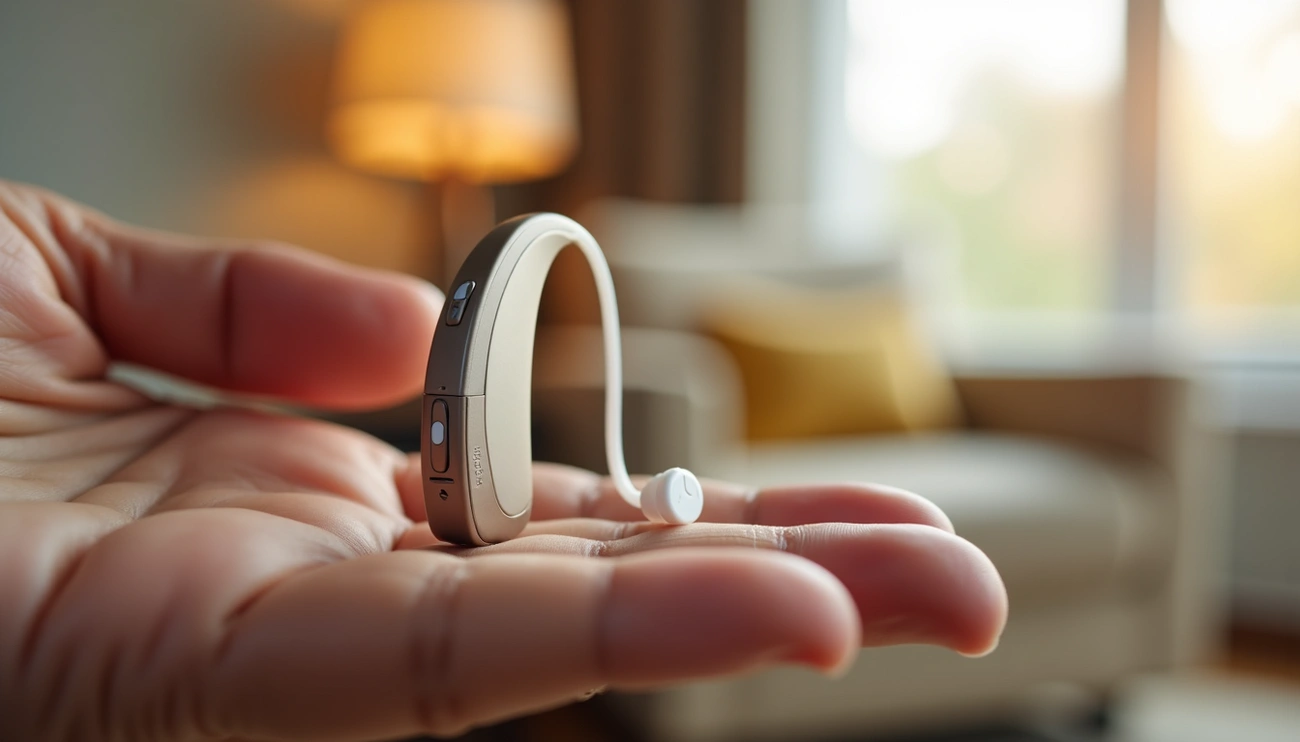
Finding the right hearing aids for yourself or a loved one can feel overwhelming when you’re sorting through countless reviews and conflicting information. Beltone operates as the second-largest hearing aid network in the United States, with over 1,500 locations nationwide across 49 states. The company offers prescription hearing aids designed for all levels of hearing loss, but many potential buyers wonder whether these devices justify their significant cost.
Beltone hearing aid models are manufactured by GN Resound, a respected company known for quality hearing technology. Most people pay between $4,000 and $6,000 for a pair, which can strain budgets for seniors living on fixed incomes. You can only purchase Beltone hearing aids in person at their dedicated facilities, though this requirement allows for personalized fittings and product demonstrations.
This review examines Beltone’s technology, pricing structure, user experience, and how their devices actually perform compared to other options available today.
Beltone Hearing Aid Models Explained
Beltone’s current product lineup includes four main hearing aid families, each designed to address different hearing challenges and technology preferences. Understanding these options helps determine which devices might work best for your specific situation.
Serene, Achieve, Rely, and Envision Overview
Beltone Envision represents their newest technology, released in January 2025. These hearing aids use artificial intelligence trained on over 13 million speech samples to separate voices from background noise in real time. The microRIE (micro Receiver-in-Ear) style offers their smallest AI-powered design, sitting discreetly low on the ear. Envision uses dual-chip architecture with Deep Neural Processing that mirrors how the brain processes sound.
Beltone Serene, introduced in September 2023, enhances the Achieve platform with improved performance in noisy settings. The microRIE version is 25% smaller than earlier RIE models. Serene became the first Beltone hearing aid to include Bluetooth LE Audio and Auracast broadcast technology.
Beltone Achieve launched in August 2022 and received the CES 2023 Innovation Award. These devices deliver 150% better speech clarity in noisy environments compared to previous Beltone technology. Achieve focuses on providing 360-degree environmental awareness.
Beltone Rely serves as the most affordable option in their lineup, introduced in 2021. Despite the lower cost, Rely includes proven hearing technology with direct streaming for both iOS and Android devices. This model offers multiple styles including RIE, CIC, ITE, ITC, and BTE options.
Which Model Fits Which Hearing Loss Level?
For mild-to-severe hearing loss, all four main models-Envision, Serene, Achieve, and Rely-can provide appropriate amplification. The selection often depends more on budget, preferred features, and specific listening challenges than hearing loss severity alone.
Those with severe-to-profound hearing loss need specialized power models. Beltone offers the Boost Ultra and Boost Max S specifically for these more challenging cases. These devices provide stronger amplification while maintaining sound clarity.
Style options vary by model family. Receiver-in-Ear (RIE) styles accommodate most hearing loss levels, while Behind-the-Ear (BTE) styles often work better for significant hearing challenges. Custom options like Completely-in-Canal (CIC), In-the-Canal (ITC), and In-the-Ear (ITE) appeal to those wanting discretion with mild to moderate hearing loss.
Rechargeable vs Disposable Battery Options
Most Beltone models now include rechargeable versions alongside traditional disposable battery models. Rechargeable hearing aids use lithium-ion batteries similar to smartphone technology. A single charge typically provides up to 30 hours of use, with battery life lasting approximately five years.
Rechargeable models offer several advantages:
- Overnight charging eliminates frequent battery changes
- Long-term cost savings by removing ongoing battery purchases
- Environmental benefits from reduced battery waste
- Enhanced safety for households with children or pets
- Easier handling for those with dexterity or vision difficulties
Disposable battery options remain available for those who prefer them. These models provide uninterrupted hearing without daily charging requirements, allow quick battery replacement while traveling, and work well for frequent travelers without consistent power access.
Your lifestyle, manual dexterity, and electricity access should guide your battery choice. Most users find rechargeable convenience outweighs any limitations, particularly for active lifestyles where nightly charging becomes routine alongside other electronics.
Key Features Tested: What Actually Works
Testing Beltone’s latest hearing aids reveals several features that make a practical difference in daily use. These capabilities address common hearing challenges that many users face in real-world situations.
AI Sound Processing and Speech Clarity
Beltone’s newer models use artificial intelligence to improve listening experiences. The Envision microRIE hearing aids employ a dual-chip architecture that pairs Beltone’s processing chip with a separate Deep Neural Network (DNN) AI chip. This system has been trained on more than 13.5 million speech samples and can perform up to 4.9 trillion operations daily. The result is better precision when separating voices from background noise.
The AI technology identifies and reduces thousands of distracting sounds. It can minimize unwanted noise from air conditioning, clattering dishes, and wind while preserving speech clarity. This proves especially helpful in restaurants and social gatherings where multiple conversations happen at once.
The system continuously monitors your environment, adjusting automatically to changing soundscapes. This approach mimics how your brain processes sound, creating clearer sound representation in difficult listening situations.
Bluetooth LE Audio and Auracast Support
Beltone Envision and Serene models include Bluetooth Low Energy (LE) Audio, which improves upon previous connectivity methods. This technology allows seamless, high-quality streaming across compatible iOS and Android devices with better energy efficiency.
These models also support Auracast broadcast audio, expanding connectivity beyond personal devices. The Auracast Assistant in the Beltone HearMax app connects you to public audio sources with a simple tap. At airports, you can connect directly to gate announcements without straining to hear.
Auracast works with public address systems, waiting room televisions, and audio systems in places of worship. For home use, the TV-Streamer+ accessory provides 56% improved speech recognition compared to standard TV speakers.
Tap Controls and Streaming Capabilities
The tap control feature offers intuitive operation. Double-tapping your hearing aid or ear lets you answer phone and video calls hands-free on compatible devices. This feature comes enabled by default but can be turned off through the HearMax app if needed.
iPhone users with model 11 or newer running iOS 18 or later can use hands-free calling. Android devices running Android 13 or newer support this functionality when paired via LE Audio.
You can stream music, podcasts, audiobooks, and TV audio directly to your hearing aids. The internal lithium-ion rechargeable battery in the Envision microRIE provides up to 30 hours of use, though heavy streaming typically reduces this to about 24 hours. A quick 10-minute charge gives nearly 3 hours of additional listening time.
Tinnitus Management Tools
For those experiencing tinnitus, Beltone provides specialized management options. The Tinnitus Breaker Pro feature built into certain models offers customized sound therapy to mask perceived tinnitus. Some devices provide soothing “ocean wave” sounds that many users find more relaxing than traditional white noise.
The Tinnitus Calmer app adds to these built-in features with additional sound therapy options and interactive exercises designed to reduce tinnitus-related irritation. Users can select different masking sounds that work best for their specific tinnitus patterns.
The tinnitus management approach addresses audiological, emotional, and neurological aspects of the condition. While not providing a cure, these tools offer meaningful relief for many users by helping redirect focus away from tinnitus sounds.
Real-World Performance and User Feedback
Technical specifications only tell part of the story. How Beltone hearing aids actually perform during daily activities provides crucial insight into whether these devices meet your needs.
Speech-in-Noise Testing Results
Understanding speech in noisy environments represents the biggest challenge for hearing aid users. The QuickSIN (Quick Speech-in-Noise) test measures speech recognition at six different signal-to-noise ratios (SNRs), ranging from +25 down to 0 SNR.
Testing revealed meaningful performance differences between Beltone models. The Envision and Serene lines demonstrated stronger noise management capabilities compared to the budget-friendly Rely. Restaurants pose particular challenges, with 14% of users reporting dissatisfaction with their Beltone devices in these settings.
SNR loss measurements provide practical guidance for device selection. If you have mild SNR loss (3-6 dB), you’ll typically perform well with Beltone’s directional microphone technology. However, moderate SNR loss (7-12 dB) may continue presenting challenges even with premium models, requiring realistic expectations.
Comfort and Fit for Daily Use
Physical comfort determines whether you’ll actually wear your hearing aids consistently. The microRIE models stood out during testing for their lightweight design and discreet profile. Several users mentioned forgetting they were wearing their devices, which indicates excellent all-day comfort.
Some comfort issues did surface. The M&RIE technology, available in select models, can cause discomfort if you have narrow ear canals. Some users also reported a persistent plugged sensation, describing it as feeling like they “always have ear plugs in”.
Battery performance varies with usage patterns. Rechargeable models deliver approximately 30 hours of use on a single charge, though heavy streaming reduces this to around 24 hours. Many users appreciated eliminating disposable battery purchases, citing this as a significant convenience factor.
App Usability and Remote Adjustments
The Beltone HearMax app serves as your control center for device management. The interface displays essential information including sound mode, program settings, volume level, and battery status. Most users found the app intuitive, even those with limited technical experience.
Remote Care Live enables virtual appointments with hearing care professionals. This system provides:
- Face-to-face video consultations with your hearing specialist
- Real-time adjustments to device settings
- Immediate testing of newly adjusted settings
This remote capability proves particularly valuable for elderly or mobility-challenged users. Obtaining adjustments requires just a few simple steps: requesting an appointment, accepting the video call, discussing your needs, and receiving adjustments directly to your smartphone.
Common User Complaints
Despite their advantages, recurring complaints appear across multiple review platforms. Connection issues rank high among user frustrations. Several users reported Bluetooth connectivity problems, particularly with Android devices, noting that “when streaming from my phone, I cannot put the phone in my pocket without it cutting off”.
Maintenance concerns surface repeatedly. The BBB complaints database revealed multiple instances of devices requiring frequent repairs, with one user stating they needed service “at least 2x a month with issues”.
Price transparency represents another pain point. Unlike many competitors, Beltone does not publicly disclose pricing, requiring in-person visits to obtain cost information. This practice frustrates many comparison shoppers.
Programming difficulties appeared in several complaints, including one instance where a user reported that a professional couldn’t program their device, yet they successfully completed the process themselves in “a few minutes”.
Many positive reviews counterbalance these complaints. Numerous users praised Beltone’s service model, which includes regular check-ups, adjustments, and cleaning without additional charges. As one satisfied customer noted: “NEVER pay for anything except the aids initially. No service fees. No charge for appointments”.
Beltone Hearing Aid Costs and Hidden Expenses
Beltone’s pricing often surprises shoppers because the company doesn’t publish costs on their website. You’ll need to visit a location in person to receive pricing information, which can make comparison shopping challenging.
What You Can Expect to Pay
Most customers pay between $4,000 and $6,000 for a pair of Beltone devices. Pricing varies based on the technology level you choose:
- Basic Technology: Ranges from $1,000 to $2,000 per device. These models address mild to severe hearing loss with essential features.
- Mid-Range Technology: Typically costs $2,000 to $3,000 per device. You’ll get improved noise reduction and speech processing capabilities.
- Premium Technology: Ranges from $3,000 to $4,000 or more per device. These include advanced AI features, hands-free calling, and superior sound quality.
If you’re budget-conscious, Beltone’s Rely series offers more accessible pricing while still providing direct streaming for iOS and Android devices. Their entry-level option for mild to moderate hearing loss starts at $799 for a pair of Jabra Enhance Plus, available without prescription.
Services Included with Purchase
Your Beltone hearing aids come with access to their BelCare program. This package includes:
- Annual hearing evaluations
- Cleaning and maintenance for the life of your device
- A 30-day satisfaction guarantee with refund policy
- Two-year protection for changes in hearing loss
- One-year protection for lost or stolen devices (minus a deductible)
Mike Halloran, president of Beltone, notes that “price differences are based on location and the technology level that best suits the user’s lifestyle”. Since each Beltone location operates independently, services may vary between locations.
Potential Additional Costs
You may encounter unexpected expenses beyond your initial purchase. A class action lawsuit revealed that despite Beltone’s advertising of “FREE Three-year manufacturer’s warranty” and “FREE Three-year loss, stolen and damage coverage,” customers were required to pay a $300 deductible when filing claims.
For financing options, Beltone accepts:
- Cash and credit card payments
- Leasing programs (availability varies by location)
- Financing plans with fixed monthly payments
- Third-party insurance coverage where applicable
Some regions, like New England, offer 48-month leasing terms with the option to upgrade technology after 36 months. This can benefit seniors on fixed incomes who want access to updated technology.
Are They Worth the Investment?
Determining value requires weighing several factors. Beltone devices incorporate technology comparable to other premium brands, and their BelCare program adds value through ongoing support without additional service fees.
However, consider these limitations:
- Each Beltone location operates independently, causing prices and policies to vary
- Devices are “locked,” meaning only Beltone centers can service them, potentially increasing long-term costs
- Programming flexibility is limited compared to some competitors
- Price transparency remains an issue since costs are only provided in-person
Studies show that people working with hearing care professionals report significantly higher satisfaction than those purchasing without support. Beltone’s service-oriented approach offers tangible benefits in this regard.
Whether Beltone hearing aids justify their cost depends on how much you value their service model versus the premium you’ll pay for that convenience. For many users, the peace of mind from lifetime support outweighs the higher initial investment.
Beltone Hearing Aids: What Works and What Doesn’t
Understanding both the advantages and challenges of Beltone hearing aids helps you make an informed decision about whether these devices suit your needs and circumstances.
Key Benefits You Should Know About
Beltone’s BelCare program represents the most significant advantage, providing lifetime service at any of their nationwide locations, annual hearing evaluations, and extended device protection. This service-oriented approach ensures consistent care throughout your device’s lifetime.
The company has earned multiple industry recognitions, including a CES 2023 Innovation Award and Edison Award, reflecting their commitment to advanced technology. Notable features include:
- Rechargeable options offering up to 30 hours of use per charge, eliminating ongoing battery costs
- AI-driven sound processing that automatically adjusts to noisy environments
- Auracast broadcast technology for direct connections to public audio sources in airports and lecture halls
Their nano-protective coating (HPF80 NanoBlock) provides meaningful protection against moisture damage. The compact design works well for active users who need minimal interference with physical activities.
Limitations to Consider
Beltone’s proprietary programming software creates a significant restriction, as adjustments can only be made at Beltone facilities. This limitation may inconvenience travelers or those without nearby locations.
Battery performance decreases with heavy streaming usage, even in rechargeable models. You may need to carry your charging case for mid-day power boosts if you frequently stream music or calls.
Maintenance concerns appear regularly in user feedback, with some devices requiring service “at least 2x a month”. Regular cleaning appointments can help prevent problems before they develop.
Price transparency remains an ongoing issue, as costs are only disclosed during in-person consultations. You should research typical price ranges for comparable technology levels before visiting.
How Beltone Compares to Alternatives
Beltone operates under the same parent company (GN Hearing Care Corporation) that owns ReSound and Jabra Enhance. This relationship creates technological similarities among these brands, with Beltone often featuring ReSound technology in different packaging.
Beltone’s service model sets it apart from competitors who sell through independent providers. Their nationwide network of dedicated hearing centers maintains a consistent experience.
Customer satisfaction metrics support Beltone’s service focus. The company received recognition as one of Newsweek’s Best in Customer Service for Hearing Care in 2023, 2024, and 2025. Their reported Net Promoter Score average of 76 ranks as “excellent” by industry standards.
For seniors who value convenience and ongoing professional support over absolute cost considerations, Beltone presents a solid option despite higher prices and limited programming flexibility.
Beltone vs Competitors: ReSound, Oticon, and More
Understanding how Beltone compares to other hearing aid manufacturers helps you make an informed choice for yourself or your loved one. The differences in technology approaches, programming flexibility, and service models can significantly affect your experience.
Programming Flexibility and Software Access
Beltone uses proprietary software that requires adjustments only at their facilities, which limits your options for programming changes. ReSound offers more flexible programming options along with their audio streaming technology . Oticon takes a different approach entirely with their BrainHearing technology, which allows your brain to naturally filter and focus on the sounds you want to hear .
These programming differences matter when you need adjustments or repairs. With Beltone, you must visit one of their locations, while other brands may offer more provider options in your area.
App Ecosystem and Accessories
The Beltone app selection includes the HearMax app for their newer models like Trust, Boost Max, and Amaze . You can also access the HearPlus app for basic device control and the SmartRemote app when using Direct Phone Link 2 . ReSound provides different app options, including specialized applications for tinnitus relief and device tracking .
For accessories, Beltone’s TV-Streamer+ works only with specific models including Envision, Commence, and Serene . Both Beltone and ReSound support Bluetooth connectivity, though compatibility varies between different device models and smartphone types.
Service Network and Support
Beltone’s service model centers on their 1,500 locations across 49 states, providing consistent care wherever you go . This dedicated network ensures uniform service standards throughout your device’s lifetime. Many competitors sell through independent hearing care providers, which can mean varying service experiences depending on your chosen provider .
The trade-off becomes apparent when weighing convenience against flexibility. Beltone’s standardized approach offers predictable service, while other brands may provide more local provider choices but less consistency in service quality.
Bottom Line
Selecting hearing aids requires weighing technology capabilities, service support, and costs against your specific needs and circumstances. Beltone offers advanced AI-powered sound processing, Auracast connectivity, and convenient features like tap controls. Their BelCare program provides ongoing support throughout the life of your devices, which many users value highly.
The investment ranges from $4,000 to $6,000 for a pair, placing these devices in the premium category. While this price includes comprehensive services, the proprietary programming means you can only receive adjustments at Beltone’s 1,500 locations nationwide.
Beltone’s face-to-face consultation approach distinguishes them from direct-to-consumer options. You receive personalized fittings, ongoing adjustments, and professional support rather than simply purchasing a device. This service model particularly benefits seniors who prefer in-person care and ongoing professional relationships.
However, the lack of upfront pricing transparency requires visiting a location to obtain cost information. Some users also report maintenance concerns that warrant consideration before investing.
For seniors who prioritize professional support and don’t mind paying premium prices for comprehensive service, Beltone presents a solid option. Those seeking more programming flexibility or lower costs might explore other manufacturers offering similar technology through independent hearing care providers. Your hearing health deserves careful consideration of all available options.
Key Takeaways
After extensive testing and analysis, here are the essential insights about Beltone hearing aids that every potential buyer should know:
• Beltone hearing aids cost $4,000-$6,000 per pair with hidden fees like $300 warranty deductibles despite advertised “free” coverage
• Advanced AI technology in newer models (Envision, Serene) significantly improves speech clarity in noisy environments using 13.5 million speech samples
• Proprietary programming means adjustments only possible at Beltone locations, limiting flexibility but ensuring consistent nationwide service
• BelCare program includes lifetime cleaning, annual evaluations, and device protection, adding substantial value beyond initial purchase
• Rechargeable models offer 30-hour battery life with convenient overnight charging, eliminating ongoing battery replacement costs
• Bluetooth LE Audio and Auracast technology enable seamless streaming and connection to public audio systems in airports, theaters
While Beltone delivers premium technology and comprehensive service through 1,500 nationwide locations, the high cost and lack of price transparency require careful consideration. Their service-first approach particularly benefits seniors who value ongoing professional support over absolute cost savings.
FAQs
Q1. How much do Beltone hearing aids typically cost? Beltone hearing aids usually range from $4,000 to $6,000 for a pair, depending on the model and technology level. Basic models start around $1,000 per device, while premium options can cost up to $4,000 per device.
Q2. What features stand out in Beltone’s latest hearing aid models? Beltone’s newest models feature AI-powered sound processing, Bluetooth LE Audio connectivity, Auracast broadcast technology support, and tap controls for hands-free calling. They also offer up to 30 hours of battery life on a single charge for rechargeable models.
Q3. How does Beltone’s service model compare to other hearing aid brands? Beltone offers a comprehensive BelCare program that includes lifetime service, annual hearing evaluations, and device protection at any of their 1,500 locations nationwide. This service-oriented approach distinguishes them from many competitors who sell through independent providers.
Q4. Are there any limitations to consider with Beltone hearing aids? Beltone devices can only be programmed and adjusted at Beltone facilities due to their proprietary software. Additionally, some users report frequent maintenance needs, and the company lacks price transparency, as costs are only disclosed during in-person consultations.
Q5. How do Beltone hearing aids perform in noisy environments? Beltone’s advanced models, particularly the Envision and Serene lines, demonstrate strong noise management capabilities. They use AI technology trained on millions of speech samples to distinguish voices from background noise, though some users still report challenges in very noisy settings like restaurants.