Key Takeaways
- Medical alert watches connect to professional monitoring centers within 60 seconds, providing faster emergency response than direct 911 calling systems.
- Fall detection accuracy varies significantly – the best models detect 8 out of 10 falls, making proper selection crucial for high-risk patients.
- Water resistance is essential since 80% of senior falls occur in bathrooms, requiring devices that function safely during showering and bathing.
- Battery life of at least 24 hours ensures continuous protection, with premium models offering up to 48 hours of operation between charges.
- Professional monitoring centers staffed with trained operators assess emergencies and dispatch appropriate help, unlike smartwatches that only connect to 911.
- Monthly monitoring costs range from $24.95 to $84.95, with protective options available for every budget without compromising essential safety features.
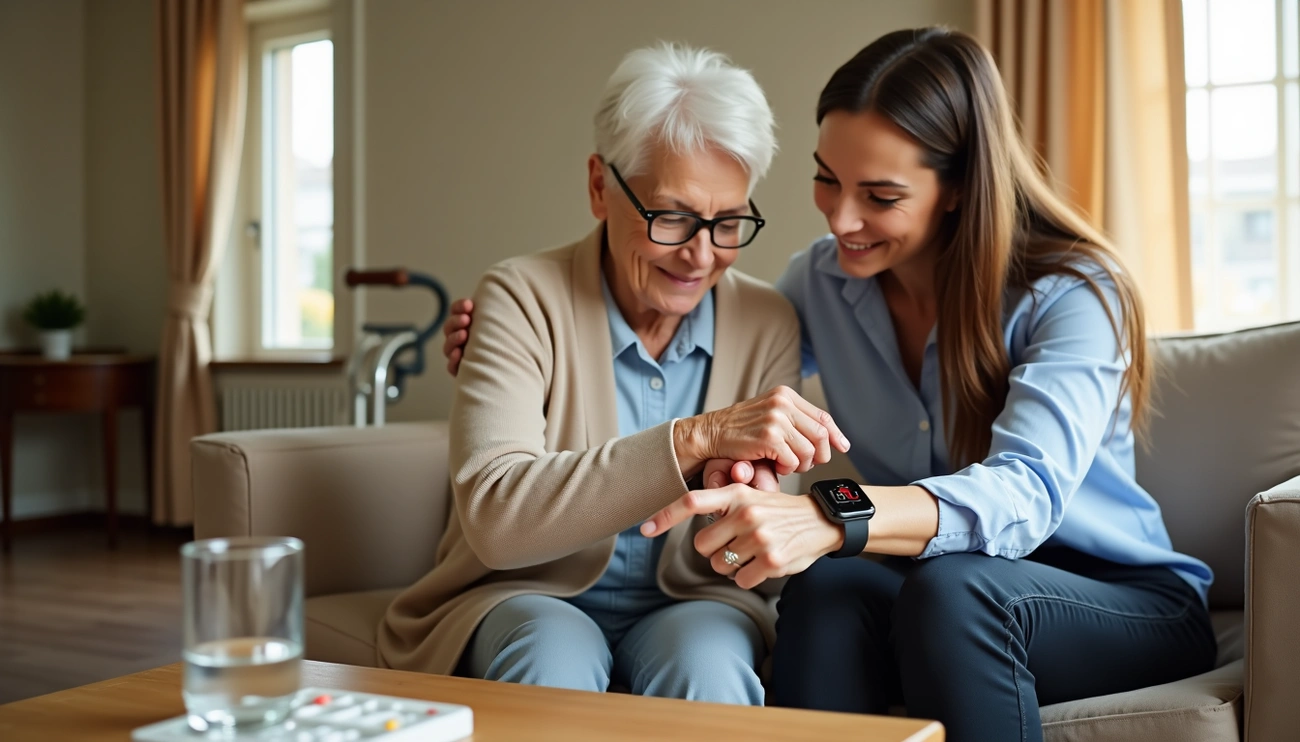
Choosing the right watch for elderly loved ones can be a life-saving decision. Medical alert watches provide essential safety features that go far beyond regular smartwatches, offering specialized emergency response and health monitoring capabilities specifically designed for elderly users.
The best emergency watches for elderly users connect to an agent or emergency contact within 60 seconds or less on average, ensuring quick response during critical situations. Fall detection watches have become increasingly sophisticated, with models like the SOS Smartwatch by Bay Alarm Medical detecting falls accurately eight out of 10 times and incorporating AI technology to automatically detect when a fall occurs. Many SOS watches for elderly users feature easily accessible emergency buttons, like the one we found on the side of certain models to prevent accidental activation.
Health monitor watches for elderly individuals track vital metrics like heart rate, blood oxygen levels, and sleep patterns with remarkable accuracy. Battery life varies significantly among models – every watch we evaluated maintained at least 18 hours of battery life, though standouts like the Spade & Co Health Smartwatch 4 delivered an impressive two-week battery life, and the Apple Watch Series 10 can last up to 36 hours when in low-power mode.
With subscription prices ranging from $38.95 to $84.95, there are options for every budget. The right medical alert watch selection depends on individual needs – fall-risk patients need superior detection accuracy, active seniors require comprehensive monitoring, and those with chronic conditions benefit from specialized health tracking features.
What You Need to Know About Medical Alert Watches
Medical alert watches function as specialized safety devices that differ significantly from regular smartwatches, though many people confuse the two types of devices. The distinction matters when you’re choosing protection for yourself or a loved one. These devices combine emergency response capabilities with health monitoring features specifically designed for senior safety needs.
How medical alert watches differ from regular smartwatches
The primary difference lies in emergency response protocols. Medical alert watches connect you directly to professional monitoring centers staffed with trained operators who can assess your situation before dispatching help. Regular smartwatches with emergency features typically connect straight to 911, which may result in unnecessary emergency service calls.
Fall detection technology works differently between these devices as well. Medical alert watches let you speak with monitoring center staff after a fall is detected, allowing them to determine what assistance you actually need. You should know that dedicated medical alert devices worn around the neck or waist prove more accurate than wrist-worn options, since studies show watches can trigger false alarms due to normal arm movements.
Key differences include:
- Medical alert watches prioritize emergency response and safety features
- Smartwatches focus on general technology with safety as a secondary feature
- Medical alert watches usually provide longer battery life for continuous protection
- Medical alert systems require subscription fees ranging from $38.95 to $84.95 monthly
Why doctors recommend these devices for seniors
Medical alert watches serve as proactive wellness tools rather than last-resort options. Dr. Keli Spencer states, “I strongly recommend medical alert devices to my patients not as a last resort, but as a proactive wellness tool”. This approach makes sense considering one in four adults over 65 falls each year, often without immediate access to help.
The devices reduce emergency response times significantly. During critical situations like cardiac arrest, stroke, or serious falls, every minute counts. Medical literature shows survival rates after out-of-hospital cardiac arrests improve by 7-10% for each minute of early intervention. The one-touch emergency response ensures rapid assistance even when your phone is out of reach.
These devices also support independent living. Knowing help is available empowers older adults to engage confidently in daily activities they might otherwise avoid due to fear of falling or being alone during an emergency. This psychological benefit improves quality of life while providing peace of mind to family members.
Essential safety features from a medical perspective
Automatic fall detection represents the most crucial safety feature. These systems use accelerometers that detect sudden changes in movement, triggering alerts to monitoring centers. This capability proves vital since extended periods on the floor can lead to rhabdomyolysis, a life-threatening condition where muscle tissues break down and release contents into the bloodstream, potentially developing after lying on the floor for as little as one hour.
GPS location tracking provides another significant safety advantage, particularly for seniors who might become disoriented. When the watch detects an emergency, monitoring center staff can provide your exact location to first responders, reducing response time in critical situations.
Water resistance often gets overlooked but remains essential. The National Institute on Aging reports that 80% of falls by seniors occur in the bathroom. A waterproof medical alert watch that can be worn while showering or bathing provides protection during these high-risk activities.
Two-way communication capabilities allow you to speak directly with monitoring center personnel, who can assess the situation and provide appropriate assistance, whether that means contacting emergency services, family members, or neighbors. This personalized response system ensures you receive exactly the help you need without unnecessary emergency interventions.
Essential Features to Consider When Choosing a Fall Detection Watch
Falls affect one in four adults over 65, making them the leading cause of injury among seniors. Finding the right medical alert watch requires understanding specific technical capabilities that determine whether help arrives quickly or dangerous delays occur. You should evaluate these critical features when selecting a fall detection watch for your loved one.
Fall detection accuracy and how it works
Fall detection sensors work most effectively when placed on the head, torso, or pelvis, achieving approximately 95% accuracy. Wrist-worn devices face the challenge of distinguishing between normal arm movements and actual falls. The most advanced systems use accelerometers and gyroscopes to detect sudden changes in movement, sensing acceleration and rotation.
Recent testing shows promising accuracy rates for wrist-worn devices:
- Bay Alarm Medical’s SOS Smartwatch detected falls accurately eight to nine out of 10 times
- Samsung Galaxy Watch7 correctly identified simulated falls eight out of 10 times
- AI-powered models learn the wearer’s movements over time, improving accuracy by distinguishing between large arm movements and genuine falls
The stakes for accurate detection are high. Dr. Warren Wong, a geriatrician, warns that lying on the floor for extended periods can lead to rhabdomyolysis, a life-threatening condition that can develop after just one hour.
Response time expectations
You should expect quality medical alert watches to connect to monitoring centers quickly. Testing reveals significant differences between models:
- Bay Alarm Medical’s SOS Smartwatch connected to an agent in just 9 seconds
- Medical Guardian’s MGMove averaged 23 seconds to 29 seconds
- Industry standard for excellent response time is under 60 seconds
This rapid connection stems from direct links to professional monitoring centers rather than relying on pre-selected contacts or delayed protocols.
Location tracking capabilities
Emergency responders need to find the wearer quickly during emergencies. Medical alert watches typically provide:
- Regular interval updates (hourly in many systems)
- Real-time location data when the emergency button is pressed
The system automatically transmits location information to emergency services. However, models like the MGMove only update location data hourly under normal circumstances, which may present limitations in certain situations.
Water protection for high-risk areas
Water resistance becomes essential when you consider that 80% of senior falls occur in bathrooms. Quality medical alert watches should offer:
- IP67 certification for shower use without damage
- Protection during handwashing and exposure to rain
- Continuous monitoring in bathroom environments
This feature provides protection during everyday activities that present slipping hazards, though you should avoid complete submersion with most models.
Battery life for continuous protection
Battery duration varies significantly between models, creating important distinctions:
- Minimum requirement of at least 24 hours of battery life
- Premium options like SmartWatch PRO offer up to 48-hour battery life
- Some models require daily charging with 1-2 hour charging periods
- Fall detection features often reduce battery life substantially, with some dropping from 5 days to 3 days when activated
Many medical alert watches provide battery status notifications at 20% and 10% remaining capacity, giving users ample warning before power depletion.
These five technical features form the foundation of effective fall detection watches for elderly users. The ideal device combines high accuracy, swift response times, reliable location tracking, water resistance, and sufficient battery life to ensure protection throughout daily activities.
Medical Alert Watch Options: Finding the Right Fit
After evaluating multiple devices, four medical alert watches stand out for their ability to meet different senior care needs. Each option addresses specific concerns that you and your loved ones may prioritize when choosing protective technology.
Medical Guardian MGMove: Complete monitoring solution
The MGMove delivers reliable emergency response with connection times averaging 23-29 seconds. Built-in GPS provides hourly location updates, allowing family members to track their loved one’s whereabouts throughout the day.
Key features that set the MGMove apart include:
- Medication and appointment reminders displayed as screen notifications
- Step counting and activity monitoring to assess daily movement
- Optional messaging through the Support Circle app
- Weather updates to help plan safe daily activities
Battery life extends up to 24 hours with a 2-hour charging requirement. The device costs $199.95 with monthly monitoring fees of $39.95-$42.95. For families seeking extensive monitoring capabilities, this investment provides substantial peace of mind.
Bay Alarm Medical SOS Smartwatch: Simple protection
Seniors who prefer straightforward technology will find the SOS Smartwatch remarkably easy to use. Testing revealed consistently positive feedback about its clear design and simple instructions. Response times impress with connections to monitoring agents occurring in 16-22 seconds.
The watch offers AI-enabled fall detection as an optional $10 monthly add-on. This system learns individual movement patterns over time, reducing false alarms while improving detection accuracy. Fall detection succeeds in 75-80% of testing scenarios, providing reliable protection despite the limitations common to wrist-worn devices.
Apple Watch Series 10: Technology-focused option
Tech-comfortable seniors often choose the Apple Watch Series 10 for its health monitoring and emergency capabilities. Unlike dedicated medical alert devices, it requires no subscription fees beyond existing smartphone data plans.
The Series 10 measures nearly 10% thinner than previous versions while maintaining 18-hour battery life. Sleep apnea monitoring analyzes breathing patterns during rest to detect this potentially serious condition. However, fall detection only recognizes hard falls, missing many soft falls that commonly affect elderly individuals.
Samsung Galaxy Watch7: Accessibility-centered design
Vision-impaired seniors benefit from the Galaxy Watch7’s specialized accessibility features. The large 44mm bright display accommodates those with vision difficulties, while additional options include:
- High contrast fonts displaying all text in white for improved visibility
- Color correction settings including Grayscale mode
- Triple-tap magnification activation
- TalkBack text-to-speech functionality
Universal Gestures allow screen-free operation using hand movements like “Make Fist” and “Pinch”. Battery life reaches 24 hours, and the extensive accessibility options address needs that other models typically overlook.
Health Monitoring Features That Matter for Elderly Care
Health monitoring capabilities in medical alert watches extend far beyond emergency response. These features can help you track potential health issues before they become serious problems, making them valuable tools for preventive care.
Heart rate monitoring for cardiac patients
Heart rate tracking provides important information about cardiac health, particularly for seniors with cardiovascular conditions. This feature monitors cardiac activity throughout different daily activities and can be especially helpful for patients managing heart disease. The most advanced watches analyze the time intervals between heartbeats (QRS complex) to deliver accurate readings.
The Apple Watch’s ECG capability offers a notable advantage for detecting atrial fibrillation (A-fib), an irregular heartbeat that increases stroke risk significantly. The FDA has approved Apple’s A-fib history feature for clinical studies to help evaluate how well treatments work. Fitbit devices use a different approach, employing photoplethysmography algorithms that monitor heart rhythm passively during rest or sleep, providing continuous cardiac monitoring without requiring any action from you.
Blood oxygen tracking capabilities
Blood oxygen (SpO2) monitoring helps assess how well your circulatory, heart, and lung systems function. Healthy adults typically maintain SpO2 levels between 95% and 100%, with variations up to 5% generally not cause for concern. Most watches use pulse oximetry technology, emitting red (660 nm) and near-infrared (940 nm) light wavelengths to measure oxygen saturation.
Low blood oxygen readings may signal early signs of circulatory, heart, or lung problems, including sleep disorders. For seniors, this monitoring proves especially useful during sleep when breathing irregularities might otherwise go unnoticed. Leading watches from Apple, Fitbit, Garmin, and Samsung include this capability, though most classify these readings as “wellness data” rather than medical-grade measurements.
Activity and step counting for mobility assessment
Activity tracking gives doctors objective data to evaluate how well you’re moving and recovering from health issues. Since approximately 30% of people over 65 fall each year, monitoring movement patterns becomes essential for preventing accidents.
Advanced devices track more than just step count. They analyze walking characteristics including speed, balance, walking rhythm, and posture. These measurements help caregivers spot subtle changes in how you move that might indicate increased fall risk. Early detection allows for interventions before accidents happen, potentially preventing the cycle of reduced mobility that often follows a serious fall.
Medication reminders and health alerts
For seniors managing chronic conditions, taking medications consistently is critical. Missing doses can have serious consequences for people with diabetes, heart disease, epilepsy, or dementia. Medication adherence becomes much easier with watches that provide programmable reminder alerts.
Advanced options like the Cadex watch offer up to 12 daily reminders with personalized text messages. The alarm can sound for up to 4 hours if you don’t acknowledge it, with a snooze feature that delays alerts in 3-minute intervals. This creates a reliable system that helps you maintain consistent medication schedules even when memory becomes challenging.
For individuals with mild to moderate cognitive impairments affecting memory or attention, such watches provide particular benefits. Since they’re worn on your wrist, they’re less likely to be forgotten or misplaced compared to other reminder devices.
How Emergency Response Systems Work
Understanding how medical alert watches connect you to help can make the difference between confusion and confidence during an emergency. Many seniors assume these devices simply dial 911, but the reality involves more sophisticated systems designed specifically for elderly users’ needs.
Professional monitoring centers vs. direct 911 calling
When you press your medical alert watch button, monitored systems connect you to professional monitoring centers rather than directly to 911. This distinction matters significantly for several reasons. Professional monitoring centers remove the burden of decision-making during stressful situations. These centers often maintain priority access to 911 operators, potentially reducing wait times when every second counts.
The monitoring centers employ EMT/EMD-certified operators available around the clock who can relay critical information to paramedics, family members, and neighbors. If you cannot respond verbally due to injury or incapacitation, operators automatically dispatch emergency services. This system ensures appropriate help arrives even when you’re unable to communicate your specific needs.
Two-way communication capabilities
Quality medical alert watches include built-in speakers and microphones that allow direct conversation with response teams. This feature serves multiple essential purposes:
- Assessment of your specific situation and needs
- Reassurance while help is being dispatched
- Collection of vital health information for responders
- Confirmation of your exact location
Operators can determine the appropriate level of response based on your conversation, preventing unnecessary emergency service calls when minor assistance might suffice.
Response time expectations
Response time directly impacts emergency outcomes. The industry standard for acceptable response time is under 60 seconds. Many leading providers exceed this benchmark. Medical Guardian’s MGMove connects users to operators in approximately 20 seconds, making it among the fastest options available. Bay Alarm Medical reports typical response times under 45 seconds. For comparison, standard emergency medical services aim to arrive within 5 minutes for 90% of high-priority calls.
Caregiver notification systems
Most medical alert watches notify your pre-designated emergency contacts through calls or text messages. Many devices offer caregiver tracking through companion apps, allowing family members to receive notifications, check your location updates, and monitor battery levels. Some services send email notifications to all emergency contacts simultaneously when incidents occur.
These notification systems ensure your family stays informed without overwhelming them with false alarms or unnecessary alerts.
Finding the Right Medical Alert Watch for Your Needs
Choosing a medical alert watch depends largely on your specific health situation and daily activities. You may need different features depending on whether you’re at high risk for falls, maintain an active lifestyle, or manage ongoing health conditions.
Options for seniors at high fall risk
If you have balance issues or a history of falls, fall detection accuracy should be your top priority. Accidental falls affect 1 in 4 older adults, making reliable detection essential for your safety. The UnaliWear Kanega Watch demonstrated impressive fall detection in testing, while the Bay Alarm Medical SOS Smartwatch detected 15 out of 20 simulated falls.
Since many falls happen in bathrooms, you’ll want water-resistant devices like the MGMove, which offers IP67 certification for shower protection. This allows you to wear the watch during high-risk activities like bathing without worry about damage.
Watches for active and independent seniors
Active seniors who enjoy activities like running, golfing, or yoga need protection that won’t interfere with their lifestyle. Medical Guardian’s MGMove provides freedom of movement with its smaller design compared to previous models, offering more discreet protection.
For tech-savvy seniors, the Apple Watch Series 10 includes fall detection that automatically activates for users over 55. This option offers fitness tracking and emergency features without additional monthly monitoring fees, making it cost-effective for those comfortable with technology.
Best choices for chronic health conditions
You may need specialized monitoring if you manage ongoing medical concerns. The Apple Watch Series 9 offers an ECG app for atrial fibrillation detection and a blood oxygen sensor, making it valuable for cardiac and respiratory conditions.
Seniors with vision impairments will find the Samsung Galaxy Watch7 particularly helpful, featuring a Super AMOLED screen with accessibility options for vision, hearing, and text-to-speech. Those who need help remembering medications can benefit from watches with reminder capabilities.
Budget-conscious options that maintain safety
Cost-effective choices still provide essential protection. MobileHelp offers monthly plans starting at just $24.95 with no equipment costs, while Lively begins at $24.99 monthly.
For those seeking a balance of features and affordability, Bay Alarm Medical’s SOS Smartwatch typically costs $199 but often goes on sale for $159.99 or less, with monthly monitoring at $39.95. This provides professional monitoring at a reasonable price point.
Conclusion
Medical alert watches serve as vital lifelines for elderly individuals, combining emergency response capabilities with health monitoring features. Throughout my years of practice, I’ve witnessed how these specialized devices provide seniors with both protection and independence. Although standard smartwatches offer some safety features, dedicated medical alert watches deliver faster response times, reliable fall detection, and direct connections to monitoring centers rather than just 911.
The ideal watch selection depends primarily on individual needs. Seniors at high risk for falls benefit most from devices with advanced AI-powered fall detection, such as the Bay Alarm Medical SOS Smartwatch. Active, independent seniors might prefer the Medical Guardian MGMove with its comprehensive monitoring capabilities. Tech-savvy individuals often gravitate toward the Apple Watch Series 10, while those with vision impairments find the Samsung Galaxy Watch7 particularly accessible.
Battery life remains a critical consideration since protection gaps during charging can leave seniors vulnerable. Therefore, models offering at least 24 hours of continuous operation provide the most reliable coverage. Additionally, water resistance proves essential since bathrooms present significant fall hazards for elderly individuals.
Professional monitoring centers offer clear advantages over direct 911 calling, especially for seniors who might be unable to communicate clearly during emergencies. These centers employ trained professionals who can assess situations quickly, dispatch appropriate help, and notify designated emergency contacts simultaneously.
Certainly, health monitoring features extend the value of these devices beyond emergency response. Heart rate monitoring benefits cardiac patients, while blood oxygen tracking helps identify potential respiratory issues. Medication reminders assist seniors with chronic conditions in maintaining proper treatment schedules.
The technology behind medical alert watches continues to advance rapidly. Still, the fundamental purpose remains unchanged: providing seniors with a sense of security and independence while giving family members peace of mind. After evaluating numerous options with my patients, I’ve found that the right medical alert watch can significantly improve quality of life for elderly individuals while potentially saving lives during emergencies.
FAQs
Q1. What are the top medical alert watches for seniors in 2026? The best medical alert watches for seniors in 2026 include the MGMove by Medical Guardian for comprehensive features, Bay Alarm Medical SOS Smartwatch for value, Apple Watch for fitness tracking, and Samsung Galaxy Watch 7 for its screen quality. Each offers unique benefits tailored to different senior needs.
Q2. Do medical alert watches offer better protection than regular smartwatches? Yes, medical alert watches typically provide superior protection compared to regular smartwatches. They offer faster response times, more reliable fall detection, and direct connections to professional monitoring centers rather than just 911, ensuring quicker and more appropriate assistance in emergencies.
Q3. How long do medical alert watch batteries typically last? Battery life varies among models, but most quality medical alert watches offer at least 24 hours of continuous operation. Some premium options can last up to 48 hours, while others may require daily charging. It’s important to choose a watch with sufficient battery life to ensure uninterrupted protection.
Q4. Are medical alert watches water-resistant? Many medical alert watches are water-resistant, allowing them to be worn while showering or during other water-related activities. This feature is crucial since bathrooms are high-risk areas for falls. Look for watches with at least IP67 certification for adequate water resistance.
Q5. What health monitoring features do medical alert watches offer? Medical alert watches often include features like heart rate monitoring, blood oxygen tracking, activity and step counting, and medication reminders. These features help monitor overall health, detect potential issues early, and assist in managing chronic conditions, enhancing the watch’s value beyond emergency response.