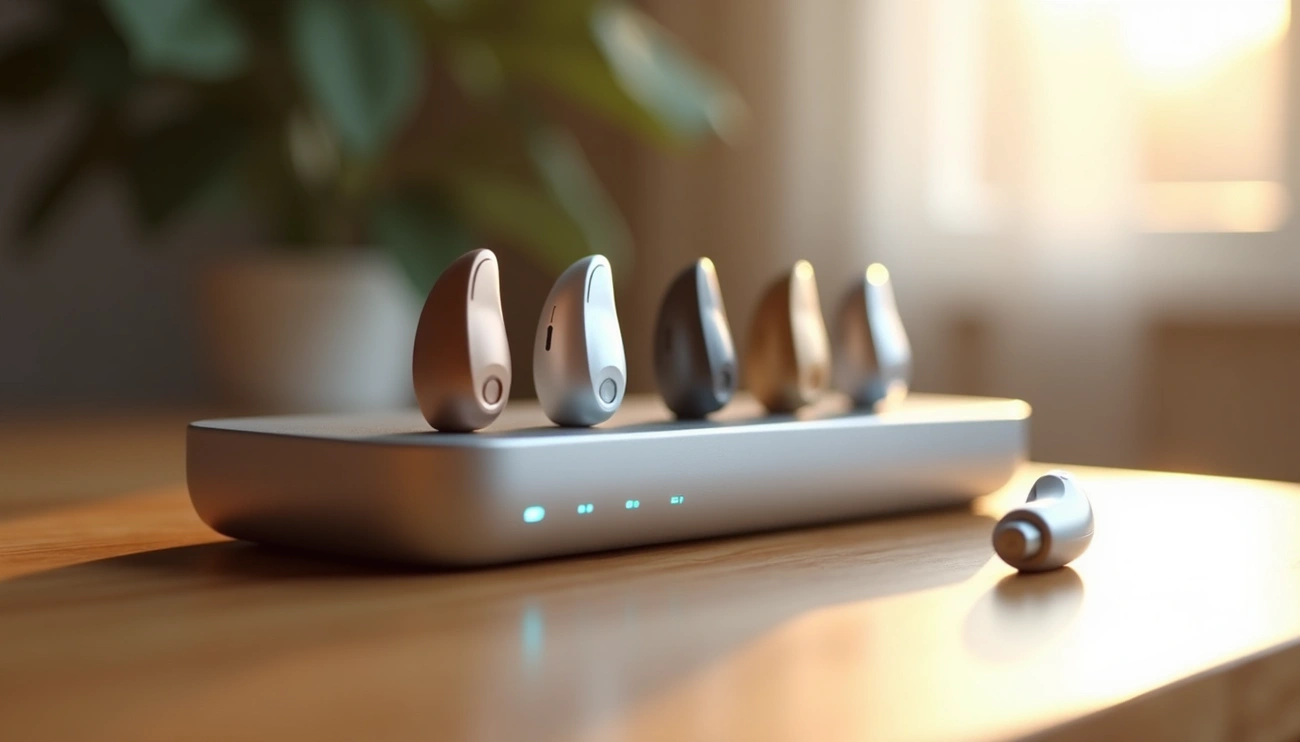
Finding the right rechargeable hearing aids can significantly improve your daily life and communication needs. After testing more than 50 hearing aids, we identified the top 11 options that offer the best combination of performance, battery life, and value. With over 10,000 Americans getting new hearing aids every day and that number continuing to grow, rechargeable models have become increasingly popular for good reason.
Many people delay addressing their hearing loss for an average of 10 years. During this time, untreated hearing loss can increase risks of falls, dementia, depression, and heart problems. Research shows that “untreated hearing loss significantly increases the odds of being emotionally lonely” and experiencing social isolation. These health impacts make selecting appropriate hearing technology an important decision.
Currently, about 80% of all hearing aids sold in the U.S. feature rechargeable batteries, making it easier to find options that fit your needs and budget. Costs vary considerably among rechargeable models, but they all eliminate the ongoing expense and hassle of replacing disposable batteries. Modern rechargeable bluetooth hearing aids connect seamlessly with smartphones and other devices, while user-friendly models designed for seniors offer simplified controls and setup.
Today’s advanced models provide impressive battery performance. Some devices last up to 51 hours on a single charge and include fast-charging capabilities with portable power banks. For example, Jabra Enhance models deliver up to 24 hours of battery life, while certain high-end options can provide up to 61 hours of listening time.
This guide examines the 11 best rechargeable hearing aids available in 2025, with detailed comparisons to help you identify the right option for your specific hearing needs and lifestyle.
Jabra Enhance Select 500
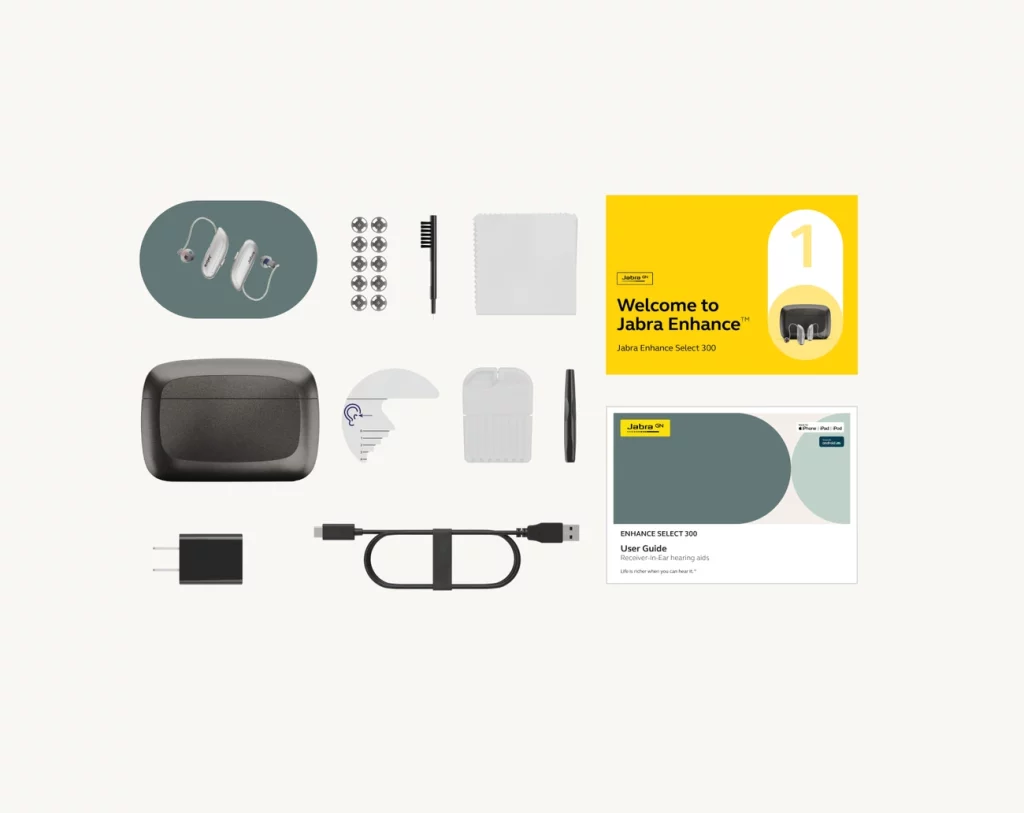
Jabra Enhance Select 500 offers advanced hearing technology in an extremely compact design. This model stands out for users who want powerful features without sacrificing discretion.
Jabra Enhance Select 500 key features
The device features Jabra’s SoundScape™ technology, which combines three key capabilities: built-in noise cancelation, enhanced spatial awareness, and advanced acoustics powered by sophisticated algorithms. The “micro” design makes it their smallest and lightest hearing aid, remaining nearly invisible when worn.
You can make hands-free calls on both iOS and Android devices using the TapControl feature-simply double-tap your ear or the hearing aid to answer calls. Music enthusiasts will appreciate the dedicated Music Mode that enhances the quality of live performances.
Jabra Enhance Select 500 battery life
Battery performance delivers reliable all-day power. A full 3-hour charge provides 24 hours of operation. For quick power boosts, 1 hour of charging gives you 12 hours of use, while a 10-minute charge provides 2 hours of operation. The portable charging case stores three complete charges, allowing extended use without access to power outlets.
Jabra Enhance Select 500 pricing
The Select 500 costs $1,995 for the premium package or $1,795 for the standard version. This pricing offers considerable savings compared to traditional audiologist-dispensed hearing aids that typically range from $5,000+. Monthly financing starts at $55 with 0% APR options available.
Jabra Enhance Select 500 pros and cons
Pros:
- Smallest, most discreet RIE design
- Excellent noise cancelation in complex environments
- Bluetooth connectivity for calls and media
- IP68 rating for dust and water resistance
- TapControl for answering calls hands-free
Cons:
- Higher price point compared to other OTC options
- Premium features require additional $200 for personalization
- Limited Auracast compatibility (currently Android only)
- Media streaming audio quality could be improved
Jabra Enhance Select 500 best for
This hearing aid works well for people with mild to moderate hearing loss who prefer a discreet appearance with advanced capabilities. It performs particularly well in challenging listening environments like busy restaurants or group conversations with multiple speakers. The device suits tech-comfortable users who value smartphone connectivity and those who need extended battery life for active schedules. Its weather-resistant construction and portable charging make it suitable for active lifestyles.
Starkey Edge AI
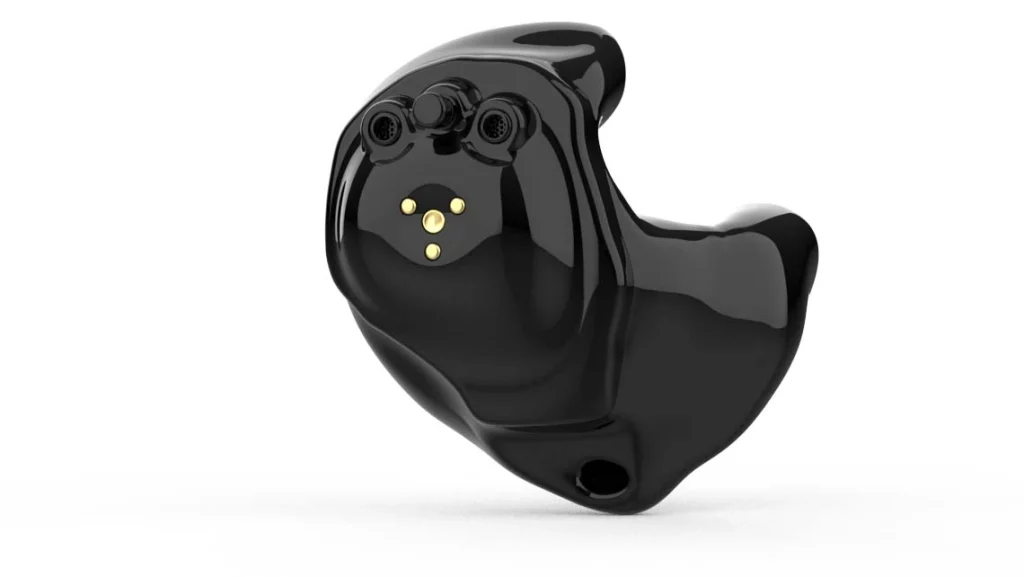
Starkey’s Edge AI brings artificial intelligence processing that mimics the brain’s auditory cortex to hearing aid technology. This model delivers exceptional speech clarity in challenging sound environments through advanced neural processing capabilities.
Starkey Edge AI key features
The G2 Neuro Processor forms the core of Edge AI, featuring a fully integrated neural processing unit that classifies soundscapes, enhances speech, and reduces noise in real time. The device provides 30% more accurate speech identification in noisy environments compared to previous models. Using Deep Neural Network architecture, Edge AI analyzes your environment 60 times per second, continuously adapting settings for optimal hearing.
The device offers complete waterproof protection with an IP68 rating, making it suitable for active lifestyles and various weather conditions. Edge AI also includes Bluetooth Low Energy Audio streaming protocol, which enables easier device pairing, faster connections, and Auracast readiness for future public venue broadcasts.
Starkey Edge AI battery life
Edge AI provides exceptional battery performance with up to 51 hours of continuous use on a single charge, including streaming functionality. This represents a 20% improvement over typical industry standards. The smaller mRIC model delivers 41 hours of use, or 33 hours when actively streaming. This extended battery life allows you to go about your daily activities without frequent charging concerns.
Starkey Edge AI pricing
Pricing varies based on technology level and warranty coverage. Some discount providers offer these hearing aids for $400 to $800 per pair, though standard retail prices are higher. Full retail pricing ranges from $1,890 to $2,530 for a single device, or $3,615 to $4,895 for a pair, depending on the specific model and technology level selected. All Edge AI models include a 3-year manufacturer warranty.
Starkey Edge AI pros and cons
Pros:
- Exceptional 51-hour battery life with streaming capability
- Advanced G2 processor with 100x more DNN processing than previous models
- 30% more accurate speech identification in noisy environments
- Waterproof, sweatproof construction
- Apple Watch compatibility
- Fall detection and balance assessment features
Cons:
- Higher price point compared to some competitors
- Requires proper fitting and programming for optimal performance
- Some features may be too complex for non-tech-savvy users
What’s Great About Starkey Edge AI
The Edge AI excels for individuals seeking premium hearing technology with health monitoring capabilities. Active users benefit from its waterproof durability and extensive battery life for all-day use. Those who struggle in complex listening environments will find significant improvement through its advanced noise reduction and speech processing capabilities. The intuitive My Starkey app allows for easy adjustments and health monitoring, making it suitable for both first-time users and technology-comfortable individuals. The device offers future-ready technology with Auracast compatibility and comprehensive connectivity options.
Phonak Audéo Infinio Sphere
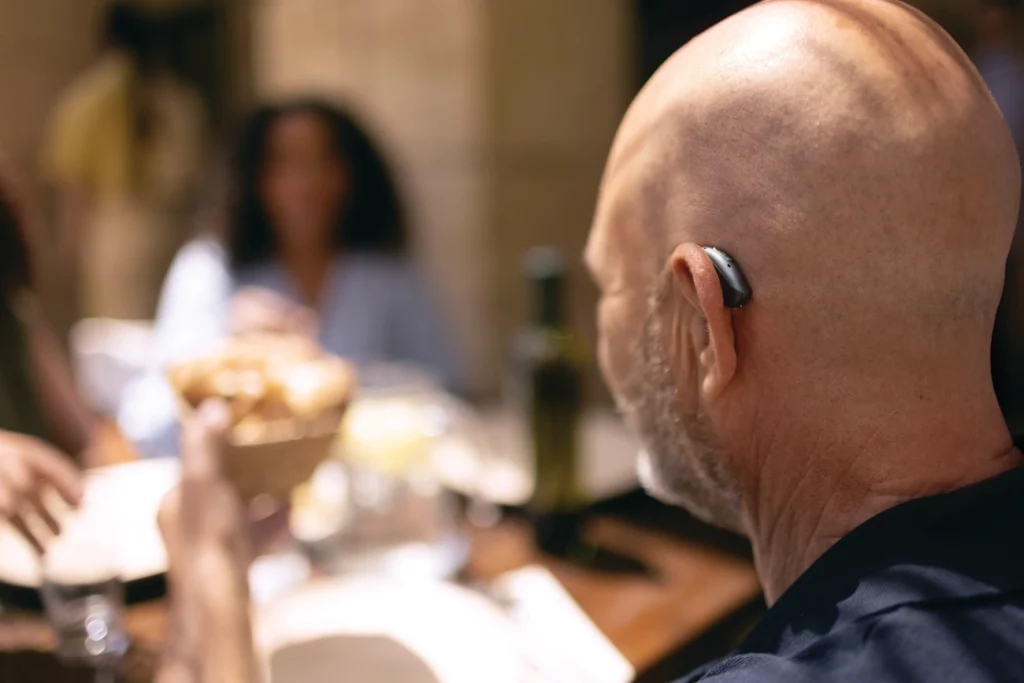
Phonak’s Audéo Infinio Sphere addresses one of the most common hearing challenges: understanding speech in noisy environments. This model uses advanced AI processing to help you follow conversations even in crowded restaurants or busy social gatherings.
Phonak Infinio Sphere key features
The device’s most notable innovation is its dual-chip architecture that combines the ERA chip for standard processing with the DEEPSONIC chip specifically for real-time AI operations. This system processes sound using a deep neural network trained on 22 million sound samples through 4.5 million neural connections, performing 7.7 billion operations per second.
What does this mean for your daily listening? The Spheric Speech Clarity feature provides up to 10 dB signal-to-noise ratio improvement, which can make speech up to three times easier to understand in challenging environments. AutoSense OS 6.0 automatically recognizes your surroundings and categorizes them into seven different acoustic environments, from quiet situations to music settings.
Clinical studies demonstrate measurable benefits: listening effort decreases by 45% in quiet environments, while fatigue drops by 21%. The device includes universal Bluetooth connectivity for hands-free calling and is Auracast-ready for future public venue audio systems.
Phonak Infinio Sphere battery life
A full charge provides 18 hours of standard use. However, the intensive AI-powered Spheric Speech in Loud Noise program can reduce battery life to approximately 7 hours when used continuously. Real-world testing shows this typically isn’t a concern since most users activate Spheric Speech mode only 1-7% of their daily wear time.
The ChargerGO RIC Sphere case fully charges your devices in 3 hours and holds up to 3 additional full charges for portable power.
Phonak Infinio Sphere pricing
Costs depend on technology level and your provider. The premium Audéo I90-Sphere runs approximately $2,535 for a single device or $4,905 per pair. The I70-Sphere offers a more accessible option at $2,045 single or $3,925 per pair. Some providers list prices from $1,500 to $3,500 per device based on the selected technology level.
Phonak Infinio Sphere pros and cons
Pros:
- DEEPSONIC AI chip delivers superior noise reduction
- Significant speech clarity improvements in difficult environments
- Universal Bluetooth connectivity with Auracast compatibility
- Waterproof construction for durability
- Hands-free calling capabilities
Cons:
- Larger size compared to some competitors
- Cannot be used with CROS systems for single-sided hearing loss
- Battery life decreases with intensive AI feature use
- No disposable battery option
- Premium pricing for top-tier models
Phonak Infinio Sphere best for
This device works well for people who frequently find themselves in noisy social situations where clear speech understanding is essential. You might benefit from this model if you often attend restaurants, family gatherings, or community events where background noise makes conversations difficult.
Those with moderate to severe hearing loss will appreciate its powerful processing capabilities. Tech-comfortable users who value smartphone integration and want future-ready connectivity features will find this model particularly useful.
Oticon Intent miniRITE R
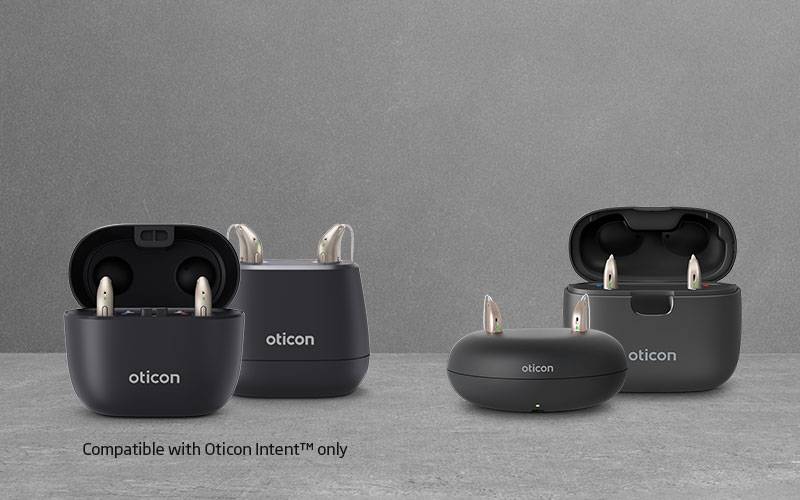
The Oticon Intent miniRITE R brings innovative sensor technology to rechargeable hearing aids. Launched in 2024, this compact device uses intelligent environmental detection to automatically adjust sound processing based on your specific listening needs and activities.
Oticon Intent key features
The Intent’s most notable feature is its 4D user-intent sensors that monitor head movements, body activity, conversation patterns, and acoustic environments to understand your listening intentions. This sensor technology enables the device to focus on sounds you want to hear, improving speech comprehension by up to 15%.
The device runs on Oticon’s new Sirius chip paired with an upgraded Deep Neural Network (DNN 2.0). This combination delivers up to 12dB noise suppression and provides 35% more access to speech cues compared to earlier Oticon models. The MoreSound Intelligence 3.0 system reduces background noise while preserving speech clarity.
For connectivity, the Intent includes Bluetooth LE Audio, Auracast readiness, and works with iOS devices (iPhone 11 or newer) and Android smartphones.
Oticon Intent battery life
You can expect 20 hours of usage from a full 2-hour charge, which represents an improvement over the 3-hour charging requirement of previous models. Quick-charge options include 8 hours of use from 30 minutes of charging, or 4 hours from a 15-minute charge. The compact charger also functions as a carrying case and uses direct-contact magnets to hold the devices securely.
Oticon Intent pricing
Four technology levels are available with different pricing: Intent 1 (premium) costs $4,898 per pair, Intent 2 at $3,898, Intent 3 at $3,298, and Intent 4 at $2,898. You can choose the level that matches your hearing needs and budget. All models come with a 4-year manufacturer warranty.
Oticon Intent pros and cons
Pros:
- Strong high-frequency amplification
- Bluetooth LE Audio and future Auracast compatibility
- Quick charging with practical charger design
- 4D sensor technology for automatic adjustments
Cons:
- No disposable battery options available
- Single-button design instead of previous rocker switch
- Limited streamed audio customization
- Contact charging system
Oticon Intent best for
This hearing aid works well for people who want automatic sound adjustments without manual programming. If you struggle with background noise, the advanced noise suppression can make conversations clearer. The tap control feature allows you to answer calls by double-tapping your ear, which appeals to users who prefer hands-free operation. The compact design and fast charging make it practical for people with active schedules.
Zepp Clarity Pixie
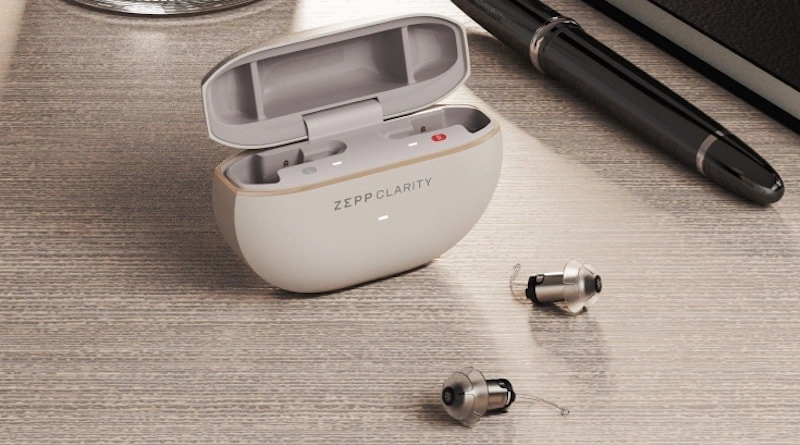
The Zepp Clarity Pixie offers a nearly invisible hearing solution for those seeking maximum discretion. At just 1.1 grams per device, these tiny in-canal hearing aids provide hearing enhancement while remaining virtually undetectable when worn.
Zepp Clarity Pixie key features
The Pixie uses durable titanium alloy construction with an in-ear design that sits comfortably within the ear canal. Its “Clarity Boost” technology focuses on clear voice comprehension while reducing ambient noise, with multiple scenario modes that adjust automatically to different listening environments. Medical-grade silicone domes provide a secure yet comfortable fit for extended wear. The device includes an IPX7 waterproof rating for moisture protection. You can customize your hearing experience through the Zepp App, which works with both Android and iOS devices and allows personalized hearing settings.
Zepp Clarity Pixie battery life
A complete charge provides up to 17 hours of continuous use. The charging case extends this with an additional 11 days of power through its built-in power bank. Both wireless and USB-C charging options are available, with approximately 2.5 hours needed to fully charge both the hearing aids and case. For quick power needs, a 10-minute charge delivers up to 4 hours of operation.
Zepp Clarity Pixie pricing
Originally priced at $1,999.00, the Zepp Clarity Pixie is currently available for $999.00. This pricing makes it competitive compared to similar models like the Eargo 7, which costs well above $2,000.
Zepp Clarity Pixie pros and cons
Pros:
- Nearly invisible in-ear design
- Lightweight titanium construction (1.1g per device)
- Personalized hearing assessment through app
- Comfortable silicone ear tips
- 17-hour battery life with extended power from charging case
- Tap control functionality
Cons:
- No Bluetooth streaming capability
- No physical buttons (requires app or tap controls)
- May be difficult to handle due to small size
- Not appropriate for severe hearing loss
Zepp Clarity Pixie best for
These hearing aids work well for people seeking a virtually invisible solution for mild to moderate hearing loss. If you prioritize discretion while maintaining good speech clarity, these devices may meet your needs. The app-based hearing assessment makes them suitable for tech-comfortable individuals who prefer self-fitting options rather than audiologist visits.
ReSound Vivia microRIE
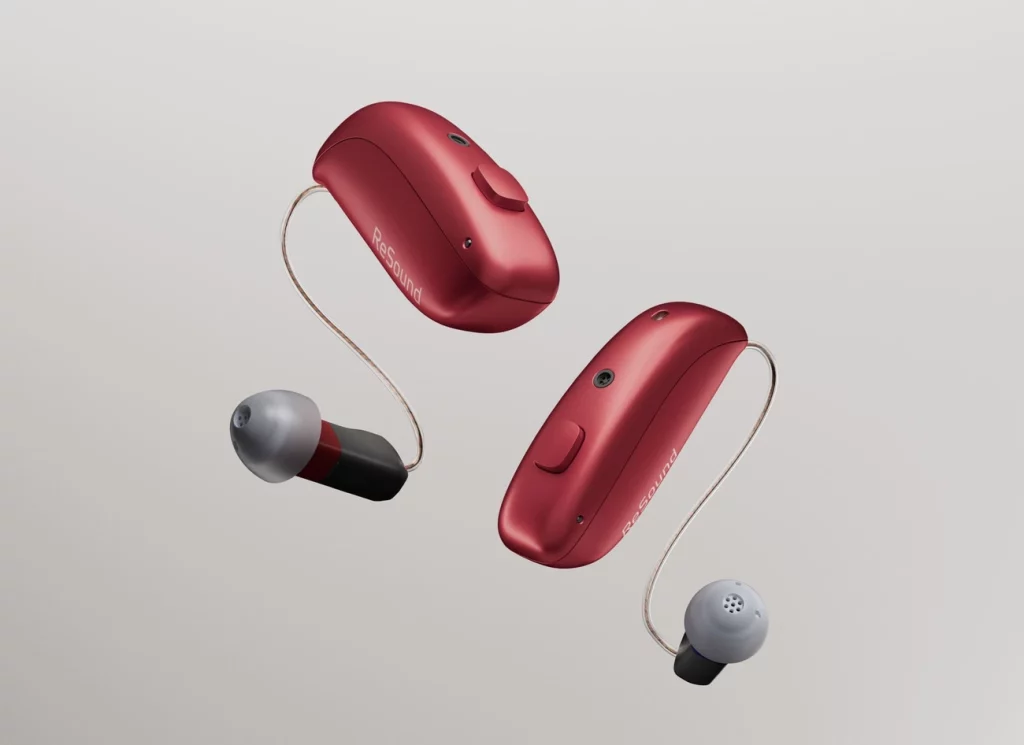
ReSound’s Vivia microRIE represents an impressive achievement in hearing aid miniaturization, combining advanced AI processing with the world’s smallest form factor for AI-powered devices. This compact receiver-in-ear model delivers sophisticated neural network processing capabilities for challenging listening environments.
ReSound Vivia key features
The Vivia’s core technology centers on its Deep Neural Network (DNN) system, trained using 13.5 million spoken sentences across multiple languages. This sophisticated processing system completes 4.9 trillion operations daily to enhance speech clarity while reducing background noise. The Intelligent Focus feature automatically prioritizes sounds based on your gaze direction, creating more natural conversations in noisy settings.
Connectivity includes Bluetooth LE Audio 5.2 with Auracast capability, allowing connection to public audio broadcasts in theaters, airports, and other venues. Despite housing advanced technology, the microRIE maintains remarkable compactness while providing IP68-rated protection against water and dust exposure.
ReSound Vivia battery life
Battery performance delivers up to 30 hours of operation on a single charge, or approximately 20 hours when using Intelligent Focus and streaming features. Quick charging provides 2.7 hours of operation from just a 10-minute charge. Multiple charger options are available, including desktop, standard, or premium versions to match different lifestyle needs.
ReSound Vivia pricing
Three technology levels are available: Vivia 9 (premium) at $4,325 per pair, Vivia 7 at $3,685 per pair, and Vivia 5 at $3,375 per pair for rechargeable models. Non-rechargeable versions cost slightly less, with the Vivia 5 starting at $3,075 per pair. All ReSound Vivia models include a three-year manufacturer warranty.
ReSound Vivia pros and cons
Pros:
- World’s smallest AI-powered hearing aid design
- Extended battery life with quick charging option
- Advanced DNN technology for speech clarity
- Auracast capability for future audio accessibility
- IP68 waterproof and dustproof rating
Cons:
- DNN feature only available in top-tier Level 9 models
- Limited speech-in-noise performance compared to competitors
- Higher price point than some alternatives
- Unreliable remote programming capability
ReSound Vivia best for
This device works well for users who need an extremely compact yet powerful rechargeable hearing aid. Active individuals will benefit from its durability and long battery life. The Auracast readiness makes it suitable for tech-savvy users seeking future-proof connectivity options. The Vivia accommodates most hearing loss ranges, from mild to severe-to-profound.
Signia Pure Charge&Go IX
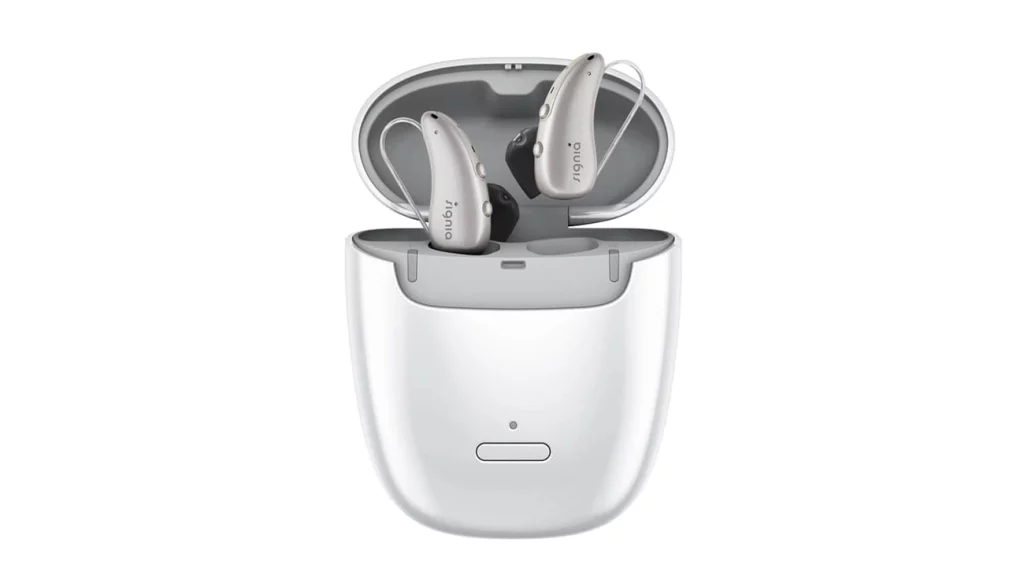
Signia’s Pure Charge&Go IX offers exceptional battery performance and conversation enhancement technology for users seeking reliable daily hearing assistance. This receiver-in-canal (RIC) device provides robust performance with extended battery life that reduces charging frequency.
Signia IX key features
The Pure Charge&Go IX includes RealTime Conversation Enhancement that tracks and enhances voices of up to three people speaking within a 2-meter radius. This technology delivers 22% better speech understanding in noisy group conversations compared to leading competitors. The device features smart buttons that distinguish between short and long presses for easy adjustments without requiring a smartphone.
Additionally, Own Voice Processing 2.0 (OVP 2.0) teaches the hearing aids to recognize your voice, reducing the uncomfortable echo effect many users experience. The BCT model offers Bluetooth Classic connectivity with universal device compatibility, alongside other connection options including MFi, LE Audio, and ASHA.
Signia IX battery life
The Pure Charge&Go BCT IX provides 36 hours of battery runtime on a single charge, including 5 hours of streaming. Without streaming, battery life extends to 39 hours. A quick 30-minute charge provides 6 hours of use. The portable charging case delivers 3 full charges without needing a power outlet.
Signia IX pricing
Pricing varies by technology level. Costs range from approximately $3,099 to $4,295 per pair depending on the model. The three main technology levels are 7IX (premium), 5IX (mid-range), and 3IX (essential).
Signia IX pros and cons
Pros:
- Longest battery life among Bluetooth Classic hearing aids
- Small, discrete design
- Three convenient charging options
- Universal device compatibility
- Effective tinnitus management tools
Cons:
- Professional fitting required
- Premium pricing
- Telecoil model slightly larger
- Not available for direct consumer purchase
Signia IX best for
These hearing aids work well for active individuals who require extended battery life. People struggling with group conversations in noisy settings benefit significantly from its conversation enhancement capabilities. The device suits those who attend venues with loop systems (T model) or require universal device connectivity across multiple platforms.
Widex MOMENT Sheer
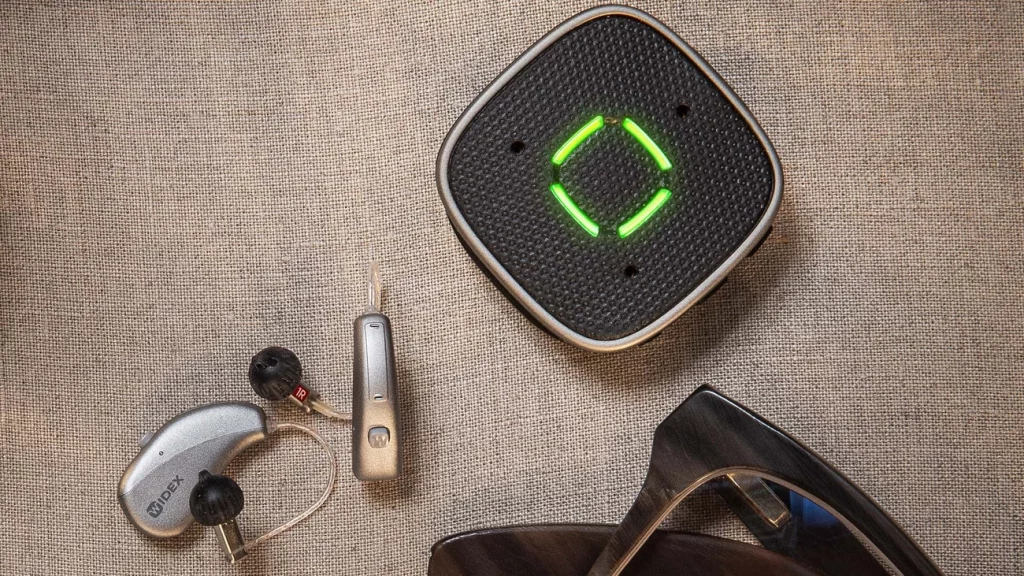
The Widex MOMENT Sheer offers a distinct approach to rechargeable hearing aids by prioritizing natural sound reproduction. This receiver-in-canal device focuses on creating an audio experience that closely resembles normal hearing through advanced processing technology.
Widex MOMENT Sheer key features
The MOMENT Sheer’s primary innovation is PureSound™ with ZeroDelay™ technology, which processes sound 8-20 times faster than standard hearing aids, eliminating the artificial “tinny” sound quality common in other devices. The device includes MySound 2.0, an enhanced feature that combines artificial intelligence with your personal preferences to offer over 10 times more sound customization options than the original version.
Additional features include SoundRelax, a built-in library of fractal sounds designed to promote relaxation and improve focus. The redesigned exterior incorporates distinctive microphone openings and premium materials that combine aesthetic appeal with functional performance.
Widex MOMENT Sheer battery life
The device provides 29 hours of use on a full charge without streaming, or 16 hours when including 8 hours of streaming. The standard charger, redesigned with premium materials, delivers a full day’s power in just 4 hours. For quick charging needs, a 30-minute charge provides 4 hours of usage.
Widex MOMENT Sheer pricing
Pricing varies by technology level: The premium Widex MOMENT Sheer 440 costs £1,895 per device or £3,695 per pair. Other options include the 330 at £1,695/£3,295, the 220 at £1,395/£2,595, and the 110 at £1,095/£2,095. In the United States, pricing ranges from approximately $1,940 to $4,500 per pair depending on the provider.
Widex MOMENT Sheer pros and cons
Pros:
- Natural sound reproduction with industry-leading processing speed
- Extensive AI personalization options
- IP68 water and dust resistance
- Tinnitus management through SoundRelax feature
- Full connectivity with iOS and Android devices
Cons:
- Premium pricing compared to competitors
- Complex personalization may challenge non-tech-savvy users
- Some users report app connectivity issues
- Remote adjustments require additional accessories
Widex MOMENT Sheer best for
The MOMENT Sheer works well for individuals who prioritize natural sound quality over other features. Those seeking extensive personalization options will benefit from its AI-powered customization capabilities. The SoundRelax feature makes it particularly suitable for users managing tinnitus who need sound therapy options. Given its waterproof design and premium construction, it serves active users who need both durability and high-quality performance.
MDHearing Volt Max
MDHearing provides an accessible entry point into rechargeable hearing aids with the Volt Max. This budget-friendly device delivers essential features at a fraction of the cost of premium models.
MDHearing Volt Max key features
The Volt Max offers FDA-registered technology with personalized sound customization through its companion mobile app. The device includes advanced noise reduction, feedback cancelation, and Bluetooth compatibility for seamless connectivity. At 50% smaller than the original model, it provides four unique program settings designed by audiologists for different environments. The device uses adaptive technology that automatically adjusts to surrounding environments.
MDHearing Volt Max battery life
A full charge provides 15 hours of use, requiring approximately 90 minutes to complete. The portable charging case offers up to 3 full charges on the go, ensuring extended use without access to power outlets.
MDHearing Volt Max pricing
Priced between $497-$797 per pair depending on the package. The standard pair costs $597, while adding VIP Care increases the price to $797. Financing options start around $53.88 monthly with various APR options.
MDHearing Volt Max pros and cons
Pros:
- Substantial cost savings compared to $5,000+ clinical options
- 45-day risk-free trial with 100% money-back guarantee
- Free lifetime support from licensed professionals
Cons:
- Shorter battery life than many competitors
- Limited streaming capabilities
- Charging system may challenge vision-impaired users
MDHearing Volt Max best for
This device works well for budget-conscious consumers seeking affordable rechargeable hearing aids. Those with mild to moderate hearing loss who prefer self-fitting options without clinic visits will find it suitable. The device particularly benefits active individuals requiring rechargeable convenience with reasonable performance.
Eargo 7
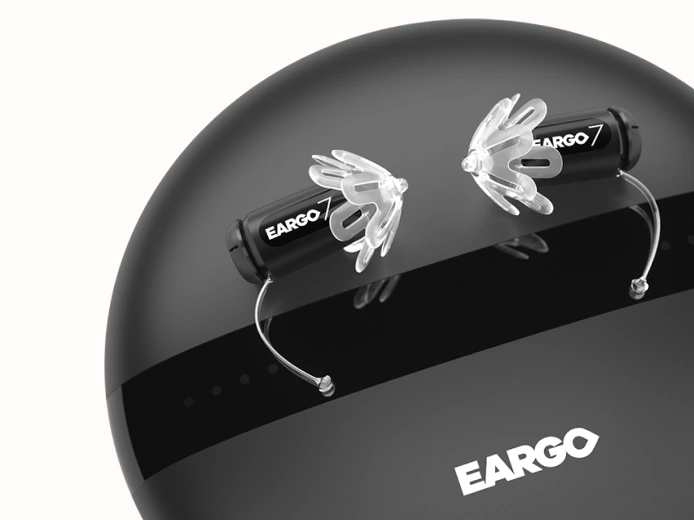
The Eargo 7 offers a nearly invisible hearing solution with its completely-in-canal design. This compact device sits discreetly inside your ear while delivering effective hearing enhancement for daily activities.
Eargo 7 key features
SoundAdjust+ technology automatically optimizes sound quality based on your current environment. The device uses a patented “Float in Canal” design with medical-grade silicone Petals that provide comfortable wear without the plugged feeling common with in-ear devices. You can customize settings through the Sound Match test available in the Eargo app. The hearing aids feature an IPX7 water resistance rating, which means they can withstand submersion in up to one meter of water for 30 minutes.
Eargo 7 battery life
Each full charge provides 16 hours of use. The portable charging case includes an internal battery that offers two additional complete charges. Recharging depleted hearing aids takes approximately 4 hours.
Eargo 7 pricing
The Eargo 7 costs $2,699, though Eargo frequently provides promotional discounts. Financing plans start around $88 monthly for qualified applicants.
Eargo 7 pros and cons
Pros:
- Nearly invisible when worn
- Excellent customer support
- Portable charging case with backup power
- Water-resistant construction for active use
Cons:
- No Bluetooth streaming capability
- Higher price than many over-the-counter alternatives
- May not fit all ear canal shapes
- Double-tap program change function can be unreliable
Eargo 7 best for
The Eargo 7 works well for individuals seeking a discreet hearing solution for mild to moderate hearing loss. Active users will appreciate its water resistance and portable charging capabilities for on-the-go convenience.
Audicus Omni 2
Audicus positions the Omni 2 as their flagship over-the-counter rechargeable hearing aid, earning recognition from Forbes Health and CNET as one of the top devices of 2024-2025. This receiver-in-the-ear (RITE) model delivers strong performance in challenging listening environments.
Audicus Omni 2 key features
The primary innovation is Smart Speech Finder™ technology that automatically detects noisy environments and enhances speech clarity without requiring manual adjustments. The device includes AutoOptimize with six built-in sound settings that automatically adapt to different environments. The Made For All universal Bluetooth feature enables audio streaming across all devices regardless of brand. You can create and save personalized sound programs for complete control over your listening experience.
Audicus Omni 2 battery life
The rechargeable version provides 16 hours of use per charge. A disposable battery option is also available, with size 312 batteries lasting approximately one week.
Audicus Omni 2 pricing
The Omni 2 costs $949 per ear ($1,898 per pair). Audicus offers flexible payment options including leasing at $119 monthly. Financing plans feature 0% interest if paid within 24 months, with payments starting at $62 monthly.
Audicus Omni 2 pros and cons
Pros:
- Excellent sound performance (SoundScore 4.2-4.4/5)
- Remote adjustments via smartphone
- Hands-free calling capability
- Lifetime audiology support
Cons:
- Higher price among OTC options
- Limited to phone-based professional support
- Battery life shorter than some competitors
- May not suit severe hearing loss without proper fitting
Audicus Omni 2 best for
This device works well for individuals with mild to moderate hearing loss seeking premium sound quality in difficult environments. It suits tech-comfortable users who value remote adjustments without requiring clinic visits.
Comparison Table
When selecting the right rechargeable hearing aid, comparing key specifications can help you identify which models meet your specific needs and budget. The following table summarizes essential details for each device we’ve reviewed:
| Model | Battery Life | Price Range (USD) | Key Features | Water Resistance | Bluetooth |
|---|---|---|---|---|---|
| Jabra Enhance Select 500 | 24 hours | $1,795 – $1,995 | SoundScape technology, noise cancelation, TapControl | IP68 | Yes |
| Starkey Edge AI | 51 hours | $3,615 – $4,895 | G2 Neuro Processor, fall detection, balance assessment | IP68 | Yes |
| Phonak Audeo Infinio Sphere | 18 hours | $3,925 – $4,905 | Dual-chip architecture, Spheric Speech Clarity | Waterproof | Yes |
| Oticon Intent miniRITE R | 20 hours | $2,898 – $4,898 | 4D user-intent sensors, DNN 2.0 | Not mentioned | Yes |
| Zepp Clarity Pixie | 17 hours | $999 | Clarity Boost, titanium construction | IPX7 | No |
| ReSound Vivia microRIE | 30 hours | $3,375 – $4,325 | Deep Neural Network, Intelligent Focus | IP68 | Yes |
| Signia Pure Charge&Go IX | 36 hours | $3,099 – $4,295 | RealTime Conversation Enhancement, OVP 2.0 | Not mentioned | Yes |
| Widex MOMENT Sheer | 29 hours | $2,095 – $3,695 | PureSound with ZeroDelay, MySound 2.0 | IP68 | Yes |
| MDHearing Volt Max | 15 hours | $497 – $797 | Adaptive technology, noise reduction | Not mentioned | Yes |
| Eargo 7 | 16 hours | $2,699 | SoundAdjust+, Float in Canal design | IPX7 | No |
| Audicus Omni 2 | 16 hours | $1,898 | Smart Speech Finder, AutoOptimize | Not mentioned | Yes |
Battery life ranges from 15 hours for budget models to 51 hours for premium options, while pricing spans from under $500 to nearly $5,000 per pair. Most models include Bluetooth connectivity and water resistance ratings, though specific features and technology levels vary considerably across price points.
Comparison Summary
| Model | Battery Life | Price Range (USD) | Key Features | Water Resistance | Bluetooth |
|---|---|---|---|---|---|
| Jabra Enhance Select 500 | 24 hours | $1,795 – $1,995 | SoundScape technology, noise cancelation, TapControl | IP68 | Yes |
| Starkey Edge AI | 51 hours | $3,615 – $4,895 | G2 Neuro Processor, fall detection, balance assessment | IP68 | Yes |
| Phonak Audeo Infinio Sphere | 18 hours | $3,925 – $4,905 | Dual-chip architecture, Spheric Speech Clarity | Waterproof | Yes |
| Oticon Intent miniRITE R | 20 hours | $2,898 – $4,898 | 4D user-intent sensors, DNN 2.0 | Not mentioned | Yes |
| Zepp Clarity Pixie | 17 hours | $999 | Clarity Boost, titanium construction | IPX7 | No |
| ReSound Vivia microRIE | 30 hours | $3,375 – $4,325 | Deep Neural Network, Intelligent Focus | IP68 | Yes |
| Signia Pure Charge&Go IX | 36 hours | $3,099 – $4,295 | RealTime Conversation Enhancement, OVP 2.0 | Not mentioned | Yes |
| Widex MOMENT Sheer | 29 hours | $2,095 – $3,695 | PureSound with ZeroDelay, MySound 2.0 | IP68 | Yes |
| MDHearing Volt Max | 15 hours | $497 – $797 | Adaptive technology, noise reduction | Not mentioned | Yes |
| Eargo 7 | 16 hours | $2,699 | SoundAdjust+, Float in Canal design | IPX7 | No |
| Audicus Omni 2 | 16 hours | $1,898 | Smart Speech Finder, AutoOptimize | Not mentioned | Yes |
Bottom Line
Selecting the right rechargeable hearing aid depends on balancing your specific hearing needs, daily activities, and budget considerations. Each of these 11 models excels in different areas, from the Starkey Edge AI’s exceptional 51-hour battery life to the Zepp Clarity Pixie’s nearly invisible design at an accessible price point.
Your priorities will guide your choice. If you need maximum battery endurance for long days or travel, consider models like Signia Pure Charge&Go IX or ReSound Vivia microRIE. For discretion, completely-in-canal options like Eargo 7 or Zepp Clarity Pixie offer near-invisible solutions. Budget-conscious users can find capable options starting with MDHearing Volt Max, while those seeking premium AI processing might prefer Phonak’s dual-chip technology or Oticon’s 4D sensors.
Most current models include Bluetooth connectivity, though this feature varies in quality and compatibility across brands. Water resistance ratings also differ, with IP68 models offering better protection for active lifestyles than IPX7-rated devices.
Consider your typical listening environments when making your decision. If you frequently attend social gatherings or dine in restaurants, models with advanced speech processing like Phonak Audeo Infinio Sphere or Signia Pure Charge&Go IX may provide clearer conversations. For quieter settings, basic models with good battery life might suffice.
Professional consultation remains valuable, even with over-the-counter options available. A hearing specialist can assess your specific hearing loss pattern and help match you with appropriate technology levels and features.
The right rechargeable hearing aid can significantly improve your communication abilities and overall quality of life. Take time to evaluate your needs, try different options when possible, and choose a device that fits both your hearing requirements and daily routine.
Key Takeaways
Modern rechargeable hearing aids offer game-changing convenience and performance, with 80% of all U.S. hearing aids now being rechargeable models.
• Battery life varies dramatically: Top performers like Starkey Edge AI deliver 51 hours per charge, while budget options provide 15-17 hours of reliable daily use.
• AI technology revolutionizes speech clarity: Advanced processors like Phonak’s dual-chip architecture and Oticon’s 4D sensors enhance speech understanding by up to 30% in noisy environments.
• Price ranges accommodate all budgets: Affordable options start at $497 (MDHearing Volt Max) while premium models reach $4,905, offering features from basic amplification to sophisticated noise cancelation.
• Invisible designs meet connectivity needs: Nearly invisible models like Eargo 7 and Zepp Clarity Pixie provide discretion, while Bluetooth-enabled devices seamlessly integrate with smartphones for calls and streaming.
• Professional consultation remains crucial: Despite OTC availability, consulting hearing professionals ensures optimal device selection and fitting for your specific hearing loss pattern and lifestyle needs.
The right rechargeable hearing aid can dramatically improve your quality of life by reconnecting you with conversations and sounds that matter most, while eliminating the hassle of constantly replacing disposable batteries.
FAQs
Q1. What are the top-rated rechargeable hearing aids in 2025? Based on extensive testing and user feedback, some of the highest-rated rechargeable hearing aids in 2025 include the Jabra Enhance Select 500, Starkey Edge AI, and Phonak Audéo Infinio Sphere. These models offer advanced features like AI-powered sound processing, long battery life, and excellent speech clarity in noisy environments.
Q2. How long do rechargeable hearing aid batteries typically last? Battery life varies significantly among different models. On average, most rechargeable hearing aids provide 15-30 hours of use per charge. However, some high-performance models like the Starkey Edge AI can last up to 51 hours on a single charge, while others may offer around 15-20 hours of use.
Q3. Are rechargeable hearing aids more expensive than traditional ones? While rechargeable hearing aids often have a higher upfront cost, they can be more cost-effective in the long run. Prices range from around $500 for budget-friendly options to over $4,000 for premium models. The elimination of ongoing battery replacement costs and the convenience factor often justify the initial investment for many users.
Q4. What are the latest technological advancements in hearing aids? Recent innovations include AI-powered sound processing, deep neural network technology for improved speech recognition, and advanced noise cancelation. Some models also feature health monitoring capabilities, fall detection, and seamless connectivity with smartphones and other devices for audio streaming and remote adjustments.
Q5. Can rechargeable hearing aids be used while charging? Most rechargeable hearing aids cannot be used while charging. However, many models offer quick-charge capabilities, providing several hours of use from just 30 minutes of charging. Some devices also come with portable charging cases that can provide multiple full charges on the go, ensuring you’re never without power for long periods.