
Senior health and independence face significant challenges as our population ages. Seven in 10 adults over age 70 now use smartphones, yet real obstacles persist in daily living. One in four older adults falls annually, putting them at risk for serious injury, and about 10% of hospitalizations stem from medication non-adherence. These concerns contribute to approximately 7 million seniors facing limitations leaving their homes.
Today’s technology offers practical responses to these specific challenges. Smart home technology for seniors, wearable health monitoring devices, and assistive technology provide tools that address fall prevention, medication management, and health monitoring needs. This guide explores how various technologies can support senior health and independence, from devices that detect health issues early to systems that help with daily activities at home.
Key Technologies Supporting Senior Health and Independence
Multiple types of technology now address specific challenges that older adults face in maintaining health and autonomy at home.
Smart Home Technology for Seniors
Voice-activated assistants like Amazon Alexa and Google Nest serve as control centers for daily activities. These devices allow older adults to manage lighting, temperature, and appliances through voice commands, reducing the need for physical movement around the home.
Smart home features that enhance safety and convenience include:
- Smart locks that eliminate concerns about lost keys and allow caregivers to provide access to home health aides remotely
- Motion-sensor lighting that automatically illuminates hallways and bathrooms at night, reducing fall risks in dark areas
- Smart smoke alarms that send alerts to family members when triggered—important since 59% of home fire deaths result from absent or faulty smoke alarms
- Water leak sensors that detect problems immediately
- Security cameras that let seniors see and communicate with visitors without opening doors
Wearable Health Monitoring Devices
Continuous health monitoring through wearable devices provides real-time data on vital signs including heart rate, blood pressure, and oxygen saturation. The UnaliWear Kanega Medical Alert Watch connects wearers directly to live operators through button press or voice command, with built-in fall detection for emergencies when the wearer cannot call for help.
The Apple Watch SE 3 offers smartphone capabilities alongside automatic fall and crash detection that alerts emergency contacts or 911 when needed. GPS tracking devices help locate individuals with memory concerns during confusion, performing most effectively in outdoor environments where satellite signals remain strong.
Assistive Technology for Daily Living
Medication management becomes more reliable with devices like the Hero Smart Pill Dispenser, which stores up to 90 days’ worth of 10 different medications and dispenses correct doses at scheduled times with both audible and visual alerts.
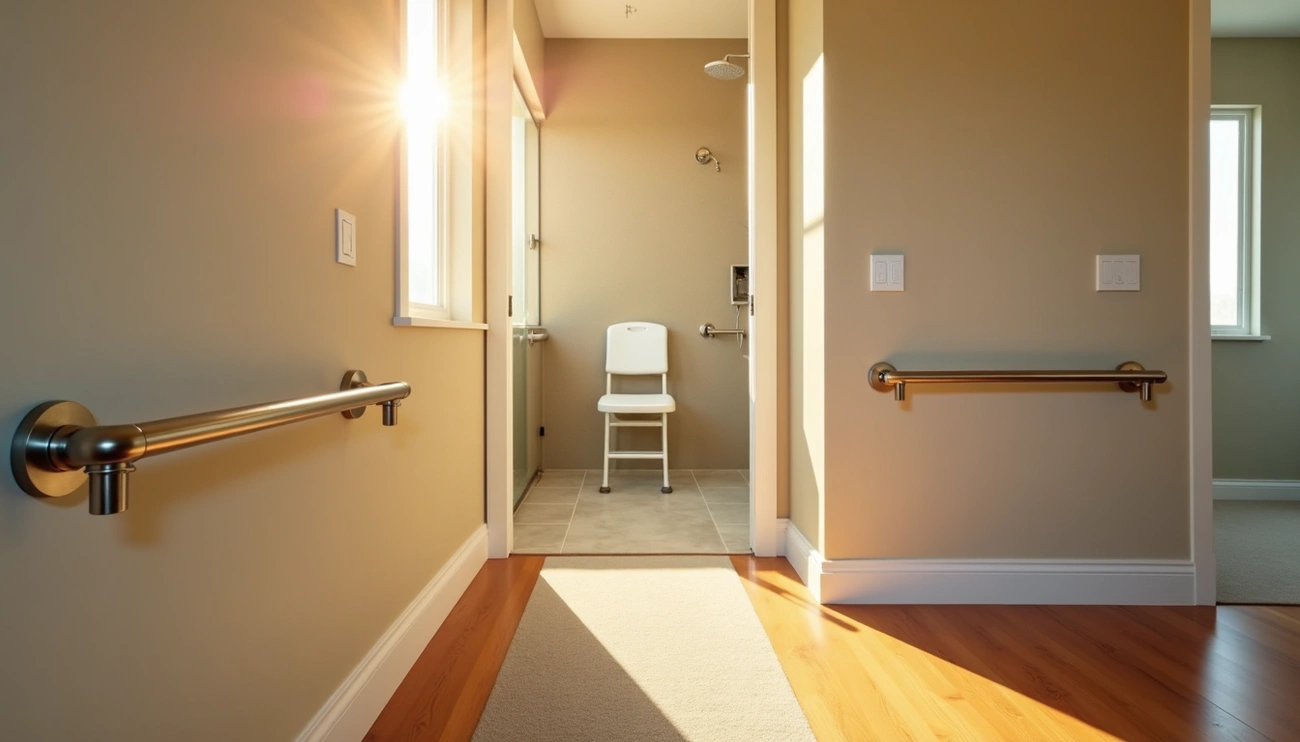
Smart home sensors monitor daily patterns through tracking motion, door usage, and appliance activity to identify unusual changes. These newer technologies work alongside traditional assistive devices such as walkers, grab bars, and raised toilet seats to create comprehensive safety environments.
Robotic Caregivers and AI Companions
AI virtual assistants handle routine tasks including medication reminders, appointment scheduling, and provide conversational interaction. Countries like Japan and South Korea use robots to assist with various caregiving responsibilities. Social companions like ElliQ focus on interaction, while automated cleaning robots and pill dispensers manage daily household tasks.
Telehealth and Remote Care Solutions
Remote healthcare access has grown significantly, with telehealth usage reaching 43.3% of adults 65 and older in 2021. Among seniors who used telemedicine services, 47% received care through phone visits, and they rated their telemedicine experience a six on a seven-point satisfaction scale.
Large-scale systems demonstrate the potential of remote care. Saudi Arabia’s SEHA Virtual Hospital connects 130 healthcare facilities with capacity to serve 400,000 patients annually. Remote patient monitoring allows secure transmission of health data to healthcare providers for timely medical intervention.
How Health Technology for Seniors Improves Medical Outcomes
Medical outcomes show measurable improvement when health technology for seniors becomes part of regular care routines. The data demonstrates concrete benefits across detection, medication adherence, and hospitalization rates.
Early Detection of Health Issues
Wearable devices detect atrial fibrillation with 84% accuracy compared to medical-grade ECG monitoring. AI-powered wearables identify subtle warning signs of frailty, which affects 15% of US residents 65 and older. These devices shift care from reactive to preventative approaches by catching health deterioration before falls or hospitalizations occur.
Continuous data collection reveals patterns that single doctor visits miss. Clinicians can intervene when trends indicate declining health rather than waiting for emergencies to develop.
Better Medication Management and Adherence
About 50% of older adults struggle with medication adherence. Poor medication adherence costs the healthcare system between $100 billion and $290 billion annually and causes approximately 125,000 deaths in the U.S. each year.
Digital health solutions address this problem directly. Among 128 studies examining medication adherence interventions, 97 (75.8%) reported improved adherence. Multimodal reminders through text, phone, and email considerably improve compliance. Apps with nursing coach support enhanced adherence, outcomes, and patient satisfaction.
Reduced Hospital Readmissions
Remote monitoring programs demonstrate significant readmission reductions. A randomized trial of elderly patients admitted with infections or heart failure found 30-day hospital readmission rates of 7% for Hospital at Home patients compared to 23% for hospital inpatients.
For COPD patients specifically, readmission rates dropped from 87% for hospital inpatients to 42% for those in home-based monitoring programs six months after discharge.
Continuous Vital Signs Monitoring
Remote patient monitoring achieves adherence rates of 75% for blood pressure measurements and 82% for weight tracking over six-month periods. Continuous monitoring detects subtle changes in breathing rate or oxygen saturation that often precede visible illness, supporting faster medical intervention.
This real-time visibility into health trends helps identify risk patterns that traditional periodic check-ups overlook.
Ways Technology Supports Independent Living for Older Adults
Independence at home requires addressing specific daily challenges that older adults commonly face. Technology provides practical solutions to these concerns.
Fall Detection and Prevention
Falls remain the leading cause of injury for adults 65 and older, with more than one in four experiencing falls annually and over 38,000 deaths recorded in 2021 alone. Wearable sensors detect falls automatically and connect users to live operators when needed. Stability scales like ZIBRIO measure balance capabilities through tiny stance adjustments; studies found these scales reduce fall risk by up to 74%. Motion-triggered lighting illuminates pathways when movement is detected, reducing nighttime tripping hazards.
Safety Monitoring at Home
Sensor systems track daily routines without cameras, sending alerts when patterns change. The Nomo Smart Care system operates at $19.99 monthly, monitoring medications, meals, and sleep routines while detecting unusual inactivity. Temperature and humidity sensors identify environmental risks like AC failures during heat waves.
Managing Daily Tasks and Routines
Digital tools make daily tasks more manageable for many seniors. Among older adults surveyed, 67.7% regularly use digital methods for paying bills and GPS navigation. Those using digital methods report greater satisfaction and fewer daily errors compared to traditional approaches.
Staying Connected with Family and Friends
Social connectivity helps combat isolation, a significant concern for many seniors. Approximately 94% of people over 65 own cellphones, with 76% using smartphones. Video calling platforms like FaceTime, Zoom, and Google Meet enable face-to-face interaction when physical visits aren’t possible.
Maintaining Mental and Physical Activity
Technology-assisted physical activity programs provide measurable benefits. These interventions improve body composition, aerobic fitness, and cognitive abilities while reducing fall risk. Studies show 91% of participants rated their experience positively. Adherence reached 80% in intervention groups using tailored programs.
Addressing Challenges in Elder Care Technology Adoption
Technology adoption faces real obstacles despite demonstrated benefits. Recognizing these barriers allows families and seniors to address them more effectively.
Making Technology Easier to Use
Vision challenges affect many older adults, with over 60% of Americans 65 and older struggling with close vision and another 15% facing distance vision issues. Most older adults believe technology isn’t designed with their age in mind, a perspective held by 66% of those 80 and older.
Design solutions can address these concerns. Simplified navigation, enlarged text and touch targets, voice interaction, and error-tolerant interfaces accommodate common limitations. When older users participate in technology development, both usability and satisfaction improve. However, cognitive overload, limited digital literacy, and accessibility barriers remain ongoing challenges.
Managing Costs and Insurance Coverage
Financing technology can present hurdles for seniors on fixed incomes. Long-term care insurance may cover assistive technology when policies include equipment benefits. Traditional policies require annual premiums for life, though some offer shorter payment periods.
Hybrid life and long-term care policies provide an alternative approach, allowing policyholders to access death benefits for care expenses. Researching coverage options before purchasing technology helps avoid unexpected out-of-pocket costs.
Protecting Privacy and Data Security
Privacy concerns represent the primary barrier to adoption, with data security worries affecting roughly half of hesitant older adults. These devices collect sensitive health and personal information, creating vulnerabilities that particularly concern older users.
You can address privacy concerns by researching company data policies, understanding what information devices collect, and learning how to adjust privacy settings before setup.
Balancing Technology with Human Connection
Technology should support rather than replace human caregiving relationships. Health technology works best when it enhances family and professional care connections. The goal remains maintaining dignity and personal interaction while using tools that address practical safety and health needs.
Consider how each device or system fits into your overall care plan, ensuring technology complements rather than substitutes for meaningful human contact.
Conclusion
Senior technology provides practical responses to daily health and safety challenges. You can see measurable benefits from fall prevention devices, medication management systems, and early detection tools when chosen thoughtfully.
Finding the right technology starts with identifying your specific needs. Consider starting with one or two devices that address your most pressing concerns—perhaps fall detection wearables, smart pill dispensers, or video calling systems to stay connected with family. The most effective approach matches technology choices to individual abilities and preferences.
Remember that these tools work best when they enhance human care rather than replace it. Technology should support the relationships and connections that remain central to quality care and daily life.
FAQs
Q1. How does wearable technology help seniors detect health problems early? Wearable devices continuously monitor vital signs like heart rate, blood pressure, and oxygen levels, detecting issues such as atrial fibrillation with 84% accuracy. These devices identify subtle warning signs and health trends that single measurements might miss, allowing for preventative care and timely medical intervention before emergencies occur.
Q2. What percentage of seniors actually use smartphones and digital technology? Approximately 94% of people over 65 own cellphones, with 76% using smartphones. Among adults over 70, seven in 10 now use smartphones regularly. About 67.7% of older adults use digital methods for tasks like paying bills and GPS navigation, showing widespread adoption of technology among seniors.
Q3. Can technology really reduce hospital readmissions for elderly patients? Yes, remote monitoring programs significantly reduce hospital readmissions. Studies show that elderly patients using Hospital at Home programs had only 7% readmission rates within 30 days compared to 23% for traditional hospital inpatients. For COPD patients, readmission rates dropped from 87% to 42% with home-based monitoring programs.
Q4. What are the main barriers preventing seniors from adopting new technology? The primary challenges include usability issues (over 60% of seniors 65+ struggle with close vision), privacy and data security concerns (affecting roughly half of hesitant older adults), cost and insurance coverage limitations, and the belief that technology isn’t designed with their age group in mind—a view held by 66% of those 80 and older.
Q5. How does medication management technology improve adherence among seniors? Digital medication management solutions, such as smart pill dispensers and reminder apps, address the fact that about 50% of older adults struggle with medication adherence. Studies show that 75.8% of digital health interventions improved adherence rates, with multimodal reminders through text, phone, and email proving particularly effective in helping seniors take medications correctly and on time.