
Assisted Living for Veterans: Your Step-by-Step Guide to Securing VA Support
Finding quality assisted living for veterans can be challenging when you’re facing the realities of aging and care costs. According to the U.S. Census Bureau, nearly half of all veterans are aged 65 or older. You or your veteran loved one deserve appropriate care options, but the financial burden can feel overwhelming. The median national cost of assisted…

Finding assisted living for veterans is challenging, particularly when aging and care costs come into play. Nearly half of all veterans are 65 or older, according to the U.S. Census Bureau. You're looking for suitable care options, but the financial burden can feel overwhelming.
Assisted living costs a median of $5,190 per month nationally, which strains many veteran families. VA benefits can help ease this burden. Veterans with no dependents can receive up to $1,413 per month through a basic VA pension, or up to $2,358 per month with Aid and Attendance benefits.
Many veterans don't realize they might qualify for financial assistance. Eligibility depends on countable income—annual earnings, retirement payments, and Social Security. A veteran's net worth must be below $150,538 to qualify.
This guide walks you through your options for VA support. You'll learn what the VA pays for assisted living, who qualifies, and what steps to take to apply. These benefits can make assisted living affordable for many veterans.
- Understanding VA Benefits for Assisted Living
- What does the VA cover and not cover?
- How VA benefits can help with assisted living costs
- Common misconceptions about VA support
- VA pension and Aid and Attendance explained
- What is the VA Pension?
- Who qualifies for VA Pension?
- What is Aid and Attendance?
- Aid and Attendance is part of the VA's pension program. It provides financial assistance to eligible veterans and surviving spouses who need regular help with daily activities. Eligibility depends on specific service, medical, and financial criteria.
- How much will the VA pay for assisted living?
- Housebound benefits and other financial support
- What are Housebound benefits?
- Eligibility for Housebound allowance
- You cannot receive both Aid and Attendance and Housebound benefits at the same time. Both programs provide extra financial help, but they serve different purposes and have different eligibility rules. You can qualify for one or the other based on your health needs.
- Support for spouses and survivors
- VA survivors pension
- Dependency and Indemnity Compensation (DIC)
- Eligibility for surviving spouses
- Applying for VA benefits can feel complicated. This guide breaks down eligibility, required documents, and application steps so you can get the financial help you need for assisted living.
- Step-by-step application process
- Required documents and forms
- Where to apply: online, mail, or in-person
- Tips to avoid delays or denials
- Bottom line
- Key takeaways
- FAQs
Understanding VA benefits for assisted living
You'll need to know what the Department of Veterans Affairs (VA) covers and what it doesn't when you're looking at assisted living options. Many veterans and families are surprised by what's included.
What does the VA cover and not cover?
The VA doesn't directly pay for room and board in assisted living communities. That often surprises families. However, VA health benefits may cover several aspects of care within these facilities.
For veterans enrolled in VA health care, covered services include:
- 24/7 nursing and medical care
- Physical therapy
- Help with activities of daily living (bathing, dressing, medication management)
- Comfort care and pain management
- Caregiver respite
Rent, utilities, food, and other living expenses don't qualify. The VA requires that assisted living facilities pass inspection and meet specific standards before accepting VA benefits.
How VA benefits can help with assisted living costs
VA benefits can substantially reduce your assisted living costs, despite these limitations. The VA offers several programs that help in 2025:
The VA Pension provides monthly support for room and board and care services. A single veteran can receive up to $1,413 per month.
Aid and Attendance provides additional money for veterans who already qualify for the basic pension and need help with daily activities. This can increase total benefits to $2,358 per month for a single veteran in 2025.
Married veterans with a dependent child might receive up to $2,795 monthly, while two veterans married to each other could get as much as $3,740. You can use these funds for any assisted living costs.
Only about 5% of eligible veterans actually use these benefits—a significant missed opportunity.
Common misconceptions about VA support
Several myths keep veterans from claiming benefits they've earned. One is the idea that VA benefits cover all assisted living expenses. The support helps, but usually covers only part of the total cost.
Another myth is that only combat veterans qualify. The VA looks at your entire military service record, not just combat experience.
Many also think the application is too complicated. It does require paperwork, but many assisted living communities have staff who can help you through it.
There's no blanket income or asset limit that disqualifies you from all benefits. Income and assets may reduce the amount you receive, but they don't automatically shut you out.
Veterans often qualify for multiple benefits at once, which can make assisted living much more affordable.
VA pension and Aid and Attendance explained
The Veterans Pension program provides financial support for veterans with care costs. To understand these benefits, you need to look at several parts.
What is the VA Pension?
The VA Pension is a tax-free monthly benefit for low-income wartime veterans. Unlike a regular retirement pension, it's supplemental income for veterans facing financial hardship. You can use these funds for anything, including assisted living expenses like room and board or personal care.
Who qualifies for VA Pension?
VA Pension eligibility depends on service and personal requirements. You must have received a discharge other than dishonorable. Service requirements vary by when you began active duty:
- Active duty before September 8, 1980: at least 90 days with one day during wartime
- Active duty after September 7, 1980: generally 24 months of service or full active duty period with one day during wartime
Additionally, you must meet at least one of these conditions:
- Be 65 or older
- Have a permanent and total disability
- Reside in a nursing home due to disability
- Receive Social Security Disability Insurance or Supplemental Security Income
Your yearly family income and net worth must fall below Congressional limits. As of 2025, the net worth limit is $159,240.
What is Aid and Attendance?
Aid and Attendance provides extra financial support beyond the basic VA Pension. This benefit helps veterans who need assistance with daily living activities. If you need help with self-care tasks or have significant physical limitations, this additional allowance is especially useful for assisted living costs.
Aid and Attendance payments go on top of your monthly VA pension.
Eligibility criteria for Aid and Attendance
You must first qualify for the basic VA Pension. You also need to meet at least one of these conditions:
- Need help with daily activities like bathing, dressing, eating, or using the bathroom
- Be bedridden or spend most of the day in bed due to illness
- Reside in a nursing home because of physical or mental incapacity
- Have severe visual impairment (corrected vision of 5/200 or less in both eyes or visual field limited to 5 degrees or less)
You cannot receive both Aid and Attendance and Housebound benefits at the same time.
The VA pension and Aid and Attendance benefit can significantly help with assisted living costs. The Department of Veterans Affairs doesn't pay assisted living facilities directly. Instead, the benefit goes to the eligible veteran or surviving spouse, who then pays for care. Maximum monthly benefits depend on your service history, marital status, and care level.
For 2024, maximum monthly benefits are:
Veteran: Up to $2,300
Married veteran (with spouse): Up to $2,727
Surviving spouse: Up to $1,478
Veteran with a sick spouse: Up to $1,824
These amounts change yearly. You also need to meet specific income, asset, and medical requirements.
The VA doesn't directly pay for assisted living room and board, but you can use pension and Aid and Attendance benefits to help cover these costs.
Benefit amounts depend on your income, assets, and dependents. For 2025, maximum monthly VA Pension rates are:
- Single veteran: $1,413 per month
- Veteran with spouse or dependent: $1,851 per month
- Two veterans married to each other: $1,851 per month
With Aid and Attendance, maximum monthly benefits increase to:
- Single veteran: $2,358 per month
- Veteran with spouse or dependent child: $2,795 per month
- Two married veterans: $3,649 per month
The VA calculates your payment as the difference between your countable income and the Maximum Annual Pension Rate (MAPR). Unreimbursed medical costs may reduce your countable income, potentially increasing your benefit.
Housebound benefits and other financial support
Veterans seeking assisted living support may qualify for another benefit. The VA offers a Housebound allowance for veterans with significant mobility challenges.
What are Housebound benefits?
Housebound benefits provide additional financial support to veterans who are substantially confined to their homes due to permanent disability. This benefit is part of the Special Monthly Pension program and helps veterans who can't easily leave their residence except for essential activities.
For eligible veterans, the Housebound allowance can significantly increase monthly pension amounts. A single veteran with no dependents could receive up to $4,054.12 per month through Special Monthly Compensation Level S. Most veterans don't automatically receive pension benefits without a special rating for personal care expenses, so a Housebound rating can be particularly valuable.
Eligibility for Housebound allowance
To qualify for Housebound benefits, you must first be eligible for the basic VA pension. You also need to meet at least one of these criteria:
- Have a single permanent disability rated at 100% disabling AND be substantially confined to your home or immediate premises
- Have a 100% disability rating WITH an additional disability rated at 60% or more
"Substantially confined" means restricted to your residence due to disability. It doesn't mean you can never leave—you may still go out occasionally with assistance for appointments, shopping, or church.
Your limitations must result from service-connected disabilities, and the condition must be permanent.
You cannot receive both Aid and Attendance and Housebound benefits at the same time. Even if you meet requirements for both, you must choose one.
The Housebound benefit is relatively rare since many veterans who would qualify for it often meet Aid and Attendance criteria instead. Aid and Attendance typically pays more, so veterans usually choose Aid and Attendance when eligible for both.
Though less common, Housebound benefits do offer financial assistance to veterans who don't meet the specific care requirements for Aid and Attendance.
Though less common, Housebound benefits offer financial assistance to veterans who don't meet the specific care requirements for Aid and Attendance.
Support for spouses and survivors
Losing a veteran spouse brings grief and financial concerns about the future. The VA offers programs to help surviving family members manage assisted living costs.
VA survivors pension
The VA Survivors Pension provides tax-free monthly payments to unremarried surviving spouses of wartime veterans with limited income and assets. This pension can be essential when considering senior care options after losing your veteran spouse.
A surviving spouse with no dependents may receive up to $948 per month through this program in 2025. If you're caring for a dependent child, the amount increases to $1,241 monthly. You can use these funds for any expenses, including assisted living costs.
The deceased veteran must have received an other-than-dishonorable discharge and served during a recognized wartime period.
Dependency and Indemnity Compensation (DIC)
DIC provides a tax-free monthly benefit to qualifying surviving spouses, children, or parents of veterans who died from service-related causes. This benefit often provides more substantial support than the Survivors Pension.
The current DIC base rate for surviving spouses is $1,653.07 per month. This may increase based on your situation. DIC has no income or asset limits for eligibility.
You cannot receive both DIC and the Survivors Pension at the same time. If you qualify for both, the VA pays whichever benefit is higher.
Eligibility for surviving spouses
To qualify for these benefits, you must meet specific requirements. For most programs:
- Have lived with the veteran continuously until their death (with some exceptions)
- Not have remarried after the veteran's death (with certain exceptions)
For DIC specifically, you must also meet one of these conditions:
- Have married the veteran within 15 years after their discharge, and the veteran developed their fatal condition while in service
- Have been married to the veteran for at least one year
- Have had a child with the veteran
You might still qualify for DIC even if you've remarried, provided you remarried after age 57 (if remarried on or after December 16, 2003) or after age 55 (if remarried on or after January 5, 2021).
These benefits can make assisted living significantly more affordable for veterans' spouses.
How to apply for VA benefits
Applying for VA benefits takes preparation, but the process is manageable. Many veterans find it less complicated than they expected, especially with proper guidance.
Step-by-step application process
Start by confirming your eligibility for VA health care, since many long-term care services require enrollment. Here's what to do:
- Determine your benefit type: Decide whether to apply for Basic Pension, Aid and Attendance, or another program based on your needs.
- Collect required documents: Gather all necessary paperwork before starting.
- Complete application forms: Fill out all forms completely and accurately.
- Submit your application: Choose your preferred submission method.
- Follow up promptly: Respond quickly to any VA requests for additional information.
Required documents and forms
You'll need these items for your application:
- Social Security Number or VA File Number
- DD-214 Military Discharge papers (original copies)
- Current financial information including bank statements and investment records
- Medical documentation showing your care needs
For Aid and Attendance, you must complete VA Form 21-2680 (Examination for Housebound Status or Permanent Need for Regular Aid and Attendance). If you reside in a nursing home, also submit VA Form 21-0779.
Where to apply: online, mail, or in-person
You have several options for submitting your application:
- Online: Use eBenefits or VA.gov for electronic submission
- By phone: Call 877-222-8387 for application assistance
- By mail: Send completed forms to your regional Pension Management Center
- In person: Visit your nearest VA regional office for help
Tips to avoid delays or denials
File a Fully Developed Claim by submitting all evidence upfront. This can speed up processing significantly. Make sure all forms are completely filled out and properly signed before you submit them.
Working with an accredited representative, such as a Veterans Service Officer, helps you navigate the process. Keep copies of everything you submit. You can track your application status through VA.gov.
Bottom line
Many veterans don't know about the financial support available through VA benefits for assisted living. These programs can provide up to $2,358 monthly for a single veteran through the VA Pension and Aid and Attendance benefit. While the VA doesn't directly pay for room and board, you can use these funds for any assisted living costs.
Surviving spouses also have options through the Survivors Pension or Dependency and Indemnity Compensation programs, providing up to $1,653 monthly. The application process requires documentation and patience, but many assisted living communities have staff who can help.
Only about 5% of eligible veterans actually use these benefits. If you have wartime service, a discharge other than dishonorable, and income within the limits, you likely qualify for financial assistance that makes quality assisted living affordable.
Work with a Veterans Service Officer to submit a complete application and avoid common delays. These benefits help cover care costs, making quality assisted living accessible after your service.
Key takeaways
Veterans have significant financial support options for assisted living costs, yet only 5% of eligible veterans use these benefits.
• Veterans can receive up to $2,358 monthly through VA Pension plus Aid and Attendance benefits to help cover assisted living.
• The VA doesn't pay room and board directly, but pension funds can be used for any assisted living costs.
• Eligibility requires wartime service, discharge other than dishonorable, and meeting income and asset limits ($159,240 net worth maximum in 2025).
• Surviving spouses qualify for up to $1,653 monthly through DIC or $948 through Survivors Pension.
• Apply through VA.gov, by phone at 877-222-8387, or with a Veterans Service Officer to avoid delays and maximize your benefits.
The application process can feel daunting, but working with accredited representatives and submitting complete documentation upfront significantly improves approval chances. These benefits make assisted living more affordable, helping veterans get the quality care they deserve.
FAQs
Q1. What financial assistance does the VA provide for assisted living?
The VA offers several benefits that can help offset assisted living costs. While the VA doesn't directly pay for room and board, eligible veterans can receive up to $2,358 per month through the VA Pension and Aid and Attendance benefit, which can be used for assisted living expenses.
Q2. Who qualifies for VA assisted living benefits?
Veterans who served during wartime, received a discharge other than dishonorable, and meet certain income and asset limits may qualify. As of 2025, the net worth limit is $159,240. Veterans must also be 65 or older, have a permanent disability, or require assistance with daily activities.
Q3. Can surviving spouses receive VA benefits for assisted living?
Yes, surviving spouses may be eligible through the Survivors Pension or Dependency and Indemnity Compensation (DIC) programs. The Survivors Pension provides up to $948 per month, while DIC offers a base rate of $1,653.07 monthly.
Q4. How do I apply for VA assisted living benefits?
You can apply online through VA.gov, by phone at 877-222-8387, by mail, or in person at a VA regional office. Gather military discharge papers, financial information, and medical documentation. Consider working with a Veterans Service Officer to help navigate the process.
Q5. Does Medicare cover assisted living for veterans?
Medicare does not cover assisted living expenses. However, veterans may be eligible for VA benefits that can help pay for assisted living costs. Explore all available VA options, as these benefits can make assisted living more affordable.
Frequently asked questions
Get matched
Looking for senior care for someone you love?
Tell us what you're considering. We'll share independent matches and pricing directly with you. No phone calls until you ask for one.
- Takes about two minutes to complete.
- Pricing details emailed to you. No phone calls until you ask for one.
- Independent matching. We do not own the communities we list.
Loading the matching form…
Powered by SilverAssist. By submitting this form you agree to our privacy policy.
More from our editors
All articles
SNAP for Seniors: The Food Benefits Millions of Older Adults Miss
More than half of older adults who qualify for SNAP never sign up, often because they assume they earn too much. Special rules for people 60 and older, including a medical expense deduction, mean many qualify for far more than the minimum.

Best Weekend Trips and Short Getaways for Seniors
The best weekend trips for seniors are short, close to home, and built around one relaxed idea. Here are the kinds of short getaways that work well for older travelers, with real examples and how to plan one.
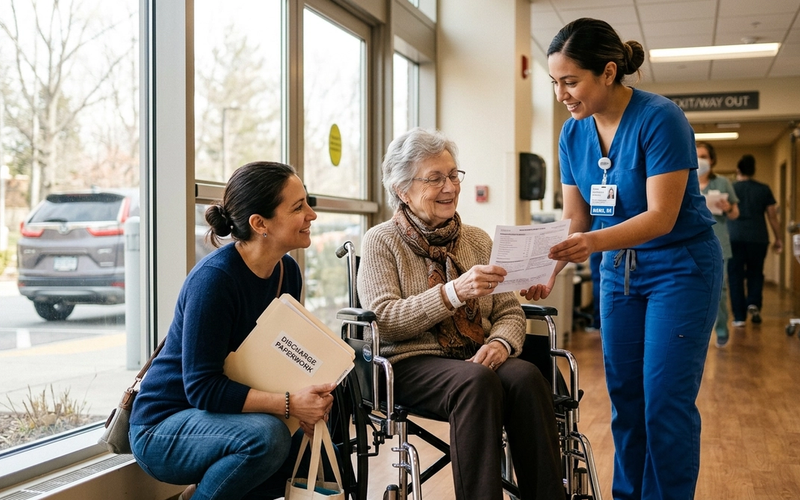
Hospital Discharge Planning for Seniors: A Family Guide
A hospital discharge for an older parent is a decision, not just a notice. Here is how discharge planning actually works, where families have leverage, and how to appeal a discharge you think is unsafe.
Explore senior living options
Comparing care for yourself or a family member? Browse communities by care type and see what each option typically costs.
- Assisted livingHelp with daily activities, costs, and how to choose a community.
- Independent livingMaintenance-free communities for active older adults.
- Home careIn-home support for seniors aging in place.
- Nursing homesSkilled nursing care and Medicare star ratings.
- Senior apartmentsAge-restricted, budget-friendly rental housing.
- Cost of senior livingCompare typical monthly prices by care type and state.