Finding ways to make homes more comfortable and safe for aging becomes increasingly important as 77% of Americans over age 50 prefer to age in place rather than move elsewhere. Home modifications for seniors address the natural changes that come with aging – reduced strength, balance challenges, and mobility limitations that can make daily tasks more difficult.
Creating an age-friendly living space focuses on five key areas: self-sufficiency, mobility, safety, security, and comfort. These modifications are specific changes designed to address mobility limitations, disabilities, and other health concerns that seniors may face. While in-home care costs 10.2% more than assisted living, many seniors find greater comfort in familiar surroundings. Thoughtful home adaptations can help older adults maintain their independence and continue living in the homes they love.
This guide explores practical modifications that make homes safer and more accessible, from bathroom and kitchen adaptations to smart technology solutions. You’ll also learn about financing options and planning strategies to make these important changes more affordable.
Key Takeaways
- Senior-friendly home modifications focus on safety, accessibility, and independence to help older adults remain in familiar surroundings.
- Essential safety features like grab bars, non-slip flooring, and lever-style handles can reduce fall risks by up to 50% with minimal investment required.
- Bathroom modifications prevent 25% of senior falls that occur in these high-risk areas. Walk-in tubs, raised toilets, and curbless showers address specific mobility challenges.
- Smart technology provides 24/7 support through voice assistants, motion-sensor lighting, and medical alert systems without requiring complex setup or navigation.
- Multiple funding options help offset modification costs. Medicare Advantage, Medicaid waivers, tax deductions, and local grants can cover expenses up to $40,000.
- Professional assessments from Certified Aging-in-Place Specialists identify priority modifications tailored to individual needs, ensuring maximum safety and effectiveness.
Essential Home Modifications for Comfort and Safety
Making homes safe and accessible doesn’t require complete renovation. Over half of all falls happen at home, making strategic modifications essential for seniors aging in place.
Grab bars and handrails
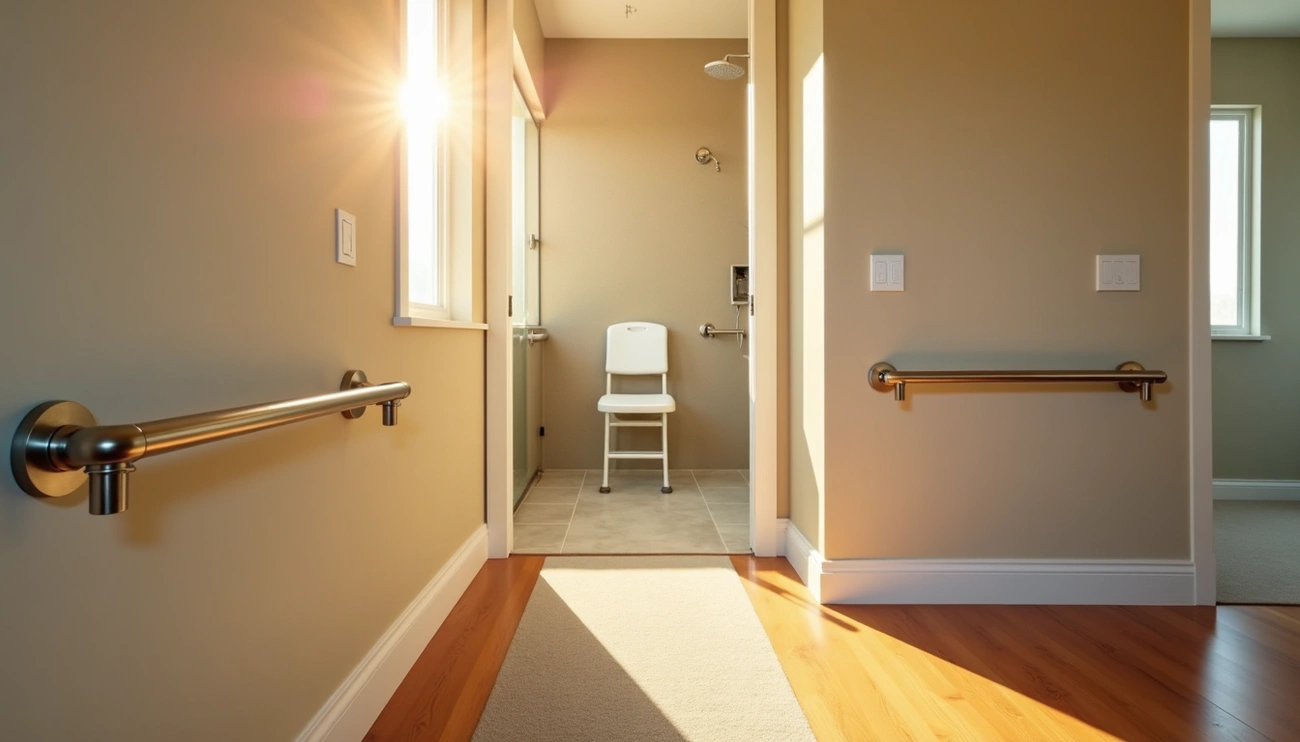
Properly placed grab bars reduce fall risks in high-hazard areas. Bathroom installations should include:
- Grab bars near showers, tubs, and toilets
- Wall stud anchoring for maximum strength
- Installation height between 33 and 36 inches from the floor
- Handrails along staircases and hallways for continuous support
Studies show seniors using these supports report better stability and independence. Handrails prove particularly helpful for those with balance challenges, providing guidance throughout the home.
Non-slip flooring and rugs
Flooring choice dramatically impacts home safety. The safest options include:
- Rubber flooring: Remains slip-resistant even when wet
- Cork flooring: Provides traction while absorbing shock to reduce injury during falls
- Vinyl and low-pile carpeting: Offer good stability for daily movement
Area rugs should be avoided entirely as they bunch up and create tripping hazards. Adding nonskid backing to existing carpets makes a substantial difference in preventing slips.
Wider doorways and step-free entries
Standard doorways typically measure 30-32 inches wide, presenting challenges for those using mobility aids. Accessibility standards recommend doorways at least 36 inches wide for smooth passage.
Doorway widening involves removing existing frames and enlarging openings, often requiring professional installation. This modification immediately improves accessibility and ensures safer movement throughout the home. Step-free entries eliminate dangerous thresholds that cause trips and falls.
Lever-style door handles and cabinet pulls
Traditional doorknobs require twisting motions that can be painful for those with arthritis or limited hand strength. Lever handles need only a simple push or pull, reducing required effort by approximately 50%.
This design aligns with accessibility standards recommending door hardware requiring no more than five pounds of operating force. Research from the National Institute on Aging shows seniors using lever handles report 30% less hand strain.
Making Bathrooms and Kitchens Senior-Friendly
Bathrooms and kitchens pose the greatest safety risks for seniors due to wet surfaces and physically demanding tasks. Falls are the leading cause of injury among older adults, with over 25% of these accidents occurring in bathrooms.
Walk-in tubs and curbless showers
Walk-in tubs eliminate the need to step over high tub walls through doors that provide easy access. These units come equipped with slip-resistant floors, built-in seating, and grab bars for fall prevention. Basic models start around $2,000, while premium versions with hydrotherapy or chromotherapy features can cost up to $10,000.
Curbless showers provide even better accessibility by removing threshold barriers entirely. These “roll-in” showers benefit many seniors, not just wheelchair users. Proper installation requires a slight floor slope of 1/4 inch per foot toward the drain and waterproofing that extends at least 2 inches up surrounding walls. Shower curtains offer an economical water barrier without restricting movement.
Raised toilets and easy-turn faucets
Standard toilets create challenges for seniors due to their low height, which strains joints during sitting and standing. Raised toilet seats add 3-3.5 inches of height, significantly reducing the effort required for these movements. The Bemis Independence Assurance model supports up to 1,000 pounds and fits both round and elongated toilets.
Traditional faucets can be difficult for seniors with arthritis or reduced hand strength. Easy-turn handles offer larger gripping surfaces and better leverage. These adaptations attach to existing faucets and dramatically reduce the effort needed for operation.
Pull-out shelves and lowered countertops
Pull-out shelving makes hard-to-reach cabinet storage accessible without kneeling or straining. Quality systems support up to 100 pounds and eliminate the need to reach deep into cabinets for items. This modification provides one of the greatest improvements for kitchen accessibility.
Standard 36-inch countertops often prove too high for wheelchair users. Optimal height ranges from 28-34 inches with at least 24 inches of clearance underneath for wheelchair access. Lowering wall cabinets by approximately 3 inches makes second shelves reachable from a seated position.
Touchless kitchen appliances
Motion-sensor faucets remove the need to grip and turn handles. Some models work with voice assistants like Alexa, allowing users to request specific water amounts at preset temperatures. Automatic shutoff features prevent flooding if faucets are accidentally left running.
Smart Technology to Support Aging in Place
Smart technology offers practical solutions for seniors who want to maintain independence at home. Currently, 34% of adults 65 and older own at least one smart home device besides a smart speaker .
Voice-activated assistants and smart lights
Voice assistants like Amazon Alexa and Google Home function as virtual companions for seniors, providing medication reminders, emergency calling capabilities, and first-aid instructions . These devices eliminate the frustration of remembering passwords or working through complex menus . Smart lights respond to voice commands or smartphone controls, allowing seniors to illuminate rooms without searching for switches in the dark .
Motion-sensor lighting for hallways and bathrooms
Motion-sensor lights automatically turn on when they detect movement, particularly helpful for nighttime trips to the bathroom . You can install these lights along hallways, in bathrooms, and on stairways, where they stay illuminated for several minutes before automatically shutting off to save energy . This technology addresses the visibility issues that contribute to many falls among older adults.
Smart thermostats for temperature control
Smart thermostats designed for seniors feature simple controls that maintain comfortable temperatures without manual adjustments. Safety settings prevent extreme temperature changes that could affect health . Remote access allows family members or caregivers to monitor and adjust settings from anywhere .
Medical alert systems and emergency buttons
Wearable devices with automatic fall detection connect seniors directly to emergency services at the press of a button. These systems provide confidence, with 95% of users reporting they feel protected at home . The devices offer 24/7 monitoring, GPS tracking, and immediate access to trained emergency responders .
How to Plan and Pay for Home Modifications
Planning home modifications requires understanding both your specific needs and available financing options. Costs can range from simple grab bars to extensive renovations, so knowing where to find assistance becomes essential for most families.
Conducting a home safety assessment
Evaluating your home’s accessibility should be your first step before making any changes. Professional assessments typically cost between $199 and $399, depending on home size and location. These evaluations identify potential hazards room by room, examining living areas, kitchens, bathrooms, bedrooms, and stairways for safety concerns. Many organizations provide free assessment checklists online that cover floors, lighting, and furniture placement. Occupational therapists often specialize in these evaluations, offering recommendations tailored to specific mobility needs.
Exploring Medicare Advantage and Medicaid waivers
Some Medicare Advantage plans now cover certain home modifications through supplemental benefits. Medicaid offers more extensive options through Home and Community Based Services (HCBS) waivers. These waivers help fund modifications such as wheelchair ramps, grab bars, and bathroom adaptations. To qualify, applicants typically need monthly income under $2,982 with assets below $2,000. The application process requires contacting your state’s Medicaid agency directly.
Using tax deductions and local grants
Many home modifications qualify as tax-deductible medical expenses if they don’t increase property value. Examples include entrance ramps, widened doorways, and bathroom modifications. The USDA Section 504 Home Repair program provides loans up to $40,000 and grants up to $10,000 for very low-income seniors. Eligible applicants must be homeowners over 62 with household income below established limits. Local programs often provide additional assistance; some municipalities offer grants up to $15,000 for seniors needing safety-related home repairs.
Hiring certified home modification services for seniors
Certified Aging-in-Place Specialists (CAPS) have specialized training in designing for seniors’ needs. These professionals understand how to implement modifications that maintain independence without sacrificing home aesthetics. Working with occupational therapists can ensure modifications address specific medical requirements. Collaborating with these specialists often results in more effective solutions than generic contractors can provide.
Conclusion
Creating a comfortable living space for seniors represents a thoughtful approach to promoting independence and quality of life. Throughout this guide, we’ve explored numerous modifications that significantly enhance safety and accessibility. Grab bars, non-slip flooring, and wider doorways serve as the foundation of a senior-friendly home, while specialized bathroom and kitchen adaptations address specific challenges in these high-risk areas.
Smart technology certainly amplifies these physical modifications. Voice-activated assistants, motion-sensor lighting, and medical alert systems work together to create an environment where seniors can maintain their autonomy without compromising safety. These technological solutions complement traditional modifications beautifully.
Financial considerations should not deter families from pursuing these valuable changes. After all, various funding options exist through Medicare Advantage plans, Medicaid waivers, tax deductions, and local grants. Professional assessments conducted by Certified Aging-in-Place Specialists can help prioritize modifications based on individual needs and budget constraints.
The decision to age in place reflects a desire for continuity, comfort, and dignity. Therefore, investing in appropriate home modifications allows seniors to remain in familiar surroundings while adapting to changing physical abilities. Additionally, these adaptations often benefit multiple generations, making homes more accessible and functional for everyone.
Aging at home becomes not just possible but enjoyable when living spaces evolve alongside changing needs. This comprehensive approach to home modification empowers seniors to maintain independence and enhances their overall well being for years to come.
FAQs
Q1. What are some essential home modifications for senior safety and comfort? Essential modifications include installing grab bars and handrails, using non-slip flooring, widening doorways, and replacing traditional doorknobs with lever-style handles. These changes can significantly reduce fall risks and improve accessibility throughout the home.
Q2. How can bathrooms be made more senior-friendly? Senior-friendly bathrooms can include walk-in tubs or curbless showers, raised toilets, and easy-turn faucets. These modifications make daily routines safer and more comfortable for older adults with mobility challenges.
Q3. What smart technology can support aging in place? Voice-activated assistants, motion-sensor lighting, smart thermostats, and medical alert systems are excellent smart technology options for seniors. These devices can enhance safety, provide reminders, and offer quick access to help in emergencies.
Q4. How can seniors finance home modifications? Financing options for home modifications include Medicare Advantage plans, Medicaid waivers, tax deductions, and local grants. Some programs, like the USDA Section 504 Home Repair program, offer loans and grants for low-income seniors to make necessary home improvements.
Q5. What professionals should be consulted for senior home modifications? It’s advisable to consult Certified Aging-in-Place Specialists (CAPS) and occupational therapists. These professionals have specialized training in designing for seniors’ needs and can provide tailored solutions that address specific medical requirements while maintaining home esthetics.