
Finding the Perfect Jewish Assisted Living Home: Real Stories & Practical Advice
The search for Jewish assisted living homes presents significant challenges for the 7.6 million Americans who identify as Jewish-about 2.4 percent of the U.S. population. These communities provide specialized services beyond standard senior care facilities, meeting unique cultural and religious needs. Jewish senior living facilities have evolved substantially since 1953, when institutions like the Dallas Home for…

About 7.6 million Americans identify as Jewish—roughly 2.4% of the U.S. population. For many, finding assisted living that honors their faith and culture can be difficult. Jewish senior living communities offer services that go beyond typical care, addressing specific religious and cultural needs.
Jewish senior living has changed dramatically since 1953, when places like the Dallas Home for Jewish Aged first opened. Modern facilities welcome residents of all faiths while offering kosher dining, on-site religious services, and transportation to synagogues. The average monthly cost is about $5,350—roughly in line with standard assisted living, though prices vary by location and amenities. Most operate as nonprofits, reinvesting revenue into resident care and facility improvements.
This guide looks at what it's like to live in Jewish assisted living. It covers how to choose a community and what makes these facilities different. If you're researching options for yourself or a family member, you'll find practical information to help you decide.
- What makes Jewish assisted living unique
- Kosher dining and dietary observance
- On-site Shabbat and holiday services
- Torah study and spiritual support
- Cultural programming and community values
- Types of Jewish senior living options
- Independent living
- Assisted living
- Memory care
- Skilled nursing and rehabilitation
- Real stories from residents and families
- Choosing a community that felt like home
- Faith-based communities often provide physical, spiritual, and emotional support through activities and gatherings that give residents a sense of purpose and belonging. This integrated approach matters: spiritual connection can improve overall quality of life. Senior living involves more than medical care alone.
- A caregiver's perspective on Jewish senior living
- Choosing a Jewish assisted living home is a significant decision. It reflects a need for care and a desire to stay connected to heritage and community. These homes offer services that address spiritual, cultural, and physical needs—kosher dining, Shabbat services, holiday celebrations, and educational programs. The best ones create environments where traditions are honored and residents feel they belong.
- Questions to ask during a tour
- When visiting a facility, look beyond the appearance. Check what amenities and care services are available. A simple checklist helps you think through your loved one's immediate needs and what might be needed down the road. This approach helps you find a community that offers quality and comfort.
- Understanding levels of care and transitions
- Including family in care decisions matters. It ensures the chosen community actually meets the senior's needs and preferences. This teamwork shows commitment and helps create a supportive environment during the move. The goal is for everyone to understand what's happening and to work together to find good care.
- Costs and financial resources to consider
- Typical monthly costs by care type
- Medicare, Medicaid, and private pay
- Jewish community financial assistance programs
Jewish communities have a long tradition of supporting elders through shared responsibility. Many organizations offer financial assistance to help seniors afford care. These programs provide support for housing, medical expenses, and daily living costs. They help seniors keep their dignity and quality of life. - No-interest loans and grants for Jewish seniors
- Conclusion
- FAQs
What makes Jewish assisted living unique
Jewish assisted living communities combine quality care with Jewish customs and practices. These communities offer more than typical senior care, letting residents stay connected to their culture while getting the support they need.
Kosher dining and dietary observance
Kosher dining is central to Jewish senior living. About 17% of American Jews keep kosher homes, making this option important for many families. Facilities vary in how strictly they observe kashrut:
- Some operate fully certified kitchens with Vaad-approved supervisors.
- Many maintain separate meat and dairy kitchens with distinct dishware and cookware.
- Some offer Jewish-lifestyle dining that balances tradition with flexibility.
Gurwin, for example, provides glatt kosher meals supervised by full-time Mashgichim. Even facilities without strict certification typically avoid non-kosher foods like pork and shellfish.
On-site Shabbat and holiday services
Shabbat is central to Jewish community life. Most facilities hold Friday evening and Saturday morning services, often followed by Oneg dinners that build connections among residents. They also celebrate Jewish holidays, helping residents maintain their cultural identity throughout the year.
Holiday celebrations create meaningful shared experiences. Communities organize Passover seders, Hanukkah lighting ceremonies, and other traditional events that structure the year. One resident described a Shabbat service: "This is what makes Shabbat different from all other days—we think about different things, set aside special things to do."
Torah study and spiritual support
Jewish tradition values learning throughout life. Most assisted living communities offer:
Daily Torah classes at different levels
Discussion groups about Jewish topics
Libraries with Torah texts and Jewish literature
Guest lecturers on Jewish history and culture
Many facilities also have rabbis or chaplains who offer one-on-one counseling, helping residents work through life challenges with faith-based support. Some have dedicated spaces (beit midrash) for Torah study, both individual and group.
Cultural programming and community values
Jewish values of respect, kindness, and charity shape daily life in these communities. These principles influence how staff are trained, how residents interact, and what activities are offered.
Cultural programming celebrates Jewish heritage through music, art, and food. Residents might participate in traditional bread-baking classes or attend lectures about Jewish history, combining learning with social connection.
Most Jewish assisted living communities welcome residents of all faiths. Hebrew SeniorLife reports that while 85–90% of their residents are Jewish, non-Jewish residents receive equal care and respect. This reflects traditional Jewish values of hospitality.
Jewish assisted living combines professional care with cultural connection. Kosher kitchens, holiday celebrations, and religious services let residents honor their heritage while receiving the support they need.
Types of Jewish senior living options
Jewish senior living communities offer different care levels for different needs. These facilities provide culturally sensitive environments ranging from independent retirement communities to comprehensive medical care.
Independent living
Independent living is for active Jewish seniors who want to live on their own and stay connected to Jewish culture. These communities focus on lifestyle, not healthcare. They promote independence, connection, and convenience while freeing residents from home maintenance.
Typical amenities include:
- Private apartments or bungalows with kitchenettes
- Community centers and social gathering spaces
- Weekly housekeeping and laundry services keep living spaces clean and comfortable. Staff handle full cleaning—dusting, vacuuming, bathrooms—and manage personal laundry. This frees residents to focus on activities they enjoy.
- Transportation to local synagogues and Jewish cultural events
- Recreational activities reflecting Jewish interests
Independent living works best for seniors who remain active and don't need daily personal care. Most have communal dining areas serving kosher or kosher-style meals, making it easy for residents to eat together and build community.
Assisted living
Jewish assisted living sits between full independence and nursing care. Residents get personalized help with daily activities, medication management, and social programming, with staff available 24 hours a day.
The average cost is about $5,350 per month—comparable to standard assisted living—with variation based on location, amenities, care level, and room type. Beyond basic care, many facilities employ full-time rabbis who guide residents, families, and staff on spiritual matters.
These communities welcome all faiths while centering Jewish values of respect, kindness, and charity. Most are nonprofits run by boards and volunteers, returning all profits to resident care.
Memory care
Jewish memory care facilities provide specialized support for Alzheimer's, dementia, and related conditions. These secure, homelike environments offer round-the-clock compassionate care.
Several communities use the "I'm Still Here®" methodology, an evidence-based program based on Montessori-inspired learning. It focuses on meaningful engagement to reduce symptoms of memory disorders.
Jewish memory care typically includes:
- Interest clubs centered on Jewish cultural interests
- Purpose-driven activities that use residents' skills
- Learning stations and concurrent programming
This approach personalizes engagement by meeting different needs. Facilities set up various "learning stations," each with a different activity. Residents choose based on their interests and abilities, which keeps them feeling independent and purposeful. Concurrent programming means many activities run at the same time, so residents can move between stations rather than sit through one scheduled event. This promotes engagement and reduces restlessness, honoring each resident's individual rhythms. - Secure outdoor spaces designed for cognitive support
The Lodge at Wolk Manor Memory Care creates small, home-like environments with private rooms that feel warm and familiar—an approach reflecting Jewish values of supportive community.
Skilled nursing and rehabilitation
Jewish skilled nursing facilities offer full medical care for seniors who need continuous supervision. Some have operated for over 100 years, providing nursing services rooted in tradition and respect.
These centers typically offer both long-term care and short-term rehabilitation after hospital stays. Services often include geriatric specialists, personalized care plans, kosher nutrition, and spiritual support.
The Jewish Home and Rehabilitation Center, for example, provides healthcare and rehabilitation services to help residents regain independence. Whether for rehabilitation or permanent residence, these facilities offer personalized care that respects Jewish faith and practice.
Real stories from residents and families
Families often choose Jewish assisted living communities for their cultural connection and care quality.
Choosing a community that felt like home
Finding the right assisted living often comes down to finding a place that feels like home. Jewish assisted living residents frequently report feeling an immediate sense of belonging and connection.
"I love my home, I love my apartment, and I love the surrounding area. Every time I go downstairs, there's always someone to talk to," one resident said. This social environment is especially valuable for seniors coming from independent living.
Another resident, whose husband was a professor, described finding new purpose: "My husband joined the writing groups, and I got involved in the lifelong learning programs. There's so much to do and so many ways to stay connected."
How faith-based care improved quality of life
Faith-based environments improve residents' wellbeing. One resident saw significant improvements in health and activity levels after moving to a Jewish senior living community with strong spiritual programming.
Family members often notice changes beyond physical health. "The personalized care improved my loved one's physical health but also lifted their spirits and outlook on life," one family member observed.
This works across faith backgrounds. Sister Karen from another faith-based community notes: "Some people here aren't religious, some aren't Catholic, some aren't anything. To have an idea or a connection to something they believe in offers hope and support, and adds to wellness of mind, body and spirit."
A caregiver's perspective on Jewish senior living
Finding the right facility brings relief. One family member shared, "Selfhelp provides excellent personalized care for my mother. I rarely worry about her, which is a blessing."
Communication quality stands out in what families say: "The staff is terrific. Someone is always available and interested in helping my mom with anything she needs."
Holiday programs create memorable moments for families. A caregiver commented, "My thanks to whoever planned the Chanukah event. It was thoughtful, well-organized, and meaningful for so many people."
These communities offer peace of mind through person-centered approaches that "respect and value the uniqueness of the individual" and create environments promoting "choice, empathy and compassion, personal worth and empowerment."
Choosing the right assisted living home
Choosing a Jewish assisted living home is significant. It involves considering medical needs, finances, social engagement, and spiritual wellbeing. For many Jewish families, cultural and religious compatibility helps ensure a comfortable and fulfilling experience. A Jewish assisted living home is more than a residence—it's a community where traditions are honored, values are shared, and residents feel they belong. This connection to heritage matters in later life.
Finding an appropriate community requires research and careful evaluation. Look beyond basic amenities to see how Jewish values and traditions shape daily operations and resident life.
Questions to ask during a tour
Asking the right questions reveals whether a community meets your religious and care needs. Ask about Shabbat services, High Holiday celebrations, Torah study groups, transportation to worship, and access to rabbinical support. These details show how seriously the facility takes religious practice.
Practical matters are equally important: staff credentials, nursing coverage, staff-to-resident ratios, and on-site medical services. Families unable to visit in person can often arrange virtual tours by video call or FaceTime.
Evaluating amenities and services
- Look beyond appearance at what amenities and services support daily life. A good community offers activities that support physical health, mental sharpness, and social connection. Fitness centers, pools, art studios, and libraries meaningfully affect residents' quality of life.
- Care services matter equally—personalized care plans, medication management, and staff attention. When evaluating Jewish assisted living, consider these key factors:
- Living arrangements: Floor plans, kitchenette availability, bathroom accessibility
- Safety features: Emergency alert systems, handicap accessibility
- Housekeeping: Frequency of laundry and cleaning services
- Activities: Jewish programming, resident clubs, entertainment options
Dining: Kosher certification, special diet accommodations (gluten-free, diabetic-friendly, low-sodium, allergen-specific), ensuring every meal meets individual health needs and religious requirements
Transportation: Community shuttles, assistance with errands
Understanding levels of care and transitions
Senior care needs change over time. Communities offering multiple care levels on one campus—from independent living through skilled nursing—let residents stay put as their needs evolve rather than forcing a move.
"A primary concern for seniors is finding a community where they can receive all necessary levels of care without having to relocate," notes Peggy O'Neill. Communities designed this way provide continuity and stability.
Tips for involving family in the decision
Everyone involved should participate in research and tours. Their observations shape the final choice. If distance prevents in-person visits, arrange virtual participation so everyone can ask questions and see the facility. Some families work with senior care advisors, who specialize in finding the right options.
The goal is finding a community where seniors feel connected to their faith and cultural heritage and receive appropriate care for their needs.
Costs and financial resources to consider
Financial planning is essential when evaluating Jewish assisted living. Understanding costs and available support programs helps families prepare for care expenses.
- Typical monthly costs by care type
- Jewish assisted living costs vary by location, amenities, and care level, though they generally match standard senior living rates. Current median monthly expenses across the United States:
- Adult day care: $1,690
- Independent living: $2,925
- Assisted living: $4,500
- In-home care: $5,148
Memory care: $5,625
Nursing home care: $7,908
Most Jewish facilities use a private-pay model, though some accept long-term care insurance. Cost differences typically reflect care intensity rather than religious affiliation.
Medicare, Medicaid, and private pay
Long-term care costs can overwhelm family budgets. Medicare excludes most home and community-based services and extended nursing home stays. Private health insurance typically covers little of these expenses.
Private long-term care insurance offers one option, though many seniors find premiums expensive or face rejection due to pre-existing conditions. Medicare, Medicaid, HMOs, and private insurance generally cover hospice services.
Jewish community financial assistance programs
Several Jewish organizations provide financial support for seniors needing care. The Jewish Assistance Fund (JAF) gives grants requiring no repayment to households in Western Pennsylvania. Yad Chessed helps with rent, utilities, and emergency food assistance.
Some communities maintain dedicated funds supporting programs for aging Jews. One foundation recently distributed $169,000 in grants to three agencies serving older adults.
No-interest loans and grants for Jewish seniors
The Hebrew Free Loan Society (HFLS) offers interest-free loans up to $7,500 for residents of New York City's five boroughs, Westchester, or Long Island. This organization serves people regardless of heritage or religion, following the Jewish principle that financial security is the highest form of poverty relief.
Similar organizations offer loans ranging from $7,500 to $30,000 depending on needs. These options give Jewish seniors alternatives beyond traditional financing for managing care costs.
Conclusion
Jewish assisted living homes blend quality care with cultural traditions. They create environments that honor residents' faith and meet changing needs. Kosher dining, Shabbat services, and specialized programs ensure Jewish practices remain accessible throughout later life.
Residents often say these communities foster connections through shared cultural experience. This sense of belonging improves overall wellbeing beyond basic care. Residents are more satisfied when familiar religious and cultural elements shape daily life.
When evaluating a Jewish assisted living home, examine how Jewish values shape operations. Questions about religious observances, cultural programming, and faith-based care reveal whether a facility truly integrates Jewish traditions or offers only surface-level cultural touches.
Financial considerations are real for most families. Jewish organizations provide specialized financial assistance. The Hebrew Free Loan Society offers interest-free loans up to $7,500, while programs like the Jewish Assistance Fund give grants requiring no repayment.
Jewish families often struggle to find appropriate senior care. Knowing about available options, unique community features, and financial resources helps families approach this decision with confidence. An ideal community meets individual care needs and offers meaningful cultural connections.
FAQs
Jewish assisted living combines quality care with Jewish traditions. It offers kosher dining, on-site Shabbat and holiday services, Torah study, and Jewish cultural programs. These communities welcome residents of all faiths while emphasizing Jewish values and practices.
Q2. How do costs for Jewish assisted living compare to standard facilities? Jewish assisted living costs about $5,350 per month on average—comparable to standard assisted living. Costs vary by location, amenities, and care level. Most Jewish communities are nonprofits that reinvest profits into resident care and services.
Jewish senior living communities offer various care options: independent living, assisted living, memory care, and skilled nursing and rehabilitation. These serve different needs, from active seniors seeking cultural connection to those needing round-the-clock medical care.
Frequently asked questions
Get matched
Looking for senior care for someone you love?
Tell us what you're considering. We'll share independent matches and pricing directly with you. No phone calls until you ask for one.
- Takes about two minutes to complete.
- Pricing details emailed to you. No phone calls until you ask for one.
- Independent matching. We do not own the communities we list.
Loading the matching form…
Powered by SilverAssist. By submitting this form you agree to our privacy policy.
More from our editors
All articles
SNAP for Seniors: The Food Benefits Millions of Older Adults Miss
More than half of older adults who qualify for SNAP never sign up, often because they assume they earn too much. Special rules for people 60 and older, including a medical expense deduction, mean many qualify for far more than the minimum.

Best Weekend Trips and Short Getaways for Seniors
The best weekend trips for seniors are short, close to home, and built around one relaxed idea. Here are the kinds of short getaways that work well for older travelers, with real examples and how to plan one.
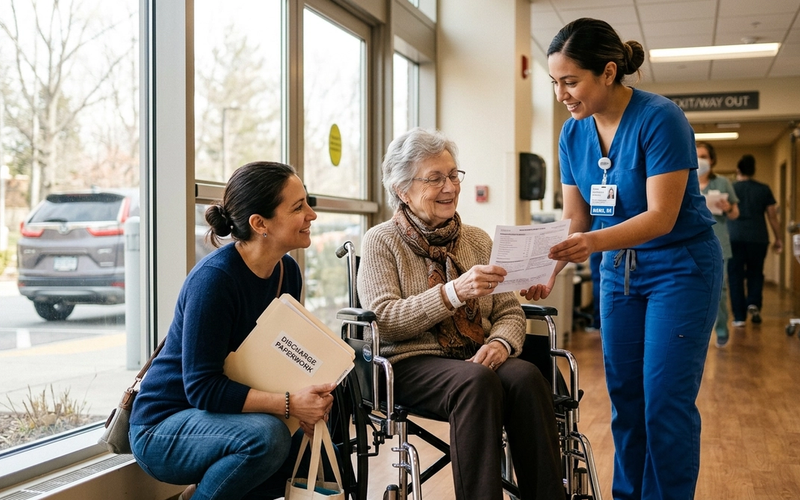
Hospital Discharge Planning for Seniors: A Family Guide
A hospital discharge for an older parent is a decision, not just a notice. Here is how discharge planning actually works, where families have leverage, and how to appeal a discharge you think is unsafe.
Explore senior living options
Comparing care for yourself or a family member? Browse communities by care type and see what each option typically costs.
- Assisted livingHelp with daily activities, costs, and how to choose a community.
- Independent livingMaintenance-free communities for active older adults.
- Home careIn-home support for seniors aging in place.
- Nursing homesSkilled nursing care and Medicare star ratings.
- Senior apartmentsAge-restricted, budget-friendly rental housing.
- Cost of senior livingCompare typical monthly prices by care type and state.