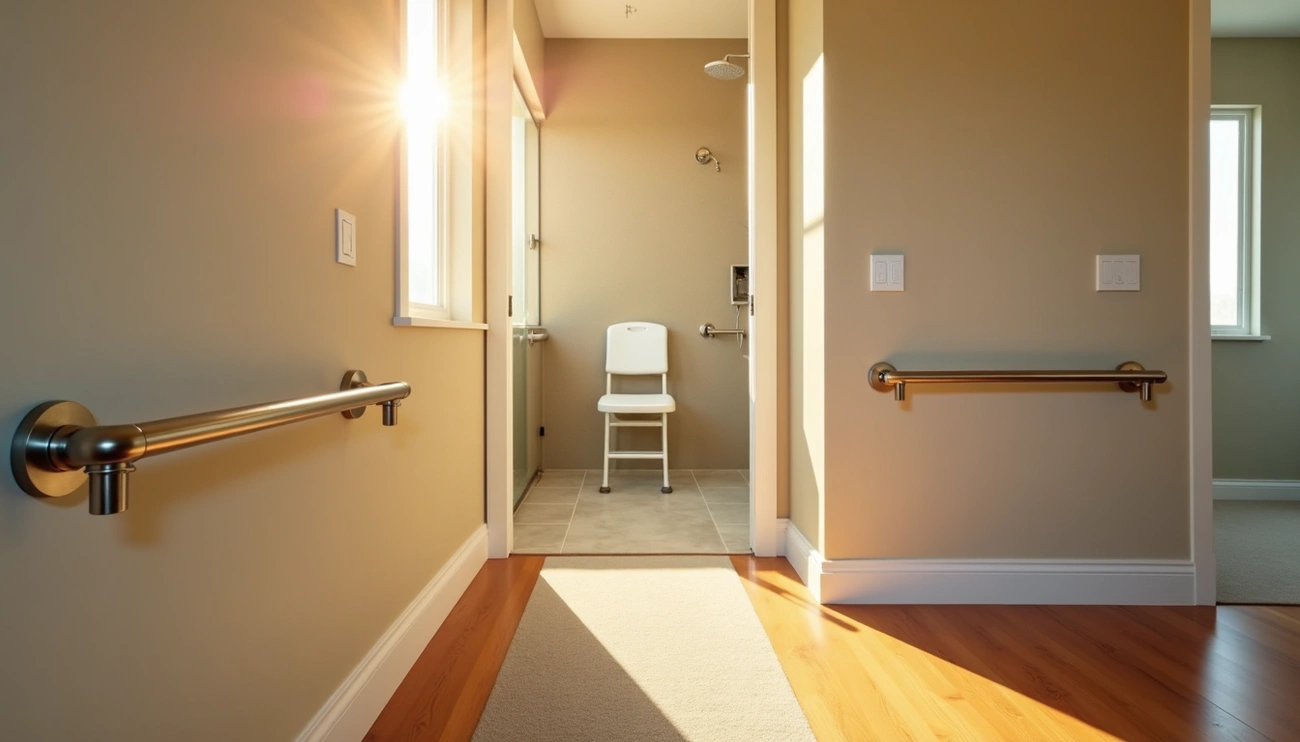

Falls are the leading cause of injury among seniors, with 1 in 4 experiencing a fall each year. These incidents result in over 3 million emergency room visits and more than 32,000 deaths annually among Americans aged 65 and older.
About 80% of fall-related injuries occur at home, especially in bathrooms, according to safety data. The National Institute on Aging reports that falls in the home account for more than 60% of falls among elderly adults.
An AARP study found that over 87% of adults aged 65 and older prefer to remain in their current home as they age. However, only 10% of American homes are adequately designed for aging populations. This gap between preference and reality highlights the need for targeted home modifications.
Research supports the effectiveness of these changes. A study published in the Journal of the American Medical Directors Association found that upgrading lighting in care homes led to a 43% reduction in falls compared to control sites.
Home modifications address specific safety risks while supporting independent living. The following guide outlines essential modifications across six key areas: safety assessment, bathroom improvements, mobility enhancements, lighting and flooring upgrades, living space adjustments, and emergency technology integration.
Step 1: Assess the Home for Safety Risks
A thorough safety assessment identifies potential hazards before modifications begin. This systematic evaluation prevents serious injuries and supports independent living for older adults.
Check for common fall hazards
Floor coverings present the most immediate risks throughout the home. Loose rugs and carpets are a major cause of injury in adults 65 and older, as these unsecured materials bunch up and create tripping hazards. Clutter in walkways poses similar dangers-papers, shoes, books, and other objects on stairs and walking paths require removal.
Electrical cords present another significant risk. These should remain near walls and away from walking areas to prevent accidental trips. Staircases need examination for broken or uneven steps, with secure handrails required on both sides.
About one-third of 70-year-olds and most 80-year-olds report mobility restrictions in their apartments and immediate surroundings. Falls don’t have to be inevitable as you age-proper assessment and modifications can prevent them.
Evaluate lighting and visibility
Research indicates that increasing light levels within homes can reduce fall rates by 30% among older adults. Age-related changes in lens flexibility and decreased pupil size limit the amount of light entering the eye, making adequate illumination essential for safety.
Key areas requiring assessment include:
- Stairways with switches at both top and bottom
- Bathrooms, where 80% of senior falls occur
- Hallways and entrances requiring bright, consistent lighting
- Nighttime pathways, particularly routes to the bathroom
Studies show 80% of older adults express heightened concern over potential accidents in dimly lit spaces. Poor lighting affects both physical safety and mental well-being.
Identify mobility barriers
Mobility restrictions make older adults prone to falls, injuries, and hospitalizations while reducing quality of life. Assessment must identify barriers that limit movement and independence beyond obvious hazards.
Doorways and hallways may be too narrow for comfortable passage, especially if mobility aids like walkers or wheelchairs become necessary. Raised thresholds at doorways can become significant trip hazards.
Furniture height and placement require careful evaluation. Sofas and chairs must be at appropriate heights for easy entry and exit. Furniture arrangement should create clear pathways throughout the home for unobstructed movement.
Bathrooms deserve particular attention. The CDC reports that bathrooms are where most falls occur, making them a priority assessment area. Outdoor spaces, including steps leading to the front door, also need evaluation. Uneven surfaces, poor lighting, and lack of handrails create hazards during inclement weather.
This comprehensive assessment provides the foundation for future modifications. Methodical identification of fall hazards, lighting issues, and mobility barriers creates a prioritized plan for changes that support safe aging in place.
Bathroom Safety Modifications Address Primary Fall Risks
The bathroom presents unique hazards for seniors. Statistics show this space accounts for the majority of home falls among older adults. Targeted modifications can reduce these risks while preserving independence.
Grab Bars and Non-Slip Surfaces Provide Essential Support
Grab bars serve as critical leverage points during bathroom activities. Proper installation requires strategic placement in high-risk areas.
Around toilets, two grab bars offer optimal support. A horizontal bar assists with sitting and standing motions, while a vertical bar above provides stability during episodes of lightheadedness. Tight spaces can accommodate toilet paper holders with integrated grab bars.
Shower and bathtub areas require horizontal grab bars above faucets, plus additional bars at elbow height for entry and exit assistance. Shower stalls benefit from grab bars positioned on either side of the entrance. The Americans with Disabilities Act (ADA) guidelines specify shower grab bars at 33 to 36 inches from the floor.
Installation method determines effectiveness. Grab bars must attach directly to wall studs rather than drywall or plaster alone. Improper mounting can render bars ineffective or create additional hazards. Rustproof finishes like stainless steel provide long-term durability.
Non-slip mats complement grab bar installations. These products use suction cup systems to secure to wet surfaces, preventing slips on bath and shower floors. Textured surfaces provide enhanced traction, supporting confident and independent bathing. Position mats inside shower areas and immediately outside where water accumulation occurs.
Walk-In Showers Eliminate Barrier Entry
Traditional bathtubs create significant obstacles for seniors. Walk-in shower conversions represent high-impact safety modifications, though costs can be substantial.
Walk-in designs provide several safety advantages. Low or zero threshold entry eliminates tripping hazards. The seamless transition from bathroom floor to shower minimizes fall risks. These installations accommodate wheelchairs and walkers. Professional installation can complete tub-to-shower conversions within one day.
Safety features enhance walk-in shower effectiveness. Built-in bench seats, handheld showerheads, and strategically placed grab bars create comprehensive support systems. Non-slip flooring within shower areas further reduces accident risks. Shower faucet valves positioned at entrances allow water temperature adjustment before entry.
Walk-in tubs offer an alternative option. However, showers generally provide superior accessibility for mobility device users. Both configurations significantly improve safety compared to standard bathtubs.
Raised Toilet Seats Reduce Physical Strain
Low toilet heights create challenges for seniors with limited mobility. Raised toilet seats reduce strain on knees and hips during sitting and standing transitions.
Several raised seat options address different needs. Bolt-on risers replace existing seats entirely. Toilet seat risers fit between bowls and existing seats. Padded models with armrests provide additional support. Adjustable height options accommodate changing mobility requirements.
Product selection affects daily independence. The Bemis Independence Assurance 3″ Raised Toilet Seat demonstrates superior stability compared to alternative models. Height additions typically range from 2-6 inches, with specific measurements based on individual height and mobility needs.
Occupational therapists recommend combining raised seats with nearby grab bars for maximum stability. Higher toilet seats facilitate easier standing while helping prevent dangerous “plopping” motions during sitting.
These bathroom modifications create environments that support independence while reducing fall risks. Proper implementation allows seniors to maintain confidence during essential daily activities.
Structural Modifications Support Mobility and Independence
Mobility challenges restrict daily activities for many seniors as they age. Approximately 90% of older adults prefer to remain in their homes rather than move to assisted living facilities, making structural accessibility modifications essential for continued independence.
Doorway and Hallway Widening
Standard doorways in most homes measure between 23 to 27 inches wide, which proves insufficient for those using mobility aids. Accessibility standards require doorways with a clear width of at least 32 inches, while 36 inches provides ideal clearance for wheelchair users.
Several approaches create wider passageways. Complete doorway widening involves removing the existing doorframe and enlarging the opening, typically costing between $650 and $3,500 per doorway. Offset hinges can add 1.5-2 inches of clearance without major construction, creating a cost-effective solution when only small adjustments are needed. Removing doors or trim in less critical areas can provide necessary clearance.
Widened doorways benefit everyone in the household by improving airflow, reducing injuries from bumping into doorframes, and making it easier to move furniture throughout the home. However, doorway modifications might require relocating electrical outlets, light switches, and wiring inside walls.
Stair Lifts and Ramp Installation
Stairs present significant hazards for seniors with limited mobility. Stair lifts and ramps offer solutions that prevent falls while maintaining independence.
Stair lifts are battery-powered chairs that glide along rail systems mounted to stair treads. These devices work during power outages and can be installed on straight, curved, or outdoor staircases. Straight stair lifts typically cost between $2,500-$9,000, while curved custom models start around $11,000. Monthly payment options beginning at $59.25 make these more accessible for those on fixed incomes.
Ramps provide another solution, particularly for entranceways. Aluminum ramps offer maintenance-free surfaces with continuous handrails, while wooden ramps can be customized to match home aesthetics though require more upkeep. Concrete provides the most durable long-term solution, lasting 10-20 years.
Ramp installation costs typically range from $1,400 to $3,000, making them more affordable than stair modifications. Portable folding ramps offer flexibility for temporary needs and can fit into a car for transport.
Threshold Modifications and Obstacle Removal
Door thresholds exceeding ¾ inch in height create mobility challenges. Threshold ramps-available in rubber, aluminum, or wood-create smooth transitions between rooms or at entrances.
Other obstacle removal improves safety throughout the home. Secure loose rugs with non-slip pads or remove them entirely. Use cable covers for electrical cords or relocate electronics closer to outlets. Clear clutter regularly from hallways and pathways.
A full accessibility renovation of a 2,000-square-foot house-including widened doorways, ramps, threshold modifications, and other adjustments-can cost between $150,000 and $180,000. However, specific targeted modifications remain much more affordable while still improving safety and independence.
Organizations like Rebuilding Together offer “Safe at Home” programs providing no-cost preventative home modifications for eligible seniors, making these essential changes more accessible to those with limited financial resources.
Lighting and Flooring Modifications Address Vision and Stability Issues
Vision naturally declines with age, making proper lighting and slip-resistant flooring critical safety elements. These modifications create immediate safety improvements that typically require less construction than structural changes.
Brighter LED Lighting Reduces Fall Risks
Aging eyes require significantly more illumination-about 75% more light than those of a 25-year-old. LED lighting offers multiple advantages for senior homes:
Energy efficiency: LEDs use up to 80% less energy compared to conventional options, reducing energy costs by 30-40% in homes where lights remain on for extended periods.
Longevity: LED systems can last for years with only occasional quality inspections and cleaning, minimizing the need for frequent bulb changes.
Health benefits: Unlike fluorescent lighting, LEDs don’t produce harmful flickers that cause headaches and eyestrain.
Adjustable brightness: Many LED bulbs offer multiple color temperatures (cool white, warm white, and neutral), allowing seniors to choose based on specific needs.
The eye’s lens becomes more transparent with age, increasing sensitivity to glare. LED fixtures provide uniform illumination that helps prevent this problem. High CRI (Color Rendering Index) LEDs help seniors differentiate between colors like blue, blue-green, and violet, which becomes more difficult as the eye’s lens yellows with age.
Motion Sensors Eliminate Switch-Fumbling Hazards
Motion-activated lighting eliminates the need to fumble for switches in dark areas-a common cause of falls among elderly residents. These automatic systems provide illumination exactly when needed without requiring physical effort.
Several types work effectively:
Battery-powered wireless sensors: Completely wireless and extremely flexible for placement, these lights can be positioned on floors, shelves, or mounted to walls.
Plug-in motion nightlights: Perfect for bathrooms and hallways, these don’t rely on batteries and use energy-efficient LEDs.
Motion sensor light switches: These retrofit over existing switches without requiring electrical work, automatically activating overhead lights.
Motion sensor outlets: Simply plug these into existing outlets, then plug lamps into them for instant automation.
Strategic placement in high-risk areas like the pathway between bedrooms and bathrooms creates subtle pathway lighting similar to airplane aisles, guiding safe nighttime navigation. Motion sensors simultaneously enhance both security and safety by illuminating walkways and entrances.
Non-Slip Flooring Materials Prevent Accidents
The CDC reports nearly 1 in 4 older adults experience falls annually, with flooring playing a crucial role in prevention. Safer flooring options include:
Rubber flooring: Provides exceptional shock absorption and remains slip-resistant even when wet, making it the safest choice overall.
Cork flooring: Offers natural elasticity that absorbs impact, making it resilient and a great choice for seniors prone to falls.
Vinyl flooring: Water-resistant, affordable, and easy to maintain-all important considerations for elderly homeowners with mobility challenges.
Low-pile carpeting: Durable, comfortable, and non-slip, this option traps less dirt than thicker carpets while providing stable footing.
Linoleum flooring: Resistant to moisture and easy to maintain, this affordable option offers good traction.
Certain flooring types present serious hazards and should be avoided:
- Polished natural stone (slippery and doesn’t absorb shock)
- Ceramic or porcelain tile (cold, hard, and requires detailed maintenance)
- Area rugs (major tripping hazards even with non-slip backing)
- High-gloss hardwood floors (extremely slippery, especially when wet)
- Bamboo flooring (vulnerable to moisture damage)
Proper lighting combined with appropriate flooring creates a safety system that works together to minimize fall risks throughout the home.
Modify Key Living Areas
Daily living areas require specific adjustments to support senior mobility and independence. Kitchen, bedroom, and furniture modifications address accessibility challenges that can restrict movement and increase fall risks.
Adjust kitchen layout for reachability
Kitchen modifications focus on placing frequently used items within easy reach. Everyday items like plates, glasses, and utensils should be stored in cabinets between waist and shoulder height rather than on high shelves. Pull-out shelves and drawers eliminate the need for dangerous bending and reaching.
Sink placement affects meal preparation safety. Positioning the sink close to the stove prevents water spills and reduces strain when carrying heavy pots. Shallow sinks measuring 6-8 inches deep require less bending for washing vegetables and dishes.
Ergonomic kitchen layouts include several key features:
- Counters lowered to 28-30 inches for wheelchair accessibility
- Pull-down shelves for accessing stored items
- Lever-style faucets replacing twist knobs for easier operation
- Microwave placement at or below counter height
Elevate furniture for easier use
Furniture height directly impacts safety during sitting and standing transitions. Optimal bed height allows seniors to sit with feet flat on the floor and knees bent at 90 degrees. This typically translates to 22-24 inches from floor to mattress top.
Chair height should measure 17-19 inches, allowing feet to rest flat with knees at or slightly below hip level. Chairs require sturdy armrests to provide stable support when standing. Furniture positioned too low forces additional effort during rising, straining knees and increasing fall risk.
Reorganize bedroom for safe movement
Bedroom organization prioritizes clear pathways and accessible storage. Position beds to create unobstructed routes to the bathroom and doorway. Install sturdy bedside tables without sharp edges to hold essential items like medications, water, phones, and glasses.
Clothing storage should place frequently used items in drawers or shelves at waist height. Avoid storing breakable or heavy objects on high shelves. Touch-controlled bedside lamps or motion-activated lighting improve visibility.
Mobility aid users need adequate space around furniture. Remove unnecessary pieces to create open walking zones.
Emergency and Smart Home Technology Integration
Technology supplements physical modifications to create comprehensive safety systems for seniors aging in place. These devices provide critical protection and emergency response capabilities beyond traditional home modifications.
Medical Alert Systems
Emergency response systems function as communication lifelines for seniors living independently. These devices maintain 24-hour connectivity to summon help during emergencies.
Key features to consider when selecting medical alert systems include fall detection capabilities that automatically contact emergency services without button activation, GPS location tracking for precise emergency positioning, two-way communication with professional monitoring centers, and waterproof designs suitable for bathroom use.
The Apple Watch SE offers an alternative to traditional medical alert devices, detecting falls and certain cardiac events while functioning as a standard smartwatch. Voice-activated emergency services like Alexa Emergency Assist connect seniors to live responders through Echo devices.
Voice-Activated Controls
Voice assistants address mobility limitations, vision problems, and arthritis by eliminating the need to physically operate switches, remotes, or thermostats.
Google Home and Amazon Alexa systems can control connected lights, thermostats, and door locks through verbal commands, call emergency contacts with specific phrases, and create automated morning and evening routines.
These systems reduce fall risks by eliminating the need to fumble for light switches in dark areas. Voice activation minimizes unnecessary movement that could lead to accidents.
Smart Smoke and Carbon Monoxide Detection
Smart detection systems provide early warnings for fire and gas hazards. Seniors face 2.5 times higher risk of dying in fires compared to younger individuals.
Smart detectors from manufacturers like Google Nest send automatic alerts to family members’ smartphones, provide voice announcements identifying specific dangers and locations, and operate as interconnected systems where one triggered detector activates all units.
Install detectors on every level of the home, particularly near sleeping areas. Carbon monoxide detectors should be positioned lower on walls since this gas accumulates closer to ground level. Test all detectors monthly to ensure proper operation.
Smart home technology creates an additional safety layer that complements physical modifications, supporting independent living through automated monitoring and emergency response capabilities.
Home Modification Programs Support Senior Safety Goals
Home modifications address the gap between senior housing preferences and current housing stock. The six modification categories covered-safety assessment, bathroom improvements, mobility enhancements, lighting and flooring upgrades, living area adjustments, and emergency technology-target the most common fall hazards seniors face at home.
Safety assessments identify specific risks before injuries occur. Bathroom modifications remain particularly important since this is where most senior falls happen. Grab bars, non-slip surfaces, and accessible fixtures address these high-risk areas.
Mobility modifications like widened doorways, ramps, and stair lifts remove structural barriers. Lighting upgrades compensate for age-related vision changes, while appropriate flooring materials provide stable walking surfaces throughout the home.
Kitchen and bedroom modifications focus on placing frequently used items within reach and ensuring proper furniture heights. Emergency response systems and smart home technology provide additional protection layers.
These modifications can be implemented incrementally. Lower-cost changes like improved lighting and grab bars often provide immediate safety benefits. Organizations like Rebuilding Together operate “Safe at Home” programs that provide no-cost modifications for eligible seniors.
Complete accessibility renovations for a 2,000-square-foot house can cost between $150,000 and $180,000, according to industry data. However, targeted modifications addressing specific safety concerns typically require much smaller investments while still providing significant risk reduction.
Local aging services agencies often maintain information about modification programs and funding assistance available to seniors in their communities.
FAQs
Q1. What are the most important home modifications for senior safety? The most crucial modifications include installing grab bars and non-slip mats in bathrooms, improving lighting throughout the home, widening doorways for better accessibility, and adding smart home features like medical alert systems and voice-activated controls.
Q2. How can I make my kitchen safer for an elderly person? To enhance kitchen safety, adjust the layout for better reachability by placing everyday items in easily accessible cabinets, install pull-out shelves and drawers, lower counters for wheelchair accessibility, and use lever-style faucets instead of twist knobs.
Q3. What type of flooring is safest for seniors? The safest flooring options for seniors include rubber flooring for its shock absorption and slip-resistance, cork flooring for its natural elasticity, and low-pile carpeting for its durability and stability. Avoid polished natural stone, ceramic tiles, and high-gloss hardwood floors as they can be slippery.
Q4. How can technology improve home safety for the elderly? Technology can enhance safety through medical alert systems with fall detection, voice-activated lighting and controls to reduce unnecessary movement, and smart smoke and carbon monoxide detectors that send alerts to family members’ smartphones.
Q5. What are some affordable home modifications for senior safety? Affordable modifications include installing brighter LED lighting, using motion-sensor lights in high-risk areas, securing loose rugs with non-slip pads, adding grab bars in bathrooms, and elevating furniture to proper heights for easier use. Many of these changes can be implemented gradually to manage costs.