
Finding suitable housing for aging parents presents a growing challenge for families nationwide. You may face the difficult choice between expensive assisted living facilities or having elderly parents live too far away to provide adequate support. ADU tiny homes offer a practical solution that allows aging parents to maintain independence while staying close to family.
The numbers tell a compelling story. According to the U.S. Census Bureau, by 2034, adults 65 and older will outnumber children under 18 for the first time in U.S. history. Nearly 77% of adults over 50 want to remain in their current homes for as long as possible. This demographic shift has prompted significant changes in housing regulations.
Housing regulations have adapted to meet this need. Dozens of states and cities have relaxed zoning laws to allow ADU development over the past five years. California saw ADU permits increase by 1,670% after legalizing them statewide, jumping from just 1,300 in 2016 to over 23,000 in 2021. These changes reflect how tiny homes for elderly parents are becoming a mainstream housing alternative.
ADU tiny homes offer the ideal balance between proximity and privacy. These compact living spaces range from 150 square feet to 1,200 square feet and can be detached units, attached additions, or garage conversions. They include all the amenities of a standard home but in a more manageable size for seniors.
The financial benefits make ADUs particularly attractive. Assisted living facilities cost between $4,000 and $9,000 monthly, while an ADU requires a one-time investment that also increases your property’s value. This arrangement allows you to provide support for aging parents without the ongoing expense of institutional care.
This guide explores why ADU tiny homes work well for aging parents, design considerations for elderly comfort, cost and legal factors, and real stories from families who have successfully created this living arrangement.
Why ADU Tiny Homes Work for Aging Parents
Multigenerational living arrangements are making a comeback, yet modern families want both togetherness and personal space. ADU tiny homes address this challenge for aging parents by offering proximity without compromising independence.
Close proximity without shared space
ADU tiny homes create the right balance of nearness and separation. Unlike traditional shared housing, these separate units allow aging parents to live just steps away without sacrificing boundaries. A 2018 AARP survey revealed that 67% of adults would consider living in an ADU to be close to someone while maintaining a separate space.
This arrangement means family members can provide immediate assistance during emergencies. Having elderly parents nearby eliminates long trips to visit them. This setup preserves family connections without the potential tensions that often arise from living under one roof.
Privacy and independence for seniors
Seniors value their autonomy, even when they may require more support. ADU tiny homes offer aging parents their own private retreat where they can entertain guests, relax, or enjoy solitude.
These separate living spaces include:
- Private entrances
- Complete kitchens and bathrooms
- Personal living areas
This independence enhances mental health by providing seniors with a sense of purpose and control. An ADU offers the middle ground between complete independence and assisted living facilities.
Support for family caregiving
For caregivers, ADU tiny homes simplify what can otherwise be an overwhelming responsibility. Family members can provide support when needed without the 24/7 demands of shared living. This arrangement reduces stress and burnout for those providing care.
The proximity creates practical benefits, making it easier to coordinate services like meal delivery, transportation, and home healthcare. Families report that having aging relatives in ADUs helps save both time and money.
This living situation strengthens intergenerational bonds. Grandchildren benefit from regular interaction with grandparents, creating meaningful family connections that might otherwise be lost.
Designing ADU Tiny Homes for Elderly Comfort
Creating a safe, accessible environment requires careful attention to design details that address the specific needs of aging parents. Thoughtful features can make these spaces not just livable but truly comfortable for seniors aging in place.
Zero-step entry and wide doorways
Physical barriers at entrances present serious hazards for seniors with mobility challenges. Zero-step entries eliminate thresholds that could cause trips and falls, creating a seamless transition between outdoors and indoors. This design feature particularly benefits those using wheelchairs, walkers, or other mobility aids.
Doorways throughout your ADU should measure at least 36 inches wide, though 40+ inches provides greater convenience for mobility challenges. Hallways need similar dimensions to ensure easy navigation throughout the space. These wider pathways accommodate wheelchairs and allow for flexible furniture arrangement.
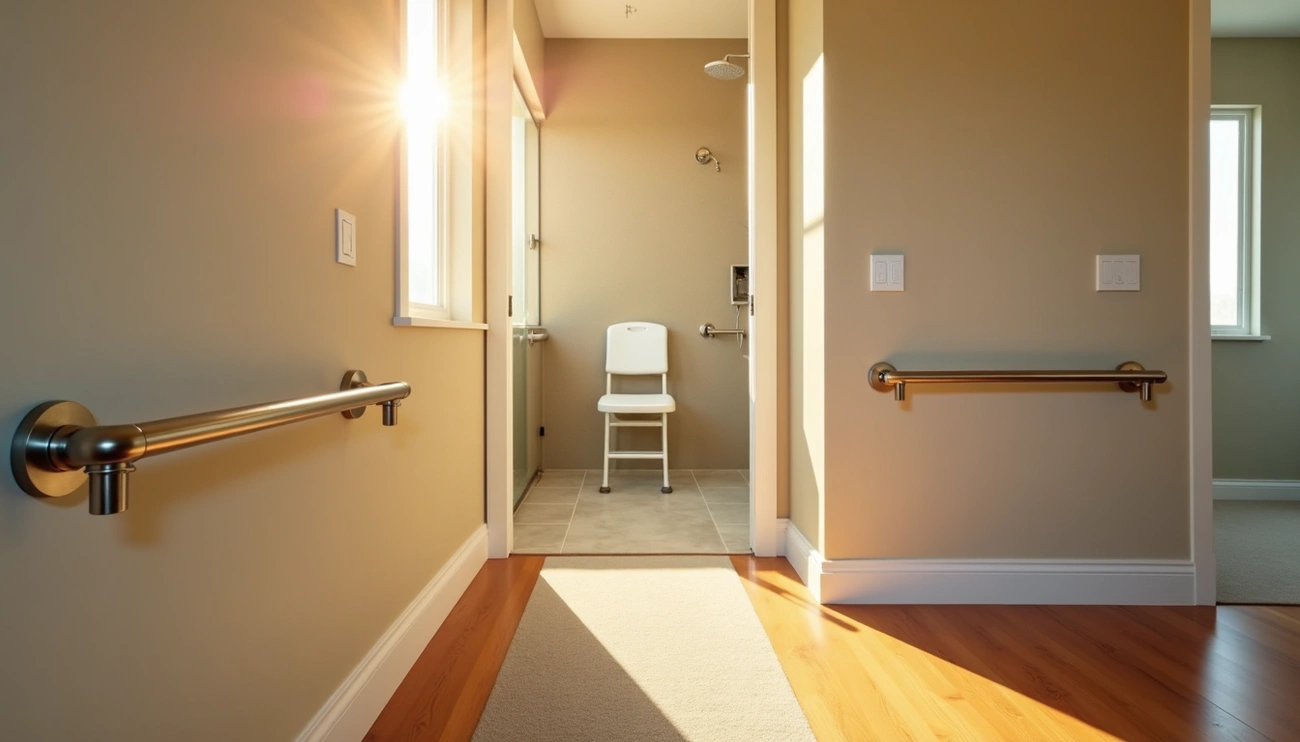
Walk-in showers and grab bars
Bathrooms present the greatest safety risks for elderly residents. Over one in four adults 65 and older fall each year, with bathrooms being a common location for these accidents.
Walk-in showers with zero thresholds eliminate dangerous barriers. Essential features include:
- Built-in seating for comfort and safety
- Textured, non-slip flooring to prevent falls
- Handheld shower wands for easier bathing
Grab bars require proper installation for safety. Place them on the side wall (at least 42 inches long) and rear wall (minimum 36 inches) of toilet areas. For showers, mount bars 33-36 inches above the floor.
Smart lighting and emergency systems
Poor lighting contributes significantly to falls among seniors. Smart lighting systems automatically illuminate pathways at night using motion detection. This technology helps prevent accidents during nighttime bathroom visits.
Emergency response systems provide essential peace of mind for families. Options include wearable devices that monitor for falls or services like Alexa Emergency Assist that connect to live responders who can request emergency services.
Quiet insulation and natural light
Quality insulation creates a peaceful environment where aging parents can rest comfortably. Beyond noise reduction, proper insulation ensures consistent temperature control.
Natural light significantly impacts senior wellbeing. Regular exposure improves mood, reduces depression, and helps regulate sleep patterns. Design your ADU with ample windows that maximize daylight, particularly during morning hours, as this can help reduce symptoms of depression.
Cost, Value, and Legal Considerations
Financial planning plays a crucial role when you’re considering housing options for aging parents. Understanding the costs, value implications, and legal requirements helps you make informed decisions about ADU construction.
Construction costs vs. assisted living
Building an ADU tiny home requires a one-time investment ranging from $180,000 to $300,000. Over a 15-year period, assisted living facilities can cost between $480,000 to $1.2 million, making ADUs more economical long-term. A 576-square-foot one-bedroom ADU costs approximately $218,000 to build, compared to the average senior housing cost of $4,917 per month or nearly $59,000 annually.
Property value increase with ADUs
ADU tiny homes boost property values beyond their construction cost. Homes with ADUs typically sell for 20-35% more than comparable properties without them. A detached ADU can increase property value proportional to its square footage, generally at 30% of the home’s current value.
Rental income potential provides additional financial benefits. You can generate between $1,500 to $4,500 monthly from ADU rentals, creating approximately $45,000 in annual income. This income stream offers flexibility if your family’s housing needs change over time.
Zoning laws and permit requirements
Permit requirements vary significantly by location. You’ll need to budget for permit fees that differ based on construction type:
- New construction ADUs: $7,000 to $13,000
- Conversion of existing space: $3,000 to $5,000
Zoning requirements differ by location, with some areas requiring minimum lot sizes or specific setbacks. Research your local regulations before beginning the planning process to avoid costly delays.
Financing options and tax incentives
Several financing approaches can help fund ADU construction. Consider home equity loans, construction loans, and cash-out refinancing options. Government programs like California’s CalHFA ADU Grant Program offer up to $40,000 for pre-development costs.
Property taxes typically increase by 1-1.5% of the ADU construction cost. However, a “blended assessment” means only the ADU value is added to existing property taxes, making the tax impact more manageable than you might expect.
Real Stories of Families Using ADUs for Elderly Parents
Real families across America have put ADU tiny homes into practice, creating successful living arrangements for aging parents. Their experiences provide practical insights for anyone considering this housing solution.
Linda’s backyard cottage in Portland
Linda, a retired schoolteacher, moved into a 480-square-foot tiny home for seniors in her daughter’s Portland backyard. Her custom-designed space features a full kitchen, roll-in shower, and garden views. This arrangement allows Linda to take daily walks with her grandchildren while maintaining her independence in a space designed specifically for her needs.
The family reports that having Linda nearby has eliminated their previous concerns about her living alone. Her daughter can check on her easily, and Linda enjoys having family close without feeling like she’s imposing on their household routines.
Tom and Mei’s garage conversion in San Diego
Tom and Mei converted their underused garage into a bright tiny house for elderly parents for Mei’s mother, who has Parkinson’s disease. Their thoughtfully designed unit includes no stairs, smart lighting, and a sensor-equipped stove. A caregiver visits regularly, allowing Mei’s mother to enjoy dignity and independence while receiving necessary support.
The conversion cost significantly less than assisted living facilities in their area. More importantly, Mei’s mother remained in a familiar neighborhood where she had lived for decades, maintaining connections with longtime friends and neighbors.
Multigenerational barn conversion in Vermont
Three siblings in rural Vermont transformed an old barn into shared living spaces with three separate tiny homes for elderly parents and aunts. Each unit maintains privacy with individual entrances yet fosters connection through a communal garden and shared living room. This approach preserves family bonds without sacrificing personal space.
The siblings found that this arrangement works particularly well for their rural location, where assisted living options are limited and expensive. The shared costs made the project feasible for all three families involved.
What families learn from ADU living
Families consistently report that proximity creates peace of mind for everyone involved. One Sonoma couple noted after building an ADU for a parent with mobility challenges that it was “the best decision we ever made”. Adult children appreciate being able to provide immediate help when needed, while elderly parents value maintaining their own household routines and personal space.
Many families also discover unexpected benefits, such as stronger relationships between grandchildren and grandparents, shared meal preparation, and reduced transportation costs for medical appointments and social activities.
Bottom Line
ADU tiny homes offer a practical solution for families seeking housing options for aging parents. These separate living spaces provide the ideal balance between independence and family support, allowing seniors to maintain their dignity while staying close to loved ones.
The financial benefits make ADUs particularly attractive compared to ongoing assisted living expenses. Building an ADU represents a one-time investment that also increases your property’s value, making it both an emotional and practical choice for many families.
Design features specifically created for senior comfort enhance the appeal of these homes. Accessible entrances, safe bathrooms, smart lighting, and emergency response systems create environments where aging parents can live safely. These elements address senior-specific needs while maintaining comfort and appeal.
Real families across the country have successfully implemented this housing solution. From backyard cottages to garage conversions to barn transformations, these examples demonstrate various approaches to creating senior-friendly living spaces that work for different family situations.
The growing acceptance of ADUs reflects recognition of our aging population’s housing needs. Zoning law changes and increased permit approvals show how communities are embracing this housing model.
For families considering housing options for elderly loved ones, ADU tiny homes represent a thoughtful solution that honors both autonomy and family connections. They provide aging parents with independence while keeping family support systems nearby. You may find that this housing arrangement offers the perfect middle ground between complete independence and institutional care.
Key Takeaways
ADU tiny homes offer a practical, cost-effective solution for aging parents who want independence while staying close to family support. Here are the essential insights for families considering this housing option:
• ADUs cost significantly less than assisted living – One-time investment of $180,000-$300,000 versus $4,000-$10,000 monthly facility fees
• Design features ensure senior safety and comfort – Zero-step entries, walk-in showers, grab bars, and smart lighting systems prevent falls and accidents
• Property values increase 20-35% while providing rental income potential of $1,500-$4,500 monthly for future flexibility
• Proximity without invasion creates ideal balance – Seniors maintain privacy and independence while families provide immediate support when needed
• Real families report high satisfaction – Stories from Portland to Vermont show successful multigenerational living arrangements that strengthen family bonds
The growing trend reflects America’s aging population needs, with zoning law changes making ADUs more accessible nationwide. This housing solution preserves dignity for seniors while offering peace of mind for adult children managing caregiving responsibilities.
FAQs
Q1. Are ADU tiny homes a good option for aging parents? ADU tiny homes can be an excellent option for aging parents. They provide close proximity to family while maintaining privacy and independence. These homes can be designed with senior-friendly features like zero-step entries and walk-in showers, offering a safe and comfortable living environment.
Q2. How do ADU tiny homes compare financially to assisted living facilities? ADU tiny homes are typically more cost-effective in the long run. While they require an initial investment of $180,000 to $300,000, this is a one-time cost. In contrast, assisted living facilities can cost between $4,000 and $10,000 monthly, potentially adding up to $480,000 to $1.2 million over a 15-year period.
Q3. Do ADU tiny homes increase property value? Yes, ADU tiny homes can significantly increase property value. Homes with ADUs typically sell for 20-35% more than comparable properties without them. Additionally, they offer potential rental income ranging from $1,500 to $4,500 monthly.
Q4. What are some key design features for ADU tiny homes for seniors? Important design features include zero-step entries, wide doorways (at least 36 inches), walk-in showers with grab bars, smart lighting systems, and emergency response technology. These elements ensure safety and accessibility for aging residents.
Q5. Are there legal considerations when building an ADU tiny home? Yes, there are legal aspects to consider. Zoning laws and permit requirements vary by location. Some areas have minimum lot size requirements or specific setbacks. Permit fees can range from $3,000 to $13,000 depending on whether it’s new construction or a conversion of existing space. It’s crucial to check local regulations before proceeding with construction.