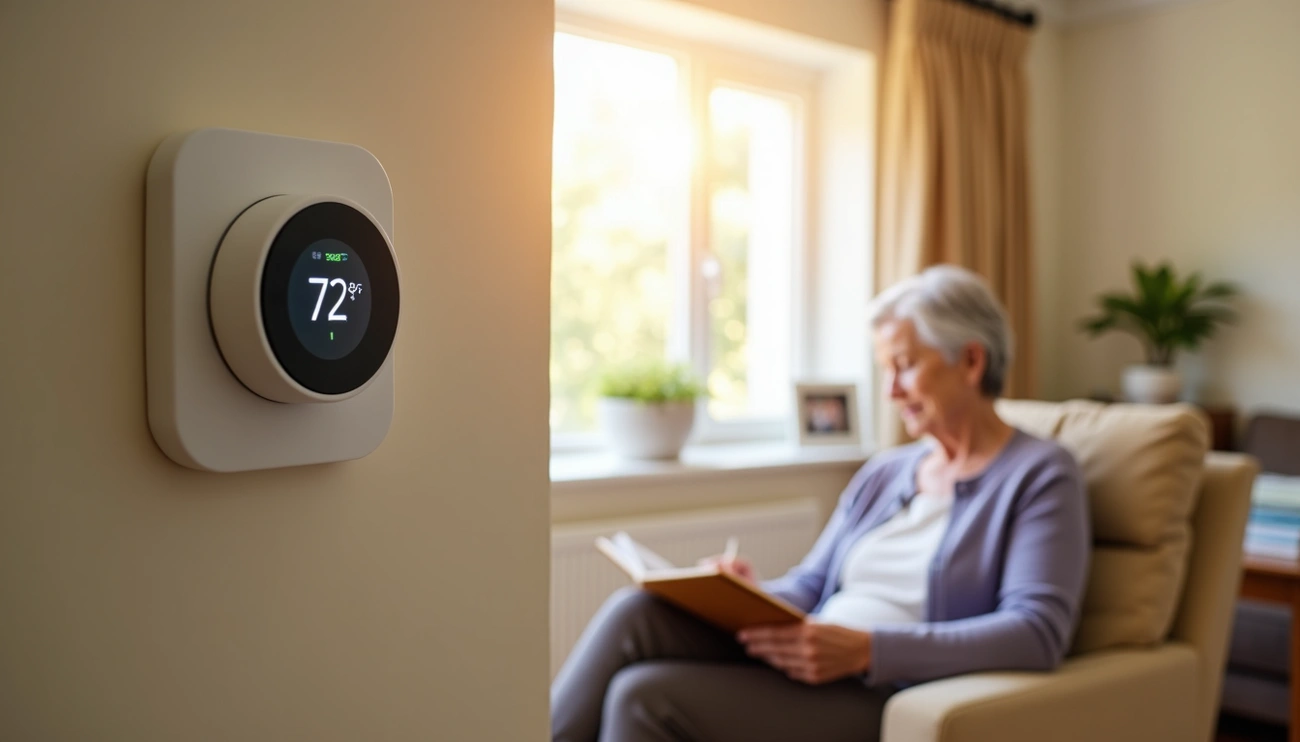
Setting your home thermostat might seem like a simple comfort decision, but research reveals it affects much more than how warm or cool you feel. Older adults maintain their attention best when home temperatures stay between 68 and 75 degrees Fahrenheit. The likelihood of attention difficulties doubles with a 7-degree Fahrenheit variation in either direction. When you feel less comfortable in your environment, your cognitive function suffers.
Temperature regulation becomes more complex as you age. Your body’s ability to sense heat and cold changes, making it harder to maintain the ideal conditions that support memory and thinking. Finding the right thermostat can help you create an environment where your brain functions at its best.
This guide explains why older adults experience temperature differently and how the right thermostat protects cognitive health. You’ll learn about features that make thermostats easier to use, from simple controls to automated systems that maintain optimal temperatures. Most important, you’ll discover practical solutions beyond equipment that help you or your loved one maintain sharp thinking at home.
The Link Between Home Temperature and Memory in Older Adults
What the Research Shows About Temperature and Cognitive Function
Scientists at the Hinda and Arthur Marcus Institute for Aging Research studied 47 adults aged 65 and older for 12 months, tracking both home temperatures and attention difficulties. Their study, published in the Journal of Gerontology: Medical Sciences, found a U-shaped relationship between temperature and cognitive performance. Both extreme heat and cold impaired attention, with participants showing particular sensitivity to cold temperatures.
The results revealed a concerning pattern. Despite having air conditioning, heating systems, and temperature controls, participants’ homes stayed outside optimal temperatures nearly 20% of the time. Many older adults struggle to maintain ideal conditions even when they have the necessary equipment.
The Optimal Temperature Range for Elderly Memory (68-75°F)
The research identified a specific temperature range where older adults performed best cognitively. Indoor temperatures between 68 and 75 degrees Fahrenheit supported optimal attention and memory function. Outside this range, attention difficulties doubled with every 7-degree Fahrenheit variation in either direction.
These findings matter when selecting temperature control systems for older adults. The relationship goes beyond comfort preferences. When participants reported feeling cold, they experienced cognitive difficulties across a wider range of actual temperatures compared to feeling hot. Your perceived comfort level affects your thinking ability as much as the actual temperature reading.
How Temperature Affects Brain Performance
Temperature influences brain function through several biological mechanisms. Cold temperatures cause blood vessels to narrow, reducing circulation and oxygen delivery to the brain. This decreased blood flow directly impacts cognitive function. For older adults, whose vascular systems are already compromised, this effect becomes more pronounced.
Heat affects the brain differently. High temperatures increase plasma serotonin levels while suppressing dopamine production, which impairs performance on complex thinking tasks. Research shows that for each 1°C increase in high temperature, global cognitive function scores decreased by 0.48 points. Cold temperatures had a smaller but still significant effect, with scores dropping 0.14 points for each 1°C decrease.
Why Indoor Temperature Matters More Than You Think
Your home environment plays a crucial role in maintaining cognitive health. Many older adults cannot afford adequate heating and cooling systems or lack the physical and cognitive abilities to operate them effectively. Low-income and underserved populations face the greatest risks, with limited resources to maintain stable home temperatures.
Temperature control equipment alone doesn’t solve the problem. Climate change makes these challenges more urgent as global temperatures rise, making access to temperature-controlled environments essential for protecting cognitive well-being. You need both the right equipment and the support to use it effectively.
Why Older Adults Experience Temperature Differently
Changes in How Your Body Senses Temperature
Your body’s temperature regulation system changes as you age. Older adults maintain a lower baseline temperature than younger people, and their tolerance of extreme temperatures becomes more limited. The ability to detect temperature changes decreases progressively with age, particularly in your hands and feet. You may notice that sensing warmth becomes more difficult than detecting cold.
The hypothalamus acts as your brain’s temperature control center. With age, this region becomes less sensitive and responds more slowly to temperature changes. It may not trigger normal responses like sweating when you’re hot or shivering when you’re cold. When exposed to the same conditions as younger adults, older people store 1.3 to 1.8 times more body heat.
Physical changes in your skin affect temperature detection as well. The density of temperature sensors decreases, and blood flow near the skin’s surface reduces. Your skin’s insulating fat layer becomes thinner, while blood vessels move closer to the surface where they’re more exposed to temperature changes. Your metabolism also slows by nearly 1% each year due to hormonal shifts, muscle loss, and reduced activity, which means your body generates less internal heat.
Medical Conditions That Interfere With Temperature Control
Several common health conditions make it harder to maintain stable body temperature. Diabetes, hypothyroidism, anemia, heart failure, and peripheral artery disease all affect your body’s ability to regulate heat. Heart conditions present particular challenges because effective cooling requires your heart to pump significantly more blood to your skin. When blood vessels in older skin don’t dilate properly, this places additional strain on your cardiovascular system.
How Medications Affect Your Body’s Temperature Response
Common medications can interfere with your body’s temperature control mechanisms. Diuretics, anticholinergic drugs, and psychiatric medications increase your risk of heat-related problems. These medications can reduce your sense of thirst, interfere with sweating, disrupt your brain’s temperature control, cause fluid loss, and prevent blood vessels from dilating properly. Beta blockers, antipsychotic medications, and drugs for overactive bladder specifically impair your ability to sweat.
Why Dehydration Makes Temperature Control Harder
Staying properly hydrated becomes more challenging with age, making temperature regulation more difficult. Older adults face increased risk because their sense of thirst diminishes and their total body fluid decreases. Since your thirst response weakens as you age, you may not realize when you need to drink more water.
Finding the Right Thermostat to Protect Memory
Choosing a thermostat that protects cognitive function means balancing simple operation with features that maintain the 68-75°F range automatically. The right device eliminates guesswork while keeping your home environment optimal for brain health.
What Makes a Thermostat Easy for Older Adults
Large, Clear Displays Look for thermostats with oversized numbers and backlit screens. The Pro-701 model features large digits that illuminate with a single tap. HVAC technicians install these frequently because older adults find them simple to read and operate.
Physical Controls Over Touchscreens Traditional dial thermostats offer familiar operation that many seniors prefer. The Wyze thermostat uses a single knob design with no confusing digital displays beyond basic temperature readings. For seniors with dementia who frequently adjust settings, this one-knob approach proves easier to explain than complex touchscreen models.
Essential Features to Look For
Basic functionality works best for most situations. Heat, cool, and off settings combined with simple temperature up and down buttons provide straightforward control. Tamper-proof designs prevent accidental changes that could affect cognitive performance.
Temperature-limiting features offer important protection. Some models automatically cap heating at 73°F and cooling at 76°F. This safety feature ensures your home stays within the memory-supporting range even if settings get accidentally changed.
Smart Options That Work Automatically
Smart thermostats can maintain optimal temperatures without daily adjustments. These devices use programming to keep your home in the ideal range for cognitive function. Machine learning capabilities adjust settings based on your patterns and preferences.
Remote access allows family members or caregivers to monitor and adjust temperatures through smartphone apps from anywhere. This feature provides peace of mind for adult children concerned about their parents’ home environment.
Making Installation Simple
Professional installation eliminates technical challenges. Services through Best Buy or Geek Squad handle setup and programming. Many smart thermostats include guided setup with large fonts to simplify the process.
Voice control features reduce the need to interact with buttons or screens. You can adjust temperature by speaking to devices like Amazon Alexa or Google Assistant, which helps when arthritis or vision problems make physical controls difficult.
Practical Solutions Beyond Thermostat Adjustments
Quick Behavioral Changes to Stay Comfortable
Simple adjustments help when temperatures shift unexpectedly. You can make immediate changes to maintain comfort while your heating or cooling system catches up:
When feeling cold:
- Bundle up in layers of clothing
- Wear a hat indoors
- Use an electric blanket
- Drink warm beverages
- Open blinds during the day to let sunlight in
When overheated:
- Take a cool shower
- Drink ice water
- Close blinds to block sun
- Use fans to circulate air
- Remove extra layers
- Wear lightweight, light-colored, loose-fitting cotton clothing
- Place a cool, moistened towel on your forehead or back of neck
Avoid direct sun exposure during the hottest hours between 11 a.m. and 4 p.m. These behavioral adjustments work alongside your thermostat to maintain the cognitive benefits of stable temperatures.
When Family and Caregiver Support Is Needed
Some older adults need extra assistance maintaining ideal home temperatures. Physical limitations, financial constraints, or cognitive decline can make temperature management challenging. Family members, caregivers, or community resources can provide personalized support to ensure proper temperature monitoring.
Individuals with cognitive impairment may not communicate when feeling too hot or cold. If your loved one lives alone, check in daily or ask neighbors to visit several times throughout the day. These regular check-ins help identify temperature-related discomfort before it affects cognitive function or health.
Home Modifications and Energy Efficiency
Energy retrofits can make significant improvements in temperature control. Studies show a 19% reduction in energy consumption following home improvements. Temperature stabilization from pre-retrofit to one year post-retrofit produces measurable results for residents.
Reducing temperature extremes of 81°F and above corresponds with improved occupant health reports. Consider these upgrades:
- Improved insulation
- Updated heating and cooling systems
- Smart thermostat installation
- Window treatments that block heat
- Weatherstripping around doors and windows
These modifications make homes more comfortable while reducing energy costs for residents.
Government and Community Resources for Temperature Control
Several programs help qualified individuals with heating and cooling costs:
Low-Income Home Energy Assistance Program (LIHEAP): Provides grants to help qualified people with heating and cooling expenses.
Weatherization Assistance Program (WAP): Serves households earning up to 200% of federal poverty guidelines with weatherization improvements.
Emergency Home Energy Assistance for the Elderly Program (EHEAP): Provides up to $2,000 for eligible applicants to cover utility disconnection fees or pre-pay energy bills.
Contact your local Area Agency on Aging at 1-866-674-6327 for assistance with these programs. Many communities also offer additional resources for seniors who need help maintaining safe home temperatures.
Bottom Line
Home temperature affects cognitive function more than many people realize. Research demonstrates that temperatures between 68 and 75°F help older adults maintain their best attention and memory performance. When your home stays outside this range, your risk of cognitive difficulties increases significantly.
The right thermostat can help maintain this ideal temperature range. Simple models with large displays and basic controls work well for many seniors, while smart thermostats offer automated temperature management and remote monitoring for caregivers. Consider your specific needs, vision capabilities, and comfort with technology when making your choice.
Equipment solutions work best when combined with other strategies. Simple behavioral adjustments like layering clothing or using fans provide immediate comfort. Family support helps monitor temperature needs, especially for those with cognitive impairment. Community programs offer financial assistance for heating and cooling costs when resources are limited.
Temperature control becomes more challenging with age due to changes in how your body senses heat and cold. Chronic health conditions and medications can further complicate temperature regulation. Understanding these changes helps you and your family create an environment that supports cognitive health and overall well-being.
FAQs
Q1. What is the ideal indoor temperature for maintaining cognitive function in older adults? Research indicates that older adults maintain their attention and memory best when indoor temperatures stay between 68 and 75 degrees Fahrenheit. Outside this range, the likelihood of experiencing attention difficulties doubles with every 7-degree variation in either direction.
Q2. Why do elderly people have difficulty sensing temperature changes? As people age, their hypothalamus becomes less sensitive and reacts more slowly to temperature changes. Additionally, structural skin changes reduce thermoreceptor density, the skin’s fatty insulation layer thins, and metabolism slows, all of which make it harder for older adults to detect and respond to heat and cold.
Q3. What health conditions can interfere with temperature regulation in seniors? Several chronic conditions affect the body’s ability to maintain stable temperature, including diabetes, hypothyroidism, anemia, heart failure, and peripheral artery disease. Heart conditions are particularly problematic because effective cooling requires pumping significantly more blood to the skin.
Q4. What features should I look for in a thermostat for an elderly person? Look for thermostats with large, backlit displays for easy reading, simple physical controls like dials or basic buttons, tamper-proof designs to prevent accidental adjustments, and temperature-limiting features that keep settings within safe ranges. Smart thermostats with remote access allow caregivers to monitor and adjust temperatures from anywhere.
Q5. What simple steps can seniors take to stay comfortable when temperatures fluctuate? When feeling cold, layer clothing, wear a hat, use an electric blanket, or drink warm beverages. When overheated, take a cool shower, drink ice water, close blinds, use fans, or wear lightweight, loose-fitting cotton clothing. Avoid direct sun exposure between 11 a.m. and 4 p.m., and place a cool, moistened towel on the forehead or neck if needed.