
Most seniors share a common desire as they age: staying in their own homes, keeping their independence, and relying on family and friends when help becomes necessary. Aging in place appeals to older adults because familiar surroundings offer comfort, security, and continuity.
Adults aged 65 and older will reach 96 million by 2060, making planning for aging in place more important than ever. Nearly 90% of seniors want to remain in their own homes, yet this preference requires preparation. What does aging in place actually mean? It involves creating a home environment where seniors can live safely and independently despite health and mobility changes that may develop over time.
The benefits include maintaining daily routines, preserving neighborhood connections, and often reducing costs compared to residential care facilities. However, successful aging in place doesn’t happen automatically.
This guide covers the essential elements families need to consider: home safety modifications, support networks, financial planning, and available resources. Whether you’re planning for your own future or helping a loved one, understanding aging in place options and services can help maintain independence and quality of life for years to come.
What Does Aging in Place Mean and Why It Matters
More seniors today want to maintain their current lifestyle as they grow older. Understanding what aging in place involves can help families make informed decisions about care options.
Understanding the Concept of Aging in Place
Aging in place means choosing to remain in your home or community rather than moving to residential care facilities as you age. This arrangement allows seniors to keep their independence while getting support when their needs change.
This living situation can look different for different people. Some seniors stay in the family home where they raised children and built relationships over decades. Others might downsize to a smaller apartment or condo that requires less maintenance. For some, aging in place might mean moving in with family members while keeping some independence.
The numbers show how much seniors value this option. According to AARP, approximately 77% of adults over 50 would prefer to age in place if given the choice. Another survey found that about 75% of people over age 50 want to stay in their homes or communities for as long as possible. A National Poll on Healthy Aging revealed that 88% of older adults wish to avoid moving away from their homes for as long as possible.
However, there’s a gap between wanting to age in place and preparing for it. Only 15% of older adults have considered what changes to make to their homes and living circumstances as they grow older. This highlights why early planning matters.
Benefits of Aging in Place for Seniors and Families
Aging in place offers several advantages that improve quality of life for seniors and provide peace of mind for families:
Independence and Control Maintaining independence ranks as the most significant benefit for most seniors. Those who age in place keep control over daily routines and decisions, which supports self-worth and dignity. You can wake up, eat meals, and engage in activities according to your own schedule without institutional restrictions.
Familiar Environment Staying in familiar surroundings provides comfort that residential facilities cannot match. For many seniors, their home represents decades of memories and established routines that offer stability and security. This familiarity becomes especially important for those with cognitive impairments, as continuity can reduce confusion.
Social connections and community ties Preserving established relationships offers another substantial benefit. Aging in place allows seniors to maintain connections with neighbors, friends, and community members. These social interactions help combat isolation and support mental health. Research shows that satisfaction with social networks and neighborhood connections directly reduces feelings of loneliness.
Financial Benefits From a practical standpoint, aging in place often costs less than institutional care. Many seniors who own their homes outright (approximately 20% of adults over 65) don’t have mortgage payments in their monthly budgets. Residential care facilities charge for numerous services and amenities that may not be necessary for every resident. At home, seniors pay only for specific services they actually need.
Health Advantages Staying at home may also provide health benefits. Millions of healthcare-associated infections occur in long-term care facilities annually, and remaining at home may protect seniors from these risks. The home environment also allows for more personalized care tailored to individual needs.
Choosing to age in place involves more than just staying in the same location-it’s about preserving independence, maintaining social connections, and creating environments that adapt to changing needs over time.
Planning Ahead: The Foundation of Successful Aging in Place
Successful aging in place requires preparation and foresight. Many older adults find themselves unprepared for the challenges that come with aging at home. Understanding when and how to plan becomes essential for maintaining independence in your later years.
When to Start Planning
You should begin planning for aging in place long before you need assistance. Experts recommend starting conversations about aging needs in your 40s or 50s, though most people seriously consider these issues around retirement age (early to late 60s). Planning ahead allows you to make important decisions while you’re still able and gives you time to prepare your home environment.
Starting early offers practical advantages. You can make gradual changes over time rather than rushing modifications during a health crisis. Early planning also allows you to build the financial resources necessary for home modifications, care services, and other supports.
AARP research reveals that 3 out of 4 adults age 50 or older want to stay in their homes as they age, yet relatively few have made concrete plans to make this possible. Beginning preparations before a health emergency forces your hand helps you maintain control over your living situation and future care.
Family Conversations About Aging Plans
Family discussions about aging plans should happen during calm periods, not amid health emergencies. These conversations allow you to express preferences about living arrangements, care options, and levels of assistance you might need.
When approaching these discussions:
- Start by explaining your desire to remain independent while acknowledging potential future needs
- Be realistic about what support family members can provide
- Discuss roles and responsibilities clearly to prevent misunderstandings
- Consider using resources like www.planyourlifespan.org to structure these conversations
Talking openly with family creates a shared understanding of your wishes. It also helps everyone prepare mentally and practically for potential caregiving responsibilities. Research indicates that joint decision-making throughout this process is crucial, as the shifting dynamic from parent to care recipient can be challenging for all involved.
Assessing Current and Future Needs
A thorough assessment forms the backbone of effective aging-in-place planning. This evaluation should examine several key areas:
Begin by considering your health status and how any current conditions might affect your ability to live independently in the future. For instance, if you struggle to rise from a chair without using armrests, consult your doctor about physical therapy to build strength.
You should also evaluate your home environment critically. Consider whether stairs might become barriers, if bathrooms need safety modifications, or if living areas should be reorganized for single-floor living. Professional home safety audits can identify potential hazards you might overlook.
Finally, examine your social support network and available resources. Understanding what services exist in your community helps you plan realistically for assistance needs. Since more than half of people 65 and older will eventually need help with daily activities, identifying potential caregivers and services beforehand ensures smoother transitions if your needs change.
Planning to age in place requires regular reassessment. What works today may not serve your needs indefinitely.
Creating a Safe and Accessible Home Environment
Creating an age-friendly home requires attention to potential hazards and thoughtful modifications. Falls being the leading cause of injury among adults 65 and older, resulting in over 34,000 deaths in 2019, home safety becomes a critical component of any aging in place strategy.
Home safety checklist for seniors
A thorough home safety assessment should examine areas where accidents commonly occur. Start by inspecting floors for tripping hazards like loose rugs, cords, or clutter that can cause falls. Evaluate stairways to ensure they have proper lighting and secure handrails on both sides.
Bathroom safety deserves particular attention because 26% of all falls happen in bedrooms and many serious accidents occur in bathrooms. Check that tubs and showers have non-slip surfaces and consider installing grab bars. Kitchens present their own challenges; frequently used items should be stored at waist height rather than on high shelves.
Additional safety checklist items include:
- Adequate lighting throughout the home, particularly in pathways and stairwells
- Clear pathways between rooms without furniture obstacles
- Secured electrical cords that don’t cross walkways
- Nightlights in bedrooms and bathrooms
Simple home modifications that make a big difference
Small changes often create significant safety improvements. Two-thirds of older adults report that home modifications would have helped them remain more independent and stay longer in their homes.
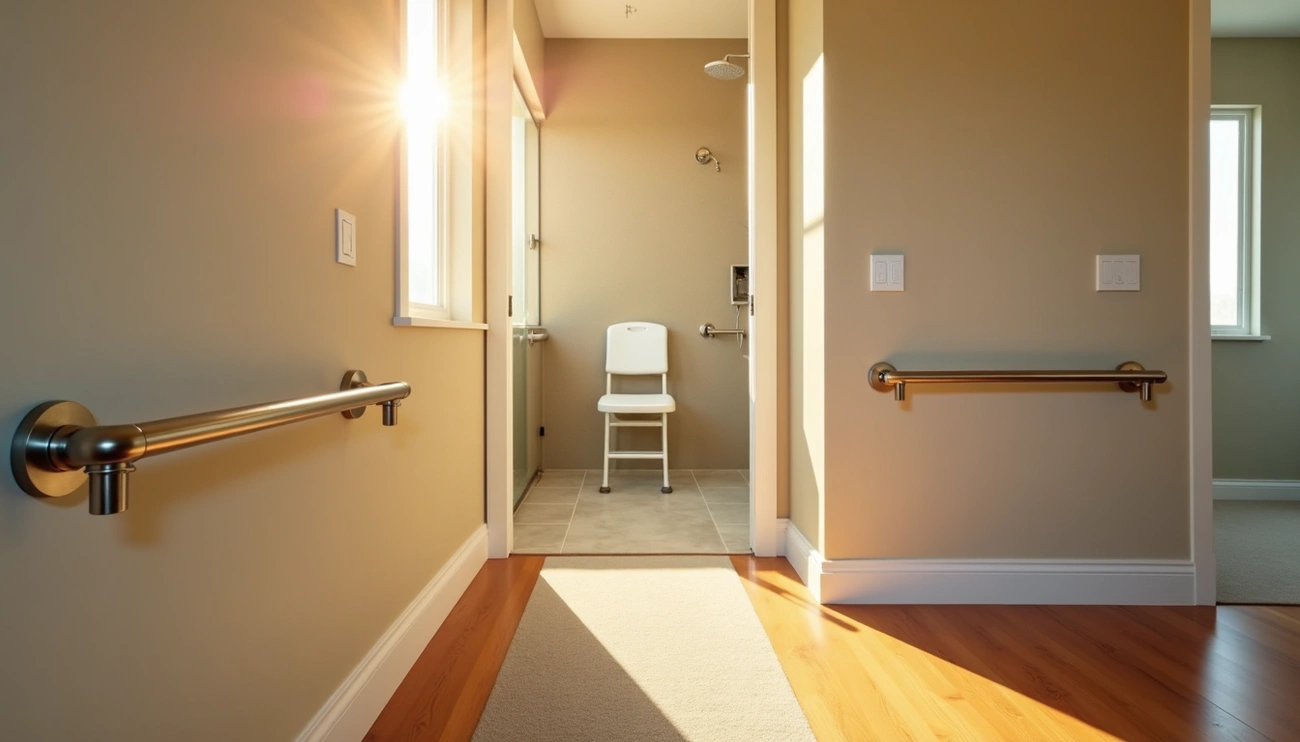
For bathrooms, installing grab bars near toilets and showers can prevent dangerous falls. A shower chair, handheld showerhead, and raised toilet seat further enhance bathroom safety. Kitchens benefit from lever-style faucets that are easier to operate with arthritis.
Improved lighting makes a substantial difference throughout the home, particularly for those with declining vision. Adding brighter bulbs and motion-sensor lights transforms previously dark, hazardous areas. Removing throw rugs or securing them with non-slip tape eliminates a common tripping hazard.
For those with mobility concerns, widening doorways to 36 inches accommodates wheelchairs and walkers. Replacing round doorknobs with lever-style handles makes daily navigation easier for those with grip limitations.
Professional home safety audits
Professional home safety assessments provide evaluation beyond what family members might notice. These audits typically include a 240-point inspection covering the exterior, entryways, and every room including bathrooms, bedrooms, kitchen, and dining areas.
Professional auditors evaluate lighting, fire safety, electrical concerns, and accessibility issues. After completing the assessment, they prepare recommendations prioritizing immediate dangers like loose stair railings before suggesting other modifications.
Currently, 100% of emergency room doctors agree that annual home safety assessments are important for keeping seniors safe. These evaluations often pay for themselves by helping avoid costly injuries or premature moves to assisted living.
Building a Support System for Aging in Place
Successful aging in place requires more than home modifications. You need a network of people and services ready to help when your needs change. Building this support system before you need it can mean the difference between staying home comfortably and having to move to assisted living prematurely.
Role of Family Caregivers
Family members form the foundation of most aging in place arrangements. Nearly 53 million Americans provide care for older adults or people with disabilities, delivering services valued at approximately $600 billion annually. These family caregivers help with household tasks, personal care, transportation, medication management, and healthcare coordination.
Caregiving can be physically and emotionally demanding, particularly for families supporting seniors with dementia or cancer, who face nearly equivalent levels of care burden. Family caregivers need their own support to prevent burnout and continue providing effective assistance.
Aging in Place Home Care and Services
Professional home-based services can supplement family support when needs exceed what relatives can provide. These services include:
- Personal care assistance with bathing, dressing, and mobility
- Household help with chores, meals, and transportation
- Health services including medication management and wound care
Certified nursing assistants provide hands-on physical care, while companions offer homemaker services without medical assistance. The level of service depends on your specific needs and budget.
Community and Government Aging in Place Resources
Area Agencies on Aging (AAAs) serve as valuable starting points for finding local support services. The Administration on Aging funds programs through the Older Americans Act, including caregiver support, nutrition services, and transportation assistance. These agencies coordinate services that help adults 60 and older maintain independence and dignity regardless of income level.
Many communities offer additional resources like senior centers, volunteer driver programs, and meal delivery services that support aging in place goals.
When to Consider Professional Help
You may need to hire professional assistance when daily tasks become challenging. Watch for difficulties with bathing, medication management, cooking, or driving. Care options range from occasional help with specific tasks to full-time assistance.
Geriatric care managers can assess your needs, coordinate services, and help you work with complex healthcare systems. Private care typically costs $25-30 per hour, but this investment often allows seniors to maintain independence at home longer than they otherwise could.
Financial planning and resources for long-term independence
Planning for the financial aspects of aging in place requires understanding what you’ll spend on home modifications and ongoing care services. These costs vary significantly based on your specific needs and location.
Estimating the cost of aging in place
Home modifications for aging in place typically range from $3,000 to $15,000 nationally, though extensive renovations can reach $40,000 to $50,000. Specific updates carry their own price tags: walk-in tubs cost approximately $5,000, stair lifts around $8,000, and complete bathroom remodels about $11,200.
These upfront investments often prove economical compared to residential care costs. For seniors needing home health aide services, the median monthly cost runs about $6,483, compared with $5,900 for assisted living and $9,277 for nursing home care. A helpful guideline: if you need less than 40 hours of weekly care, aging in place typically costs less than institutional alternatives.
Funding options: Medicare, Medicaid, and private insurance
Medicare provides limited coverage for home health services, including:
- Skilled nursing care (part-time)
- Physical therapy and speech-language services
- Medical social services
- Medical equipment
However, Medicare doesn’t cover 24-hour home care, meal delivery, or custodial care when that’s the only assistance needed. Medicaid offers more extensive coverage for qualifying low-income seniors, including home and community-based services. Some states even allow Medicaid to pay family caregivers directly.
Private insurance options include long-term care insurance, which primarily covers in-home care costs. You may also consider home equity loans or reverse mortgages to fund modifications and care services.
Budgeting for home care and modifications
Start by evaluating your current financial situation-income, savings, and investments-to determine your monthly cash flow for aging in place expenses. Look into benefit programs that can help with healthcare costs, groceries, and property taxes if you have limited income.
Research grants from nonprofit organizations that support healthcare access, caregiver assistance, and independent living. Many communities offer financial aid programs specifically designed to help seniors remain in their homes safely.
Bottom Line
Aging in place offers a practical solution for the 90% of seniors who prefer staying in their homes rather than moving to residential care facilities. Success requires early planning, ideally starting in your 40s or 50s, before health challenges make decisions more difficult.
Home safety modifications form the foundation of safe aging in place. Simple changes like installing grab bars, improving lighting, and removing tripping hazards can prevent falls-the leading cause of injury among older adults. Professional home safety audits provide comprehensive evaluations that identify potential dangers you might miss.
Building a strong support network proves equally important. Family caregivers provide care valued at approximately $600 billion annually, but professional services may become necessary when family support isn’t sufficient. Area Agencies on Aging serve as excellent starting points for finding local resources and services.
Financial planning requires understanding both immediate and long-term costs. Home modifications typically range from $3,000 to $15,000, while more extensive changes can cost $40,000 to $50,000. However, if you need less than 40 hours of weekly care, aging in place generally costs less than assisted living or nursing home care.
Medicare covers limited home health services, while Medicaid offers more extensive coverage for those with limited income. Long-term care insurance and other private options can help cover additional costs.
Aging in place presents challenges, but proper preparation makes it achievable for many seniors. Early planning, appropriate home modifications, reliable support systems, and sound financial strategies can help you maintain independence and quality of life in familiar surroundings for years to come.
Key Takeaways
Aging in place allows seniors to maintain independence at home, but success requires early planning, home modifications, and strong support systems to ensure safety and quality of life.
• Start planning for aging in place in your 40s-50s, involving family in conversations about future needs and preferences before health crises occur.
• Implement simple home safety modifications like grab bars, improved lighting, and removing tripping hazards to prevent falls-the leading cause of senior injuries.
• Build a comprehensive support network combining family caregivers, professional home care services, and community resources to fill gaps in assistance.
• Budget for aging in place costs ($3,000-$15,000 for modifications) which are typically more economical than institutional care when needing less than 40 hours weekly care.
• Explore funding options including Medicare for skilled nursing, Medicaid for comprehensive services, and private insurance to support long-term independence goals.
With 90% of seniors preferring to age at home, proper preparation transforms this desire into reality while preserving dignity, social connections, and familiar surroundings that contribute to overall well-being.
FAQs
Q1. What are the most essential services for seniors aging in place? The most crucial services for seniors aging in place include personal care assistance, meal preparation and delivery, transportation, housekeeping, and medication management. These services help maintain independence and quality of life while addressing common challenges faced by older adults at home.
Q2. How can families start planning for aging in place? Families should begin planning for aging in place in their 40s or 50s, well before assistance is needed. This involves having open conversations about future needs, assessing the home environment for potential modifications, and exploring local support services and financial options.
Q3. What home modifications are most important for aging in place safely? Key home modifications for safe aging in place include installing grab bars in bathrooms, improving lighting throughout the house, removing tripping hazards like loose rugs, widening doorways for wheelchair access, and adding lever-style handles on doors and faucets. These changes can significantly reduce fall risks and improve accessibility.
Q4. How does aging in place compare financially to assisted living? Aging in place is often more economical than assisted living when less than 40 hours of weekly care is needed. While home modifications can cost between $3,000 to $15,000, this investment is typically less than long-term institutional care expenses. However, costs vary based on individual needs and local care prices.
Q5. What role do family caregivers play in successful aging in place? Family caregivers are crucial in supporting seniors aging in place. They often provide assistance with daily tasks, transportation, medication management, and emotional support. However, it’s important to balance caregiving responsibilities and seek additional help when needed to prevent burnout and ensure the best care for the senior.