
Research shows mindfulness for seniors can reduce the risk of chronic stress, hypertension, and heart disease while simultaneously improving brain function and cognition.
Regular meditation offers seniors benefits beyond basic relaxation. Studies indicate the practice boosts memory and potentially slows the progression of Alzheimer’s disease and dementia. Mindfulness activities create a foundation for better physical and mental health in older adults. Clinical trials support meditation’s effectiveness for improving attention, reducing burnout, and enhancing sleep quality.
The accessibility of mindfulness meditation makes it particularly valuable for seniors. These exercises can be practiced through various methods-breathing techniques, body scans, or journaling-making them adaptable for all mobility levels. They require no special equipment and can be done anywhere, needing just 10 minutes daily to deliver significant benefits.
This guide presents a simple 10-minute daily mindfulness routine specifically designed for seniors. The practice helps individuals focus on the present moment, whether they’re dealing with anxiety, stress, or simply want to enhance their quality of life. Regular mindfulness practice allows seniors to find genuine peace and contentment through present-moment awareness.
Understanding Mindfulness for the Elderly
Mindfulness offers older adults more than a wellness trend-it provides a practical skill that transforms daily life. The practice centers on “maintaining a moment-by-moment awareness of our thoughts, feelings, bodily sensations, and surrounding environment through a gentle, nurturing lens”.
What mindfulness means
The practice trains the mind to focus, relax, and redirect thoughts purposefully. Practitioners learn to pay attention to themselves from a neutral standpoint without judgment. Mindfulness combines two distinct skill sets-cognitive abilities for maintaining focused attention and emotional capabilities for achieving non-judgmental observation.
This approach helps disrupt unhelpful thinking patterns that often contribute to mental health issues. Its versatility makes mindfulness particularly valuable-people can practice through meditation, mindful eating, walking, or during routine activities by bringing full attention to the present moment.
How it helps seniors specifically
Studies reveal mindfulness training delivers numerous benefits particularly relevant to older adults:
- Enhanced emotional well-being: Seniors practicing mindfulness reported significantly reduced rumination and improved memory specificity. Multiple studies found mindfulness meditation decreased depression and anxiety symptoms in older adults.
- Improved cognition: A neuroscience study showed seniors in a mindfulness group outperformed puzzle-solving participants on pre-Alzheimer’s tests, demonstrating increased neural activity in the brain’s memory centers.
- Better physical health: The practice improves immune function in older adults, reduces inflammation, and supports heart health. It also helps manage chronic pain-one study found seniors with back pain functioned better after an eight-week mindfulness program, with reduced pain persisting up to six months.
- Increased quality of life: Mindfulness naturally aligns with older adults’ emotion regulation strategies, explaining why self-reported mindfulness often measures higher in seniors compared to younger adults.
Common myths about meditation for seniors
Many older adults hesitate to try mindfulness due to persistent misconceptions:
First, meditation isn’t exclusively religious. Though rooted in Buddhist practice, modern mindfulness has evolved into a secular practice for relaxation.
Second, practitioners don’t need to sit still or in silence. Walking meditations, tai chi, and other movement-based practices prove equally effective.
Third, clearing the mind isn’t the goal. Having thoughts during meditation is normal-the practice focuses on noticing them without judgment.
Fourth, extensive practice time isn’t necessary. Even three to five minutes of mindful breathing can calm the mind and ease the nervous system.
Setting Up for Success
Creating the right environment proves fundamental for establishing an effective mindfulness practice for seniors. Both physical space and timing significantly impact meditation experiences.
Creating a quiet and safe space
A dedicated meditation area helps remove obstacles from regular practice. Research shows seniors don’t need an entire room-a corner, alcove, or garden spot works effectively. Meditation experts recommend choosing a location naturally encountered daily, such as a bedroom corner visible upon waking and before sleeping.
Effective meditation spaces typically include:
- A serene area away from household traffic
- Minimal distractions and clutter, which research links to mental distraction
- Natural elements like plants or natural light
- Clean space ready for immediate use
Meditation teacher Ralph De La Rosa notes, “There are so many obstacles involved with meditation, a dedicated space moves some of them out of the way.”
Choosing the right time of day
Consistency matters more than specific timing for seniors beginning mindfulness practice. Early morning offers distinct advantages-the environment remains quieter, and the mind hasn’t accumulated the day’s stresses.
Mid-morning sessions (around 10 AM) work well after mental fog clears. Afternoon meditation provides reset opportunities between activities, particularly beneficial during hectic days.
Meditation teacher Dora Kamau advises, “The most optimal time of day is the time that will allow you to stay consistent with your practice.”
Using props like chairs or cushions
Proper support prevents discomfort that might otherwise distract from meditation for elderly practitioners. Chairs provide excellent options for seniors with mobility concerns.
Backless yoga chairs offer support while enabling various positions. Cushions like zafus (round meditation pillows) provide hip support and help maintain proper spine alignment.
Additional comfort considerations include:
- Knee pads with concave centers to cradle joints
- Meditation mats for ankle support
- Backrest cushions for lumbar support
Buddhist teacher Thich Nhat Hanh emphasizes comfort as the essential aspect of meditation posture, rather than adhering to specific traditional positions.
Your Simple 10-Minute Daily Routine
The 10-minute mindfulness routine for seniors combines simplicity with effectiveness. Breaking the practice into four manageable parts creates a complete experience that calms the mind and relaxes the body.
1. Begin with 2 minutes of deep breathing
The mindfulness journey starts with focused breathing. Practitioners should find a comfortable seated position, either in a chair or on the floor with the spine upright but not rigid. Placing one hand on the chest and the other on the stomach helps track breathing patterns.
Slow, deep breaths through the nose fill the lungs completely, with visible belly expansion during inhalation. Exhaling slowly through pursed lips (as if gently blowing out a candle) for twice as long as the inhale slows breathing. This pursed-lip technique reduces anxiety and improves lung function.
Complete focus on each breath-the sensation of air entering the nostrils, chest rising, and abdomen expanding-forms the foundation of the practice. When thoughts wander, attention should gently return to breathing.
2. Do a 3-minute body scan
Following the breathing exercise, the body scan begins. With closed eyes, awareness shifts to physical sensations, starting at the feet.
The practice involves noticing feelings in the toes and feet-perhaps warmth, coolness, or tingling. Attention gradually moves upward through ankles, calves, knees, and thighs, continuing through hips, abdomen, chest, back, shoulders, arms, hands, neck, and finally to the head.
Each area requires simple observation without judgment. When tension appears, breathing into that space and imagining the tension dissolving with each exhale helps manage pain and connects practitioners with their body’s present state.
3. Spend 2 minutes observing your surroundings
After the body scan, open eyes direct attention outward. The practice focuses on environmental details typically overlooked. Outdoors, this might include swaying trees, cloud patterns, or bird sounds. Indoors, textures, colors, and shapes become the focus.
The observation engages all senses-hearing, smelling, feeling. Observing without labeling or categorizing enhances the experience. Instead of thinking “chair” or “tree,” noticing colors, patterns, and textures strengthens present-moment awareness.
4. End with 3 minutes of guided meditation
A short guided meditation completes the routine. Free online resources designed specifically for seniors offer various themes from gratitude to relaxation.
Many seniors find this the most accessible meditation form because it provides structure and gentle direction. The practitioner simply listens and follows instructions, allowing the guidance to direct attention.
Regular practice of this simple routine improves mental clarity, emotional balance, and overall well-being. Consistency matters more than perfection when establishing this daily practice.
Adapting Mindfulness to Your Needs
Mindfulness practices can be tailored to accommodate various physical limitations and personal preferences. Research shows the adaptability of mindfulness meditation for seniors allows virtually everyone to experience its benefits.
If you have mobility issues
Physical limitations don’t prevent effective mindfulness practice. Researchers have developed numerous adaptations specifically for seniors with mobility challenges. For seated meditation, sitting slightly forward on a chair with hands resting near the knees and feet firmly planted on the floor provides proper support. Some practitioners prefer using the chair’s back support or adding a pillow for extra comfort.
Body scans can be performed while seated rather than lying down-eliminating the risk of difficulty getting up from the floor. This modification works particularly well for those with arthritis, decreased flexibility, or balance concerns.
Studies suggest maintaining a pace close to normal walking speed for walking meditation rather than slowing down excessively, as this could affect balance. Experts recommend practicing near a wall or with another support available. Similarly, yoga poses can be modified using a chair or wall for stability.
If you prefer group activities
Group mindfulness provides both practice support and social connection. Data shows 72% of participants recommend mindfulness groups to friends, with 89-93% rating their group experience as “good” or “very good”.
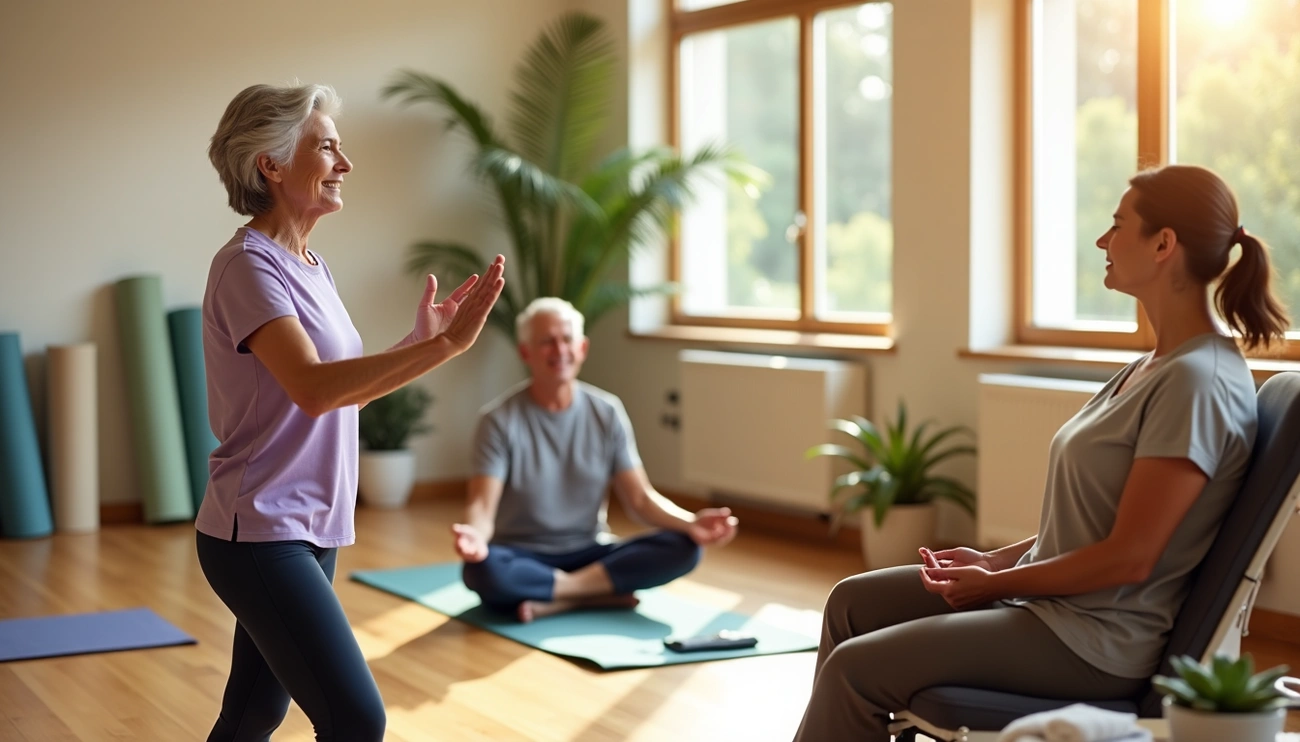
Joining a meditation class helps deepen practice while offering meaningful social interactions. Many community centers and senior living facilities now feature mindfulness groups specifically designed for older adults. These shared experiences foster a sense of belonging and community-key components of emotional well-being.
If you enjoy writing or art
Creative expression offers another pathway to mindfulness. Mindful writing-putting thoughts and feelings on paper without judgment-helps clarify thinking and process emotions. Research indicates expressive writing for just 20 minutes over three consecutive days produces notable benefits.
Art therapy stimulates cognitive processes while enabling emotional expression. Activities like painting, drawing, or phototherapy (using photography therapeutically) show particular benefits for seniors. Digital phototherapy combined with mindfulness has demonstrated promising results for improving self-esteem in older adults.
Additional creative mindfulness options include coloring (which reduces stress and enhances motor skills), gardening (connecting with nature while staying present), and cooking (focusing on smells, textures, and tastes).
Conclusion
Mindfulness practice delivers significant benefits for seniors at any stage of life. Research shows that just 10 minutes daily improves physical health, emotional wellbeing, and cognitive function. The practice remains accessible regardless of mobility limitations or personal preferences.
Consistency matters more than perfection in mindfulness practice. Starting with the simple four-part routine outlined provides a solid foundation. Many seniors find that after several weeks of regular practice, they naturally extend their meditation time as benefits become increasingly apparent.
The flexibility of mindfulness allows adaptation to changing needs. Whether through seated meditation, creative expression through art, or group activities for social connection, mindfulness accommodates individual preferences. This adaptability makes it particularly valuable for navigating the various challenges of aging.
At its core, mindfulness teaches appreciation for the present moment-something particularly meaningful in later years. The ability to fully experience life as it unfolds represents perhaps the greatest benefit mindfulness offers. Starting a 10-minute practice today often leads seniors to discover that mindfulness becomes not just an activity, but a more peaceful approach to daily living.
FAQs
Q1. How can seniors begin a daily mindfulness practice? Start with a simple 10-minute routine: 2 minutes of deep breathing, 3 minutes of body scanning, 2 minutes of observing surroundings, and 3 minutes of guided meditation. Consistency is key, so choose a comfortable space and time that works for you.
Q2. Can mindfulness be adapted for seniors with mobility issues? Absolutely. Mindfulness can be practiced while seated in a chair, using props for support, or even during gentle movements. Body scans and breathing exercises can be done in any comfortable position, making it accessible for all mobility levels.
Q3. What are the benefits of mindfulness for older adults? Mindfulness can improve emotional well-being, enhance cognitive function, boost physical health, and increase overall quality of life for seniors. It may help reduce stress, anxiety, and depression while potentially slowing the progression of cognitive decline.
Q4. Are there group mindfulness activities suitable for seniors? Yes, many community centers and senior living facilities offer mindfulness groups specifically designed for older adults. These provide both practice support and social connection, with studies showing high satisfaction rates among participants.
Q5. How can creative activities be incorporated into mindfulness practice? Seniors can engage in mindful writing, art therapy, coloring, gardening, or cooking as forms of mindfulness practice. These activities stimulate cognitive processes, enable emotional expression, and provide alternative ways to stay present and focused.