
What It Takes to Become a Successful Geriatric Care Manager
By: Paula Tchirkow, MSW, LSW, ACSW Eight years ago, on New Year’s Eve, I visited a 97-year-old client at 2:00 p.m., giving me more than enough time to check in on her, and still get ready to ring in 1996. I finished that call at 3:00 a.m., in a hospital emergency room. My client’s heart…

By: Paula Tchirkow, MSW, LSW, ACSW
Eight years ago, on New Year's Eve, I visited a 97-year-old client at 2:00 p.m., planning to check in and still make it home to ring in 1996. That call ended at 3:00 a.m. in a hospital emergency room. Her heart was failing. I spent most of the night holding her hand, cooling her forehead with wet cloths, and listening to her fears. She died that night.
On New Year's Day, I arranged her funeral. She had no family left and had outlived her friends. But I knew what she wanted: a formal funeral with flowers. So her priest and I made sure that happened.
To do this work well as a geriatric care manager, you need flexibility and emotional stamina. The hours are long on hard days, and the work takes a physical and emotional toll. You need patience, a sense of humor, and thick skin, you can't take things personally. Some days include being hit with a skillet, cursed at, or having a client throw a sweater at you.
Most days aren't that extreme. But you have to love the work and find meaning in helping older adults and their families navigate aging and illness. It's holistic work that involves a client's body, mind, and practical life. It requires creativity and persistence when crises happen.
Are you thinking about becoming a geriatric care manager? There are some things to know first.
Easier said than done?
To start: anyone can call themselves a GCM. There's no license, degree requirement, or minimum experience. Adult children and family members looking to hire one should be careful.
Many people market themselves as GCMs without the right background. I know of a Pittsburgh real estate broker who calls himself a GCM because he sells older adults' homes and helps them move into condos or senior facilities. Buyer beware.
GCMs should have degrees in social work, nursing, or psychology, ideally at the master's level in these fields or gerontology. Most have experience in family work, client advocacy, long-term care, or psychotherapy. Some are certified through the Academy of Certified Social Workers. At minimum, I believe all GCMs should be licensed in their state.
Good GCMs also stay current on Medicaid and Medicare rules and track changes in county Department of Aging regulations, which set income and asset limits for long-term care assistance.
Open for business
A listing in the NAPGCM directory and credentials aren't enough to start a GCM practice. This business grows through referrals and word of mouth, not advertising. I market to attorneys and financial planners, but even those referrals depend on long-standing relationships.
I went full-time when I had five steady clients. I'd met them while working in a bank's trust department, where I helped customers understand long-term care financing options.
Referrals from attorneys, financial planners, clergy, and physicians helped me build the practice. Now I have two clients under 50, though most need long-term care support.
Clients need different levels of care, which creates natural rhythm in the work. Some need weekly or monthly visits after the initial assessment; others only contact me for crises or during hospital stays.
Rates vary by region, typically $85 to $125 per hour. Successful single-manager practices make around $50,000 annually. Clients, adult children, bank trust departments, or attorneys with power of attorney usually pay. You don't have to be wealthy to hire a GCM, but you need some savings set aside.
Most people resist paying for GCM services. There's a stigma around paying for social work, they don't expect to pay.
Geriatric care management is still relatively new, about 10 years old, and many people see it as something government should cover. Medicaid doesn't fund care management, and only newer insurance policies include long-term care riders.
In emergency situations or as a last resort, people more easily justify the expense, when a parent's decline threatens to tear a family apart.
Also, good client relationships are usually long-term. The initial assessment takes two to six hours over one or two visits, depending on complexity. Some clients use only that assessment. Most work out a full care plan with regular visits. Many stay with a GCM for the rest of their lives, since physical and mental changes are common in later years and require ongoing reassessment.
The longer you work with a client, the easier it becomes to spot problems early. And clients build trust, which matters enormously during health crises. One client told hospital staff, "Everything will be alright, Paula is here," when I arrived at the emergency room.
The bottom line
I've built my practice on two principles: I work for my client, not the adult children, attorney, or nursing home, and I aim to keep clients as independent as possible.
I don't base a client's needs assessment on what her daughter wants. The assessment is holistic, it includes input from the client and family, plus a physical, emotional, psychological, financial, and lifestyle review. But the client comes first. A GCM's job is sometimes tough love: developing a care plan that gives the client the highest possible level of independence in healthcare and finances.
That might mean installing ramps, hiring a home health aide twice a week, arranging volunteer rides to the grocery store, finding an assisted living community, or working with an eldercare attorney on long-term care details.
Do you have what it takes?
There's no single personality type for a successful care manager. But after 10 years as a GCM, I've noticed patterns that help newcomers and established practitioners.
Experience, patience, and humor help. So do creativity and careful observation. The initial assessment often requires detective work and diplomacy.
To gauge whether a client can handle daily tasks, I'll ask for a cup of coffee and watch how they manage, physically, pouring it, or mentally, remembering where the coffee is or how to make it. I note stains on clothes or hygiene issues and pay attention to their reaction, is it normal forgetfulness or something chronic? I might tour the home looking for signs of physical or mental decline.
Beyond assessment, client visits vary widely. I've monitored pain medication during hospital stays, checked care levels at facilities, surprised clients with birthday cakes, and helped uncover financial abuse.
Once, I escorted an insurance appraiser through a client's home at her children's request. They suspected their mother's nurse was stealing. They were right. The nurse took $40,000 in goods over six months before getting caught.
Intangibles
You work hard for every dollar as a GCM, but the intangible rewards usually outweigh the challenges. There's a satisfaction that's hard to measure in dollars.
Helping a client regain independence after a stroke, comforting them before surgery, or sorting out financial problems that sparked a family crisis, any of these can turn an ordinary day into a great one. There's also the oral history you collect, which I never expected when I started.
The stories are remarkable. One client supported herself in the 1920s by playing organ for silent movies.
Another paid a penny to cross the Mansfield Memorial Bridge to get to school near McKeesport, a Pittsburgh suburb. She played hooky on days when penny candy seemed more important than reading and writing.
A third client, a pioneer of sorts, took a cross-country trip to Yellowstone in the 1930s with college roommates in a Model T Ford.
I have a client from Chicago who danced in Ziegfeld-style Vaudeville extravaganzas. Another vividly describes Atlantic City before Trump.
Some victories carry real weight. I have a client with bipolar disorder. When we met, she barely spoke, wasn't communicating with family or her doctor, and seemed disoriented.
Her children and doctor had given up on psychiatry after several failed treatments and antidepressants didn't work. When I suggested another psychiatrist, her doctor dismissed the idea.
But my client was my priority, not the doctor's ego. I kept pushing until I found a psychiatrist who specialized in bipolar disorder and convinced the family to try again. Five months later, my client asked me to take her Christmas shopping. She's talking with her family and looking forward to the holidays.
I don't take credit for her hard work or her psychiatrist's skill. But I take credit for keeping clear focus on what my client needed and working to bring independence back into her life.
Paula Tchirkow is President of Pittsburgh-based Allegheny Geriatric Consultants, which specializes in geriatric care management for aging parents and seniors planning for the future of their middle-aged children who have chronic illnesses. Paula is also a daughter of an elderly mother. Visit her website: www.caregivingadvice.com or reach her by email at .
Get matched
Looking for senior care for someone you love?
Tell us what you're considering. We'll share independent matches and pricing directly with you. No phone calls until you ask for one.
- Takes about two minutes to complete.
- Pricing details emailed to you. No phone calls until you ask for one.
- Independent matching. We do not own the communities we list.
Loading the matching form…
Powered by SilverAssist. By submitting this form you agree to our privacy policy.
More from our editors
All articles
Senior Monitoring Systems: A Complete Guide to Keeping an Aging Parent Safe at Home
Senior monitoring systems range from one-button medical alerts to passive motion sensors, cameras, GPS trackers, and caregiver apps. Here is how the main types compare on what they do, what they cost, what Medicare covers, and how to choose the right one without crossing privacy lines.
Normal Blood Oxygen Levels by Age for Seniors: What SpO2 Should Be
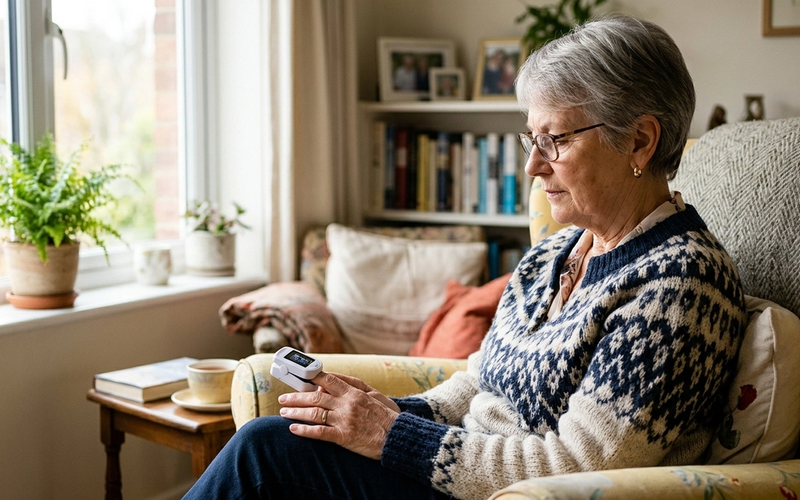
A normal blood oxygen level for seniors is 95 to 100 percent, the same as for any healthy adult, and it does not drop by the decade the way some charts claim. Here is what your pulse oximeter number means, when a low reading is an emergency, and why the device can read falsely high.

Cholesterol Levels by Age Chart for Seniors: What's Normal After 60
A desirable total cholesterol is under 200, with LDL under 100 and HDL over 60, and those targets are the same at 70 as they are at 40. Here is what your cholesterol numbers mean, how they really change with age, and when the number actually calls for treatment.
Explore senior living options
Comparing care for yourself or a family member? Browse communities by care type and see what each option typically costs.
- Assisted livingHelp with daily activities, costs, and how to choose a community.
- Independent livingMaintenance-free communities for active older adults.
- Home careIn-home support for seniors aging in place.
- Nursing homesSkilled nursing care and Medicare star ratings.
- Senior apartmentsAge-restricted, budget-friendly rental housing.
- Cost of senior livingCompare typical monthly prices by care type and state.