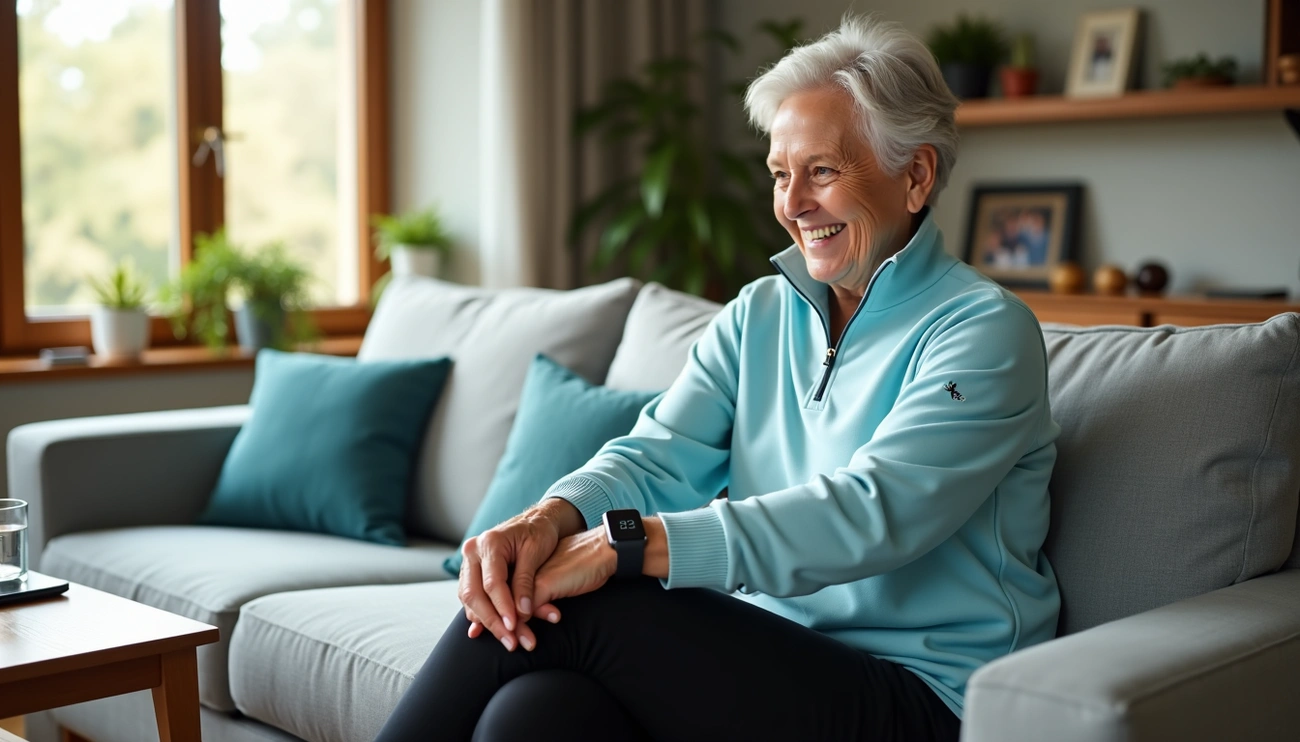
Choosing the right best Fitbit for seniors requires understanding which features matter most for older adults. According to the Pew Research Center, about 79 percent of adults 65 or older now use smartphones, making fitness trackers a practical addition to many seniors’ daily routines.
The numbers show growing acceptance of wearable technology. Currently, there are 454.7 million smartwatch users worldwide, with that number expected to increase by 40 percent to 324 million by 2025. Fitbit has positioned itself well in the healthcare space, partnering with seven of the top 10 U.S. health plans and appearing as a benefit in more than 100 Medicare Advantage plans across all 50 states.
You can find options ranging from simple to advanced. The Fitbit Inspire 3 offers a straightforward approach with its improved silicone band, while the Fitbit Sense provides stress tracking capabilities for those wanting more detailed health monitoring.
This guide examines the most senior-friendly Fitbit models for 2026, focusing on features that provide real value for older adults. You may want a basic device for step counting and sleep tracking, or you might prefer a feature-rich option with built-in GPS and voice assistants. Either way, we’ll help you find the right match for your health monitoring needs.
Why Fitbits Are Great for Seniors
Wearable fitness trackers provide practical benefits for older adults managing their health. Fitbits offer features designed to address common concerns that seniors face in their daily lives.
Encourages daily movement and activity
Research shows that sitting for extended periods creates health risks, including obesity, increased blood pressure, high blood sugar, and abnormal cholesterol levels. Even meeting daily exercise guidelines doesn’t eliminate the negative effects of prolonged sitting.
Fitbits help address this challenge through gentle reminders. The devices send vibration alerts when you’ve been inactive, encouraging at least 250 steps per hour. This small amount of movement – just a few minutes of walking – helps reduce the harmful effects of sitting.
The devices track Active Zone Minutes, a metric calculated using your age and resting heart rate. This provides a personalized measurement of activity intensity that goes beyond simple step counting. Some studies suggest that reaching 7,000 steps daily could help you live longer, making this tracking particularly valuable for health-focused seniors.
Many older adults find motivation in seeing their daily metrics. Fitbit’s achievement system offers virtual badges for consistent activity, such as the “Skydiver badge” for climbing 1,000 floors or the “London Underground badge” for covering 250 miles.
Helps monitor heart rate and sleep
Heart and sleep monitoring capabilities provide valuable health insights for seniors. Most Fitbit models offer continuous heart rate tracking and can detect irregular heart rhythms while you’re still or sleeping.
The American Heart Association estimates that at least 2.7 million Americans live with atrial fibrillation (AFib), a condition that increases stroke risk. Advanced models like the Fitbit Sense 2 include ECG functionality to check for AFib and provide irregular heart rhythm notifications. This information supports more informed conversations with healthcare providers about heart health.
Sleep quality often changes with age, but Fitbit tracks both quantity and quality. The devices analyze nighttime heart rate and movement patterns to estimate time spent in light, deep, and REM sleep stages. Each morning, you receive a Sleep Score along with restoration data including sleeping heart rate, restlessness, snore detection, and estimated blood oxygen variation.
Supports independent living with reminders and alerts
For seniors maintaining independence, Fitbits offer helpful daily living support through various reminders and alerts:
- Medication schedule reminders
- Hydration goal notifications
- Alerts for incoming calls and messages
- Calendar event reminders
Stress management tools can benefit seniors with specific health concerns. The Fitbit Sense includes an electrodermal (EDA) sensor that tracks stress levels. Premium subscribers receive a Stress Management Score that combines a dozen data points including sleep quality, exercise levels, and heart-rate variability.
Consider which features would most benefit your lifestyle when choosing a Fitbit. Some older adults prefer basic models focusing on step counting and sleep tracking, while others value advanced health monitoring capabilities. Fitbit’s partnerships with seven of the top 10 U.S. health plans and inclusion in more than 100 Medicare Advantage plans across all 50 states make these devices increasingly accessible to seniors.
Top 5 Fitbit Models for Seniors in 2026
Fitbit offers several models designed to meet different needs and preferences of older adults. Each device provides unique advantages, from basic step tracking to advanced health monitoring. Here are the top choices available this year.
1. Fitbit Sense 2 – Best for health tracking
The Fitbit Sense 2 delivers the most advanced health monitoring capabilities in the current lineup. Its stress management features include continuous electrodermal activity (cEDA) sensor tracking that identifies potential signs of stress throughout the day. This allows seniors to address stress before it affects other aspects of their health.
Heart health monitoring includes ECG functionality to check for atrial fibrillation and irregular heart rhythm notifications. Sleep tracking covers breathing rate, heart rate variability, and overnight skin temperature variations for comprehensive rest analysis.
The device offers up to 6 days of battery life with fast charging that provides a full day’s power in just 12 minutes. The aluminum case houses a bright 1.58-inch AMOLED display while remaining lightweight and comfortable for extended wear.
2. Fitbit Versa 4 – Best for everyday use
The Fitbit Versa 4 provides an ideal balance between functionality and simplicity for seniors. The slimmer case design weighs 15% less than previous versions, while a physical button simplifies navigation compared to touch-only interfaces.
Built-in GPS enables outdoor activity tracking without requiring a smartphone connection. The 50-meter water resistance makes it suitable for swimming and showering. With 6-day battery life, charging frequency remains minimal for busy seniors.
Rather than overwhelming users with complex data, the Versa 4 focuses on essential health metrics including sleep quality, heart rate, and blood oxygen levels. This approach works well for seniors who want meaningful health insights without complexity.
3. Fitbit Charge 6 – Best for active seniors
Active older adults benefit from the Fitbit Charge 6’s precision heart rate tracking, which delivers up to 60% more accuracy during vigorous activities like HIIT workouts, spinning, and rowing. This precision helps seniors monitor heart health during exercise safely.
The device includes ECG functionality and EDA stress monitoring. With over 40 exercise modes and built-in GPS, it accommodates varied physical activities. Google app integration provides Maps for turn-by-turn directions and Google Wallet for convenient payments.
Battery life extends to 7 days between charges, and the 5 ATM water resistance rating ensures full swim-proof protection.
4. Fitbit Inspire 3 – Best basic option for seniors
At $99.95, the Inspire 3 represents the most affordable entry point into Fitbit tracking. The bright color AMOLED display improves visibility for seniors with vision concerns.
The impressive 10-day battery life leads Fitbit’s lineup, minimizing charging inconvenience. Essential features include sleep tracking, stress management scoring, and connection to a phone’s GPS for outdoor activities.
Its slim, lightweight design ensures comfortable all-day wear. The simple interface makes it particularly suitable for first-time fitness tracker users who want straightforward health monitoring.
5. Google Pixel Watch 4 – Best premium option
The Google Pixel Watch 4 offers premium features with exceptional battery performance: 30 hours on the 41mm model and 40 hours on the 45mm version. Battery Saver mode extends this to two and three days respectively.
The domed Actua 360 display provides excellent visibility from all angles. Safety features like Fall Detection automatically contact emergency services after detecting a fall if the wearer doesn’t respond within a set timeframe.
All Fitbit health tracking capabilities come standard, plus unique features like a personal AI health coach built with Gemini technology. This provides proactive fitness and sleep coaching tailored to individual goals. Quick charging delivers 0-50% battery in just 15 minutes.
Key Features Seniors Should Look For
When choosing the best Fitbit for seniors, certain features directly impact your daily experience and health monitoring success. Consider these essential aspects based on how you plan to use your device.
Large, easy-to-read display
Screen visibility becomes crucial when checking health metrics throughout the day. Models like the Fitbit Versa series offer 1.4-inch displays that provide clear readability. Some Fitbits include accessibility options such as the ability to tap the screen three times to magnify the view. For seniors with vision concerns, AMOLED screens offer better contrast and brightness compared to standard displays.
Heart rate and ECG monitoring
Heart health features matter significantly for older adults managing cardiovascular wellness. Modern Fitbits provide continuous heart rate tracking and can analyze heart rhythm while still or sleeping to detect signs of atrial fibrillation. The ECG app on compatible devices measures the heart’s electrical activity and records signals to identify potential AFib. These capabilities give you meaningful health data to discuss with your healthcare providers.
Sleep and stress tracking
Quality rest affects overall health, especially as we age. Fitbit devices analyze nighttime heart rate and movement patterns to estimate time spent in light, deep, and REM sleep. Most models provide a daily Sleep Score alongside data on restoration, sleeping heart rate, and restlessness. Stress management tools help you identify when your body shows signs of stress, with guided breathing exercises available in the app.
Water resistance and durability
Current Fitbit models feature water resistance to 164 feet (50 meters), making them suitable for swimming, showering, or accidental water exposure. This durability ensures your device continues working through daily activities without concern about water damage.
Long battery life
Battery longevity becomes important if you prefer not to charge devices frequently. Battery performance varies across models, with the Inspire 3 offering up to 10 days between charges. Most other Fitbit models provide 5-7 days of continuous use, reducing the need for daily charging routines.
Voice assistant and call notifications
Modern Fitbits connect with Google Assistant or Alexa, allowing you to ask questions, set alarms, check weather forecasts, and control smart home devices through voice commands. Models like the Sense and Versa series support on-wrist calls through built-in speakers and microphones, enabling you to answer phone calls directly from your wrist without reaching for your phone.
Ease of Use and Setup for Older Adults
Getting started with a Fitbit for seniors doesn’t need to be overwhelming. Many older adults find these devices surprisingly manageable once they understand the basic setup process.
Simple Fitbit for seniors: what to choose
The Fitbit Inspire 3 offers the most straightforward experience for older adults new to wearable technology. Its simple interface requires minimal technical knowledge, and the impressive 10-day battery life reduces how often you need to remember charging. Another solid choice is the Charge 5, which seniors describe as “quite simple” to use, even for “smartwatch beginners”.
Both models include small and large silicone bands in the package, so you can find the right fit without buying additional accessories.
How to set up a Fitbit without a smartphone
Setting up a Fitbit without a smartphone is no longer possible since Fitbit discontinued computer-based USB dongle syncing in 2023. You must use the Fitbit app on a compatible smartphone or tablet for initial account creation and device pairing.
However, once setup is complete, your Fitbit tracks activity on its own. The device stores data until you can sync it again with a compatible device. If you don’t own a smartphone, consider asking a family member to help with the initial setup process.
Using the Fitbit app on Android and iPhone
The Fitbit app requires specific operating system versions to function properly:
- Apple iOS 16.4 or higher
- Android 11 or higher
Some devices may experience compatibility issues, including Huawei P8 Lite, Huawei P9 Lite, Xiaomi Mi 6, and Huawei P20 Lite. Once installed, the app provides detailed data visualization that isn’t available on the device screen alone.
Tips for adjusting settings for better visibility
Newer Fitbit models include accessibility features designed with seniors in mind. The “Magnify” feature on Charge 6, Sense 2, and Versa 4 lets you zoom the display by triple-tapping the screen, offering 2x or 3x magnification options.
Voice assistants can help overcome visibility challenges. Amazon Alexa integration allows you to ask for fitness stats verbally instead of reading small text. For those with serious visual impairments, specialized apps like Fitbraille translate time and step count into Braille using vibration patterns.
Fitbit Premium: Is It Worth It for Seniors?
Fitbit devices provide useful health tracking without additional subscriptions, but many seniors ask whether upgrading to Fitbit Premium offers enough value for the extra cost.
What’s included in Fitbit Premium
Fitbit Premium extends your device’s basic capabilities with several additional features:
- Guided programs to improve sleep, nutrition, and activity levels
- Advanced insights connecting your activity, heart rate, and sleep patterns
- Detailed sleep analysis with personalized recommendations
- Over 200+ workout videos from Fitbit and partners like Daily Burn and PopSugar
- Mindfulness sessions including meditation and sleep sounds
Benefits for health-conscious seniors
Health-focused older adults often find Premium’s expanded features valuable. The service offers detailed wellness metrics unavailable to free users, including blood glucose tracking (manual input required) and advanced temperature data.
For seniors with doctors’ appointments, the Wellness Report provides a printable overview of health data from the past 30 days to year, featuring charts for heart metrics, weight, sleep, and activity. This report helps medical professionals understand your health patterns during visits.
Premium also offers functional fitness classes specifically beneficial for seniors looking to improve balance, strength, and flexibility without gym access.
Free trial and pricing overview
Every Fitbit includes a 90-day free trial of Premium, activated within 60 days of device setup. After this period, Premium costs $9.99 monthly or $79.99 annually, making the yearly option more economical (saving about $16).
Most newer Fitbit models (Charge 6, Charge 5, Sense, Inspire 3, Sense 2, Versa 4) include at least three months free, with some offering six months. You can evaluate whether the additional features justify the cost during this trial period before committing to a subscription.
Bottom Line
Selecting a Fitbit requires matching the device to your specific health monitoring needs and technical comfort level. The Inspire 3 offers the best value for seniors wanting basic tracking with minimal complexity, while the Sense 2 provides advanced health insights for those needing detailed monitoring capabilities.
Consider these key factors when making your decision. Battery life varies significantly across models, from the Inspire 3’s impressive 10-day performance to the 5-7 days offered by other devices. Screen readability matters for daily use, particularly if you have vision concerns. Many newer models include accessibility features like screen magnification that can help.
The free Fitbit features provide substantial health monitoring benefits for most seniors without additional cost. Premium subscription offers extras like detailed sleep analysis and guided programs, but the included 90-day trial lets you determine if the $79.99 annual cost adds meaningful value to your routine.
Your choice should align with how you plan to use the device. Some seniors find step counting and basic sleep tracking sufficient for their goals. Others benefit from comprehensive heart monitoring, stress tracking, and medication reminders that support independent living.
Fitbit’s partnerships with major health plans and inclusion in more than 100 Medicare Advantage plans across all states make these devices increasingly accessible for seniors. Whether you choose a basic model or feature-rich option, you’ll have a tool that supports active aging and provides valuable health insights to share with your healthcare providers.
Key Takeaways
Here are the essential insights to help seniors choose the perfect Fitbit for their health and lifestyle needs:
• Fitbit Inspire 3 offers the best value for beginners – 10-day battery life, simple interface, and $99 price make it ideal for first-time users
• Advanced health monitoring requires premium models – Fitbit Sense 2 provides ECG, stress tracking, and AFib detection for comprehensive health insights
• Setup requires smartphone initially – All Fitbits need mobile app for first-time configuration, though devices work independently afterward
• Premium subscription isn’t essential – Free features provide substantial health tracking; 90-day trial helps determine if $80/year upgrade adds value
• Battery life varies significantly by model – Choose Inspire 3 for 10 days, or Sense 2/Versa 4 for 6 days between charges
The key is matching features to your specific health goals and technical comfort level. Whether you need basic step counting or comprehensive heart monitoring, there’s a Fitbit designed to support your active aging journey without overwhelming complexity.
FAQs
Q1. What is the best Fitbit model for seniors in 2026? The best Fitbit for seniors depends on individual needs. The Fitbit Sense 2 is ideal for comprehensive health tracking, while the Fitbit Inspire 3 is the most user-friendly and affordable option. The Fitbit Versa 4 offers a good balance of features and simplicity for everyday use.
Q2. Are Fitbits easy for older adults to set up and use? Most Fitbits are designed with user-friendliness in mind. Models like the Fitbit Inspire 3 and Charge 6 are particularly simple to use, even for smartwatch beginners. Initial setup requires a smartphone, but many models offer features like screen magnification and voice commands to enhance accessibility for seniors.
Q3. How long does the battery last on Fitbit devices? Battery life varies by model. The Fitbit Inspire 3 offers the longest battery life at up to 10 days. Most other Fitbit models, including the Sense 2 and Versa 4, provide 5-7 days of use between charges, minimizing the need for frequent charging.
Q4. Can Fitbits monitor heart health for seniors? Yes, many Fitbit models offer heart health monitoring features. Advanced models like the Fitbit Sense 2 include ECG functionality to check for atrial fibrillation and provide irregular heart rhythm notifications. Most Fitbits also offer continuous heart rate tracking throughout the day and night.
Q5. Is Fitbit Premium worth it for older adults? Fitbit Premium can be valuable for health-conscious seniors, offering detailed wellness metrics, guided programs, and comprehensive sleep analysis. However, the free features provide substantial benefits for most users. A 90-day free trial is available to help determine if the additional features justify the $79.99 annual cost.