
Farxiga Cost with Medicare: What You'll Actually Pay in 2026
Farxiga costs become much more manageable with Medicare once you understand your coverage options and the savings available in 2026. Medicare's negotiated price and the annual out-of-pocket cap give real financial protection to beneficiaries managing diabetes, heart failure, or chronic kidney disease. This page covers cost, not whether the drug is right for you.

Key takeaways
Farxiga costs a lot less once you understand your coverage options and know what savings are available in 2026.
- Medicare covers Farxiga widely: most Medicare Part D plans include it on their formularies, and many do not require prior authorization.
- In 2026, the negotiated price drops to $178.50 monthly, a 68% reduction from the previous price.
- Once you reach the $2,100 yearly cap, you pay nothing for covered medications for the rest of that year.
- You can reduce costs further with 90-day supplies, mail-order pharmacies, and patient assistance programs.
- Check your specific plan's formulary, since coverage terms and copayments vary between Medicare Part D plans.
Medicare's negotiated pricing and the annual spending limit give important financial protection for people managing diabetes, heart failure, or chronic kidney disease.
Paying cash for Farxiga is expensive, which puts it out of reach for many people with Type 2 diabetes, heart failure, or chronic kidney disease. Medicare makes it far more affordable, and the negotiated price that took effect on January 1, 2026 brings it down further.
This guide answers your main questions about Medicare coverage for Farxiga: Does Medicare cover it? What will you actually pay in 2026? How do Part D plans handle coverage? You'll also learn about patient assistance options and how the new $2,100 annual cap protects you from high prescription costs.
Farxiga is used to manage type 2 diabetes and certain heart and kidney conditions. It helps the kidneys remove glucose from the body, which lowers blood sugar and protects the heart and kidneys. Medicare covers it because it improves health outcomes for beneficiaries.
What Farxiga treats
Farxiga (dapagliflozin) treats several conditions common in older adults. It reduces the risk of kidney disease progression, end-stage kidney disease, cardiovascular death, and hospitalization for heart failure in people with chronic kidney disease. About 37 million Americans have CKD.
For people with heart failure, Farxiga reduces the risk of cardiovascular death, hospitalization for heart failure, and urgent heart failure visits. It also helps people with Type 2 diabetes and known cardiovascular disease or multiple cardiovascular risk factors by reducing hospitalization risk for heart failure.
Farxiga improves blood sugar control when combined with diet and exercise in adults and children 10 years and older with Type 2 diabetes. Because it manages blood sugar and protects vital organs, Medicare Part D plans regularly cover it.
How SGLT2 inhibitors work
Farxiga is a sodium-glucose cotransporter 2 (SGLT2) inhibitor. It blocks your kidneys from reabsorbing glucose that has been filtered from your blood. Instead, your body removes excess glucose and sodium through urination.
This has several effects. For people with Type 2 diabetes, more glucose leaves through urine, which lowers blood sugar. For those with chronic kidney disease, it reduces pressure inside the kidney's filtering units, keeping them healthier over time. Farxiga also reduces activity in the sympathetic nervous system, which contributes to heart failure.
In the DAPA-CKD trial, Farxiga cut the risk of worsening kidney function, end-stage kidney disease, or cardiovascular or kidney death by 39% compared to placebo. It also reduced the risk of death from any cause by 31%.
Who Farxiga is prescribed for
Farxiga may be prescribed for adults with chronic kidney disease at risk of progression, whether or not they also have diabetes. It is approved for CKD stages 2 through 4 with elevated urinary albumin. It may also be prescribed for adults with heart failure where the heart is too weak to pump adequately. Whether it belongs in any individual's medicine cabinet is a decision for that person and their doctor, not something a chart can settle.
It may also be prescribed for people with Type 2 diabetes who have cardiovascular disease or multiple cardiovascular risk factors, to reduce the risk of hospitalization for heart failure. It is not used in Type 1 diabetes to improve blood sugar control, and it is not recommended for people with polycystic kidney disease or those on immunosuppressive therapy for kidney disease.
Risks and side effects to know about
Farxiga is a prescription medicine with real risks, and cost is only one part of the decision. The National Library of Medicine's MedlinePlus drug information for dapagliflozin lists the following among the reasons to call a doctor right away:
- Ketoacidosis. Nausea, vomiting, stomach-area pain, tiredness, or difficulty breathing can signal ketoacidosis, and it can happen even when blood sugar is below 250 mg/dL. MedlinePlus advises stopping the drug and getting emergency care.
- A serious genital infection. Fever with pain, tenderness, redness, and swelling of the genitals or the area between the genitals and the rectum needs immediate attention. This is the rare but life-threatening infection sometimes called Fournier's gangrene.
- Dehydration and low blood pressure. Farxiga works by flushing glucose out through urine, which also flushes out fluid. Dry mouth, dark urine, decreased sweating, and dry skin are the warning signs, and dehydration matters more in later life because it raises the risk of dizziness and falls.
- Urinary tract and yeast infections. Burning or painful urination, cloudy or bloody urine, fever, back pain, or genital itching and discharge are all worth a call.
Tell your doctor before starting if you have had pancreatitis, low blood pressure, frequent urinary tract or yeast infections, liver disease, or if you follow a ketogenic diet or drink heavily. Do not start, stop, or change the dose of any prescription medicine based on what a price guide says. This page is about what Farxiga costs under Medicare, not about whether you should be taking it.
Does Medicare cover Farxiga
Medicare Part D coverage for Farxiga
Most Medicare drug plans cover Farxiga, and many do so without requiring prior authorization. You can get coverage through either a standalone Medicare Part D plan or a Medicare Advantage Prescription Drug (MAPD) plan. Tier placement and cost still vary from plan to plan, so check your own formulary.
Federal regulations require Part D plans to cover most FDA-approved medications. But private insurers decide how to design their coverage. Farxiga is usually covered, though the amount of coverage and your out-of-pocket costs vary between plans.
Part D plans must cover at least two drugs in commonly prescribed categories. Even if brand-name Farxiga is not on your formulary, generic dapagliflozin or other SGLT2 inhibitors likely are.
Checking your plan's formulary
Every Part D and MAPD plan keeps a formulary, which is simply the official list of drugs it agrees to cover. The only way to know for certain whether Farxiga is on yours is to check that list.
You can review formulary information at Medicare.gov/plan-compare or by calling your plan directly. Formularies change, and your plan will notify you of changes.
If your plan doesn't cover Farxiga, you have options. Start by discussing alternatives with your doctor. Jardiance, for example, is another SGLT2 inhibitor that many plans carry, though you should check your formulary rather than assume. You can also request a formulary exception, your doctor must submit a letter stating the medication is medically necessary. Your plan must respond within 72 hours for a standard request or 24 hours for an expedited request if waiting could harm your health. If your plan denies the request, you can appeal. You can also switch plans during the Annual Enrollment Period (October 15 to December 7).
Farxiga cost with Medicare in 2026
Average out-of-pocket costs
What you actually pay each month depends on your plan's formulary tier, deductible, and coinsurance structure. Two people filling the same prescription under different plans can pay very different amounts.
Cost without insurance
Without insurance you face the list price. CMS put Farxiga's 2023 list price at $556 for a 30-day supply, which is the benchmark the 2026 negotiated price is measured against.
How the 2026 price negotiation affects you
Starting January 1, 2026, the negotiated price for Farxiga is $178.50 for a 30-day supply, a 68% discount from the 2023 list price of $556. This lower price is used to calculate your True Out-of-Pocket spending, which determines when you reach your out-of-pocket maximum.
Monthly premiums and deductibles
For 2026, the Part D national base premium is $38.99. The maximum Part D deductible rises to $615, up from $590 in 2025. Some plans offer lower deductibles or waive them entirely.
Copay expectations by plan tier
Your copay depends on which tier your plan assigns to Farxiga. Plans typically require 25% coinsurance during the initial coverage phase. With the negotiated price of $178.50, that's about $44.63 per month.
Ways to lower your Farxiga costs
Even after Medicare's negotiated price, a few moves can shave your Farxiga costs down further.
Ordering a 90-day supply
A 90-day supply means fewer pharmacy trips and lower overall costs. Your insurance company must approve it, but it simplifies medication management and saves money.
Using mail-order pharmacies
Mail-order pharmacies charge less than retail locations. AstraZeneca offers a mail-order program that may save you money on Farxiga.
AstraZeneca patient assistance program
The AZ&Me program provides medications at no cost to people who cannot afford them. You may qualify if you're covered under Medicare but still struggle with costs. Once enrolled, you receive up to a 90-day supply shipped to your home at no cost. The enrollment lasts one year, and you can reapply after that.
If you have Medicare and are considering a Farxiga coupon, understand how it works with federal healthcare programs. Manufacturer coupons help commercially insured patients pay less. Federal rules prevent using these coupons directly for prescriptions covered by Medicare, Medicaid, or other federal programs. This prevents manufacturers from using coupons to influence prescribing decisions or raise prices in government programs. However, in rare cases, like if you're in the Part D coverage gap or have non-federal supplementary insurance, a coupon might help. Talk with your pharmacist or Medicare plan administrator to see if you qualify and what options you have.
You cannot use the Farxiga savings card if you have Medicare. People enrolled in state or federally funded prescription insurance programs are not eligible. However, using a discount program instead of your Medicare coverage might save you money in some situations.
Generic dapagliflozin as an alternative
Generic dapagliflozin has been approved by the FDA and several manufacturers now market it in 5 mg and 10 mg tablets. What it costs varies by pharmacy, by plan, and by month, and no single figure holds. Ask your pharmacist for the cash price at your pharmacy and check whether your Part D plan covers the generic on a lower tier than the brand.
The $2,100 annual cap on drug costs
The maximum out-of-pocket cost for 2026 Part D drugs is $2,100. Once you reach this limit, your plan covers 100% of covered medication costs for the rest of the year.
Conclusion
Medicare makes Farxiga far more affordable than paying list price out of pocket. The 2026 negotiated price of $178.50 per month is real savings, especially alongside the new $2,100 annual out-of-pocket cap. Check your plan's formulary to confirm coverage. If you still struggle with costs, patient assistance programs and mail-order options can help further.
Sources
Primary sources for the figures and guidance on this page:
CMS - Medicare Drug Price Negotiation Program: Negotiated Prices for Initial Price Applicability Year 2026 (Fact Sheet) - Lists Farxiga's negotiated price of $178.50 for a 30-day supply effective 2026, versus a $556 list price in 2023 - the 68% reduction cited in this article.
CMS - Final CY 2026 Part D Redesign Program Instructions (Fact Sheet) - Confirms the CY 2026 Part D annual out-of-pocket threshold of $2,100, the $615 annual deductible, 25% coinsurance in the initial coverage phase, and zero cost sharing in the catastrophic phase.
Heerspink HJL, et al. Dapagliflozin in Patients with Chronic Kidney Disease. New England Journal of Medicine, 2020 (DAPA-CKD trial, PubMed) - Reports the DAPA-CKD results cited here: a 39% lower risk of the primary composite outcome (sustained kidney function decline, end-stage kidney disease, or renal or cardiovascular death; hazard ratio 0.61) and 31% lower all-cause mortality (hazard ratio 0.69) versus placebo.
MedlinePlus (NIH National Library of Medicine) - Dapagliflozin - Source of the safety information on this page: the approved uses of dapagliflozin, the ketoacidosis warning that applies even below 250 mg/dL, the serious genital infection warning, dehydration risk, and the conditions to tell a doctor about before starting.
FDA - Drugs@FDA database, dapagliflozin approvals - Confirms that generic dapagliflozin has FDA-approved abbreviated new drug applications from multiple manufacturers in 5 mg and 10 mg tablets. The database does not publish prices, which is why no generic price figure appears on this page.
Frequently asked questions
More from our editors
All articles
The ACA Subsidy Cliff Is Back for 2027: Why Adults 50 to 64 Face the Steepest Premium Jumps
The enhanced premium tax credits that held down Affordable Care Act premiums from 2021 through 2025 have expired, and Congress has not renewed them for 2027. The 400 percent subsidy cliff is back, and adults 50 to 64 face the steepest increases. Here is what changed and what to do during open enrollment.

Social Security's 2027 Earnings Test: How Much You Can Earn Before Benefits Are Withheld
If you claim Social Security early and keep working, 2027 lets you earn more before any benefit is held back. The under-full-retirement-age limit rises to $25,560 a year. Here is how the earnings test works, what counts as earnings, and why the money that is withheld is not actually gone.
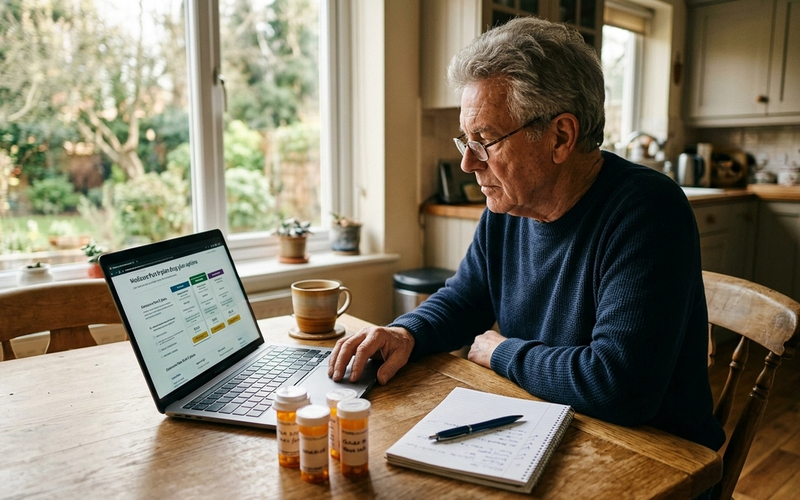
Medicare Is Ending the Program That Held Down Part D Drug-Plan Premiums. What It Means for 2027
For two years, a federal program quietly held down the premiums on stand-alone Medicare drug plans. It ends with the 2027 plan year, which is why some Part D premiums could jump more this Open Enrollment than they have recently. Here is what changed, who is affected, and how to protect your drug costs before December 7.
Explore senior living options
Comparing care for yourself or a family member? Browse communities by care type and see what each option typically costs.
- Assisted livingHelp with daily activities, costs, and how to choose a community.
- Independent livingMaintenance-free communities for active older adults.
- Home careIn-home support for seniors aging in place.
- Nursing homesSkilled nursing care and Medicare star ratings.
- Senior apartmentsAge-restricted, budget-friendly rental housing.
- Cost of senior livingCompare typical monthly prices by care type and state.