
Housing for Seniors on Social Security: Finding Affordable Options
Housing is the largest line in most older adults' budgets, and rents have risen faster than Social Security checks. This guide covers the programs that help: Housing Choice Vouchers, public housing, Section 202 supportive housing, and LIHTC apartments, with the income limits and application steps for each.

Rents have risen faster than Social Security checks, and the waiting lists for subsidized senior housing show it. Knowing which programs exist, and which one actually fits your situation, is what gets you onto the right list sooner.
For anyone over 55, housing is usually the single biggest expense. Several government programs exist to ease that strain for older adults on a fixed income. The Housing Choice Voucher Program, public housing, and subsidized apartments all open doors for people getting Social Security.
The options run the gamut, from independent living to assisted care. Landing affordable housing on Social Security takes some specific steps and a stack of paperwork, and every program writes its own rules for who qualifies and how to apply.
You apply for federal programs through your local housing authority. How long you wait depends on where you live and which program you're after, and some areas move certain applicants up the list based on age, income, or special needs.
Housing options for seniors receiving Social Security benefits
Social Security is the income that keeps millions of older adults afloat, but stretching it to cover housing is tough. Federal and local programs step in with housing built specifically for people living on a fixed income.
Available affordable housing programs
The Department of Housing and Urban Development (HUD) sponsors several programs for senior housing. The Section 202 Supportive Housing for the Elderly Program provides apartments for adults 62 and older with limited incomes. The Housing Choice Voucher Program (Section 8) lets qualifying seniors rent from private landlords at reduced rates.
Public housing is another option. Local housing authorities manage apartments or homes for eligible low-income seniors. Adult family homes offer group living for up to six seniors in licensed residential settings. Home sharing lets homeowners earn extra income by renting space to others at affordable rates.
Understanding income eligibility requirements
Income limits for senior housing assistance are pegged to the Area Median Income (AMI). The tiers are extremely low income (15% to 30% of AMI), very low income (30% to 50%), and lower income (50% to 80%).
For Section 8 housing, household income must not exceed 50% of the median income in your area. Section 202 supportive housing requires applicants to fall within the "very low-income" bracket, below 50% of the AMI. The Low Income Housing Tax Credit (LIHTC) program works differently: federal law requires each property to set aside units for households at or below either 50% or 60% of area median gross income, and properties using the income-averaging option can designate individual units anywhere from 20% to 80% of AMI as long as the average stays at or below 60%.
Most housing assistance programs require residents to pay 30% of their adjusted gross income toward rent and utilities.
Subsidized and income-based housing both aim to keep rent affordable, but they get there differently. With subsidized housing like Section 8, the government pays part of the rent straight to the landlord, and you cover a set share of your income, usually 30%. Income-based housing instead sets the rent according to what a tenant earns, and the help isn't always direct; sometimes it comes from tax credits to developers, which lets them offer lower rents in the first place. The distinction matters when you're trying to stay housed on a tight budget.
With Section 8 vouchers, recipients pay 30% of monthly income toward rent while the government pays the difference between that amount and the actual market rent. In public housing, rent is set at about 30% of adjusted income regardless of market value.
Section 202 housing combines both approaches. Residents pay 30% of adjusted gross income for rent, and the program subsidizes the rest. This keeps housing affordable despite changes in residents' fixed incomes.
Preparing your application for senior housing assistance
The stronger your paperwork and the more accurate your financial reporting, the better your odds of getting help. Housing authorities want specific documents and a detailed financial picture before they can judge whether you qualify.
Required documentation for applications
Housing authorities verify your information through several required documents. When applying, you'll need:
- Photo ID for all household members 18 or older
- Birth certificates and Social Security cards for everyone in your household
- Proof of income including Social Security award letters, pension statements, and recent bank statements
- Four consecutive pay stubs (if employed) or notarized income statements
- Current and previous landlord contact information
- Medical records for special accommodation requests
Keep your contact information current throughout the process. Application updates will be sent to the address you provide.
How to report income and assets
Housing authorities calculate your Total Tenant Payment (TTP) based on your anticipated gross annual income minus allowable deductions. Accurate income reporting directly affects your eligibility.
HUD allows specific deductions: $480 for each dependent, $400 for elderly families or persons with disabilities, and certain medical expenses for elderly-headed households. The Housing Opportunity Through Modernization Act (HOTMA) disqualifies families with net assets exceeding $100,000 or those owning suitable real property.
Assets under $50,000 typically qualify for self-certification, though you must report any expected income from them. Housing authorities verify assets every three years to ensure continued program compliance.
Application assistance resources
The application forms are lengthy and detailed. Senior centers often offer free application help. If you cannot complete the application yourself, someone else may submit it on your behalf.
Some programs, particularly Section 202 or LIHTC properties, charge application fees. Processing takes several weeks or months. Housing counselors and social workers can guide you through the process.
Start applications early and gather all required documents. This increases your chances of securing affordable housing while living on Social Security benefits.
Applying for low-income housing programs
How you apply depends on the program, since each one sets its own requirements and its own way of taking applications. Housing authorities then measure what you submit against their eligibility rules.
Section 8 housing voucher applications
To apply for Section 8 assistance, contact your local Public Housing Authority (PHA). PHAs only accept applications during specific enrollment periods. You can apply:
- Online through the PHA website
- By mail with paper forms
- In person at the housing authority office
The application is free but requires detailed information about household members, income sources, and residency status. After submission, you enter a waiting list until vouchers become available. PHAs may prioritize applicants in unsafe living conditions or with urgent medical needs.
Public housing application procedures
Public housing applications start by contacting your local Housing Authority (HA). You must complete a written application, either independently or with help from an HA representative. The application typically requires:
- Names, birth dates, and relationships of all household members
- Current contact information
- Family characteristics that might qualify for preferences
- Landlord references
- Income estimates and sources
After submission, the HA may visit your home to see how you manage your current living situation. You'll receive written notification about your eligibility and waiting list status.
Section 202 supportive housing application steps
Section 202 applications differ from Section 8. You must first contact your local HUD office to find participating properties. Applications go directly to property managers, not HUD. Most properties require:
- Completing an application (online, by phone, or in person)
- Paying an application fee
- Proof that you are at least 62 years old
- Documentation of "very low-income" status
You remain on the property's waiting list until processing completes, which typically takes weeks or months. The final eligibility determination involves an in-person interview with property management.
Navigating waiting lists and finding immediate housing solutions
Waiting lists for affordable senior housing can last several months to multiple years. Various alternatives exist for seniors who need housing while waiting for permanent options.
How waiting list priorities work
Waiting lists determine the order in which housing authorities offer units to qualified applicants. Most senior housing programs operate on a first-come, first-served basis. When waiting lists open, some housing authorities use lottery systems. Many PHAs prioritize seniors living in unsafe conditions or those with urgent medical needs.
Housing authorities periodically request application updates. Failing to respond usually results in removal from the waiting list. Declining multiple housing offers may also cause demotion.
Emergency housing alternatives
Seniors who need immediate housing can dial 2-1-1 to reach United Way services. These services connect you with local shelters and transitional housing. There's no formal application process. The service also helps with food assistance and mental health support.
The Federal Emergency Rental Assistance Program continues to operate in many states, offering temporary financial help for rent and utilities. Veterans facing housing insecurity should consider:
- HUD-VASH program offers housing vouchers and case management
- The Enhanced-Use Lease (EUL) program allows the Department of Veterans Affairs to convert unused VA properties into supportive housing for veterans, especially those experiencing homelessness. The program creates affordable housing through private sector investment and provides stable living spaces for veterans in need.
Home sharing arrangements
Home sharing matches seniors with extra living space with those seeking affordable housing. Programs like SeniorHomeshares.com facilitate these arrangements without charging fees.
Typical arrangements involve homeowners offering private bedrooms and shared common areas in exchange for rent, household help, or both. You create a profile with property details, budget, and preferences before matching. Many programs include background checks and reference verification for safety.
The National Shared Housing Resource Center maintains a state-by-state directory of home sharing programs.
Conclusion
Finding affordable housing on Social Security is a real struggle for a lot of older adults. Federal programs like Section 8 vouchers, public housing, and Section 202 supportive housing can help, but each asks for specific documents and a good deal of patience while your application works its way through.
Staying housed comes down to preparing well and meeting each program's requirements. That means documenting your income and assets, reporting your finances accurately, and staying in touch with the housing authority. Waits often stretch for months or even years, so temporary fixes like home sharing and emergency assistance can carry you in the meantime.
The steps vary from one program to the next but tend to rhyme. Housing authorities weigh your income, age, and other factors that shift by program and location. Applying early helps, since most waiting lists run first-come, first-served.
Local housing counselors and senior centers can walk you through the forms. Applying to several programs at once improves your odds. And because housing authorities update their waiting lists regularly, keep your contact information current so you don't fall off.
These programs shift with federal policy and funding. Local authorities run housing needs assessments to decide who gets priority, moving people in unsafe conditions or with pressing medical needs toward the front.
FAQs
Q1. What housing options are available for seniors on Social Security? Several affordable housing programs exist for seniors on Social Security, including the Section 202 Supportive Housing for the Elderly Program, Section 8 Housing Choice Voucher Program, and public housing. These offer apartments, vouchers for private rentals, and income-based housing to help seniors live independently.
Q2. How do I qualify for senior housing assistance programs? Eligibility depends on your income level. Most programs require applicants to fall within the "very low-income" bracket, usually below 50% of the Area Median Income (AMI). You'll need to provide documentation of your income, assets, and other personal information.
Q3. What documents do I need to apply for senior housing assistance? You'll need photo ID, birth certificates, Social Security cards for all household members, proof of income (Social Security award letters and bank statements), and landlord contact information. Medical records may be required if you need special accommodations.
Q4. How long is the typical waiting list for senior housing? Waiting lists vary greatly, ranging from several months to years. Length depends on location, housing type, and demand. Apply early and keep your application updated to maintain your position.
Q5. Are there any immediate housing solutions for seniors in urgent need? Seniors who need housing right away can call 2-1-1 to reach United Way for local shelters and transitional housing. Home sharing programs and the Federal Emergency Rental Assistance Program also offer temporary solutions while you wait for long-term housing.
Sources
Primary sources for the figures and guidance on this page:
U.S. Department of Housing and Urban Development - Housing Choice Voucher Program (Tenants) - Confirms that voucher tenants apply through their local Public Housing Agency, usually pay about 30% of adjusted monthly income toward rent, and that waiting lists can be long.
U.S. Department of Housing and Urban Development - Public Housing Program - Describes the public housing application process (contacting the local housing authority, household and landlord information, possible home visit) and the rent formula of 30% of monthly adjusted income with deductions of $480 per dependent and $400 for elderly families or persons with a disability.
U.S. Department of Housing and Urban Development - Multifamily Housing for Seniors and Persons with Disabilities - Describes the Section 202 Supportive Housing for the Elderly program, which funds and subsidizes rental housing for low-income residents age 62 and older.
HUD - HOTMA Income and Assets Final Rule Highlights (PDF) - Confirms the HOTMA asset limitation: families with net assets over $100,000 (adjusted for inflation) or suitable real property are out of compliance, and self-certification is allowed for net assets of $50,000 or less.
U.S. Department of Veterans Affairs - HUD-VASH Program - Confirms that HUD-VASH combines a HUD Housing Choice Voucher with VA case management and supportive services for veterans experiencing homelessness.
Get matched
Looking for senior care for someone you love?
Tell us what you're considering. We'll share independent matches and pricing directly with you. No phone calls until you ask for one.
- Takes about two minutes to complete.
- Pricing details emailed to you. No phone calls until you ask for one.
- Independent matching. We do not own the communities we list.
Loading the matching form…
Powered by SilverAssist. By submitting this form you agree to our privacy policy.
More from our editors
All articles
Social Security's 2027 Earnings Test: How Much You Can Earn Before Benefits Are Withheld
If you claim Social Security early and keep working, 2027 lets you earn more before any benefit is held back. The under-full-retirement-age limit rises to $25,560 a year. Here is how the earnings test works, what counts as earnings, and why the money that is withheld is not actually gone.

Medicare Is Ending the Program That Held Down Part D Drug-Plan Premiums. What It Means for 2027
For two years, a federal program quietly held down the premiums on stand-alone Medicare drug plans. It ends with the 2027 plan year, which is why some Part D premiums could jump more this Open Enrollment than they have recently. Here is what changed, who is affected, and how to protect your drug costs before December 7.
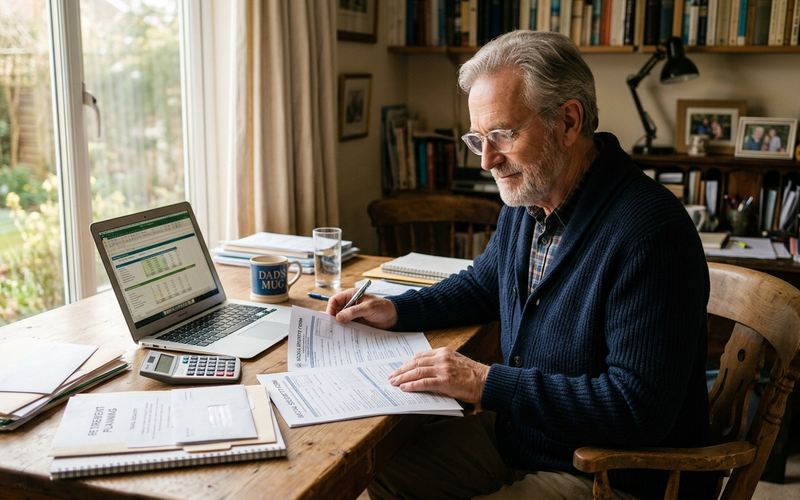
Social Security's Full Retirement Age Reaches 67 in 2027: What It Means for When You Claim
In 2027, the full retirement age for Social Security finishes its long climb to 67. People born in 1960 are the first group to reach a full retirement age of exactly 67. Here is what that changes, what it does not, and how the age you claim still moves your check by hundreds of dollars a month.
Explore senior living options
Comparing care for yourself or a family member? Browse communities by care type and see what each option typically costs.
- Assisted livingHelp with daily activities, costs, and how to choose a community.
- Independent livingMaintenance-free communities for active older adults.
- Home careIn-home support for seniors aging in place.
- Nursing homesSkilled nursing care and Medicare star ratings.
- Senior apartmentsAge-restricted, budget-friendly rental housing.
- Cost of senior livingCompare typical monthly prices by care type and state.