Eighty-three percent of older Americans want to stay in their current homes for the rest of their lives, according to recent surveys. This preference takes on added significance when creating suitable living spaces for those diagnosed with dementia.
Most older people live in homes that are more than 20 years old, spaces not designed with dementia patients’ unique needs in mind. The Centers for Disease Control and Prevention (CDC) reports that thousands of older Americans fall at home each year. Dementia patients find everyday tasks increasingly difficult as the condition progresses without proper environmental support.
Environmental modifications for dementia patients address both safety and independence concerns. Good lighting helps prevent accidents, while contrasting colors make household items easier to locate and use. Certain patterns and surfaces can cause confusion for people with dementia, making thoughtful home modifications essential for everything from floor coverings to furniture placement.
Home modifications range from simple changes like replacing doorknobs with pull handles to more extensive alterations. These adjustments can transform living spaces into supportive environments where dementia patients maintain dignity and function despite cognitive challenges.
Safety Modifications Begin with Layout Changes
Physical space modifications form the foundation of dementia care environments. Safety improvements become priorities given the fall risks documented among older Americans.
Remove clutter and tripping hazards
Clutter poses both physical and cognitive challenges for dementia patients. Remove throw rugs, extension cords, and excessive items that could cause falls. Power cords, unstable rugs, and stacked items create hazards throughout living spaces.
Household disorder can increase confusion and distraction for dementia patients. Organized cupboards and drawers reduce cognitive load, while limiting background noise from televisions or radios prevents additional confusion. Moderate dementia patients benefit from removing pathway obstacles, though eliminating all familiar objects may not always help.
Use clear pathways and wide doorways
Unobstructed pathways improve movement safety throughout homes. Doorways should accommodate walkers or wheelchairs. Hallways and stairs require smooth surfaces without physical barriers.
Well-lit circulation routes using color and tonal contrast support orientation and safe movement. Matt flooring surfaces in colors that contrast with walls work best. Green flooring might be perceived as grass, while blue can appear as water, causing confusion for dementia patients.
Install automatic lighting in key areas
Adequate lighting prevents disorientation caused by changing light levels. Night lights in hallways, bedrooms, and bathrooms reduce nighttime fall risks.
Automatic lighting systems activate when someone enters rooms, particularly helpful for nighttime movement. Even lighting levels across entries, landings, transitional areas, stairways, and bathrooms maintain visual consistency.
These layout modifications create environments that support independence while addressing safety concerns for dementia patients.
Visual Design Elements Show Impact on Dementia Patient Independence
Environmental design choices affect daily functioning for dementia patients beyond basic safety measures. Visual elements play a significant role in creating supportive living spaces for those with cognitive impairments.
Color contrast improves object recognition
Studies show that 75% of people in the 75+ age group have serious vision problems. Color contrast helps dementia patients locate everyday items more easily. Effective contrasting applications include toilet seats that differ from toilet bowls and floors, light switches that stand out against walls, and handrails, taps, and towels that contrast with bathroom surroundings.
Cutlery and dishes in colors that differ from table surfaces also improve visibility. Placing a white dinner plate on a green placemat creates higher contrast, making food more visible.
Surface textures and patterns affect perception
Shiny surfaces and complex patterns create confusion for dementia patients. Patterned carpets might be mistaken for uneven ground, while dark mats can appear as holes in the floor. Shiny floors may look wet, causing anxiety. Mirrors sometimes create distressing confusion.
Matt flooring and walls with simple, minimal design elements reduce these perceptual problems.
Labeling systems support navigation
Clear labeling maintains independence for dementia patients. Large, easy-to-read labels at eye level work best when combined with pictures and text for better recognition. Self-adhesive picture labels for drawers and cabinets provide visual cues, while replacing solid cupboard doors with clear ones improves visibility.
High-contrast colors and fonts large enough to read from across the room prove most effective.
Memory aids reduce daily confusion
Memory support systems provide consistent information sources. Whiteboards display daily reminders, while posted medication schedules and meal times appear in visible locations. Visual cues for routine tasks help maintain routines, and sticky notes at strategic points serve as reminders.
Healthcare whiteboards in patient rooms demonstrate this approach, displaying everything from caregivers’ names to treatment schedules. These environmental modifications support independence while reducing confusion for dementia patients.
Room-by-Room Safety Modifications Target Specific Dementia Risks
Different rooms present distinct safety challenges for dementia patients. Safety experts recommend targeted modifications based on each space’s unique risk factors.
Bathroom Modifications Address Highest Accident Rates
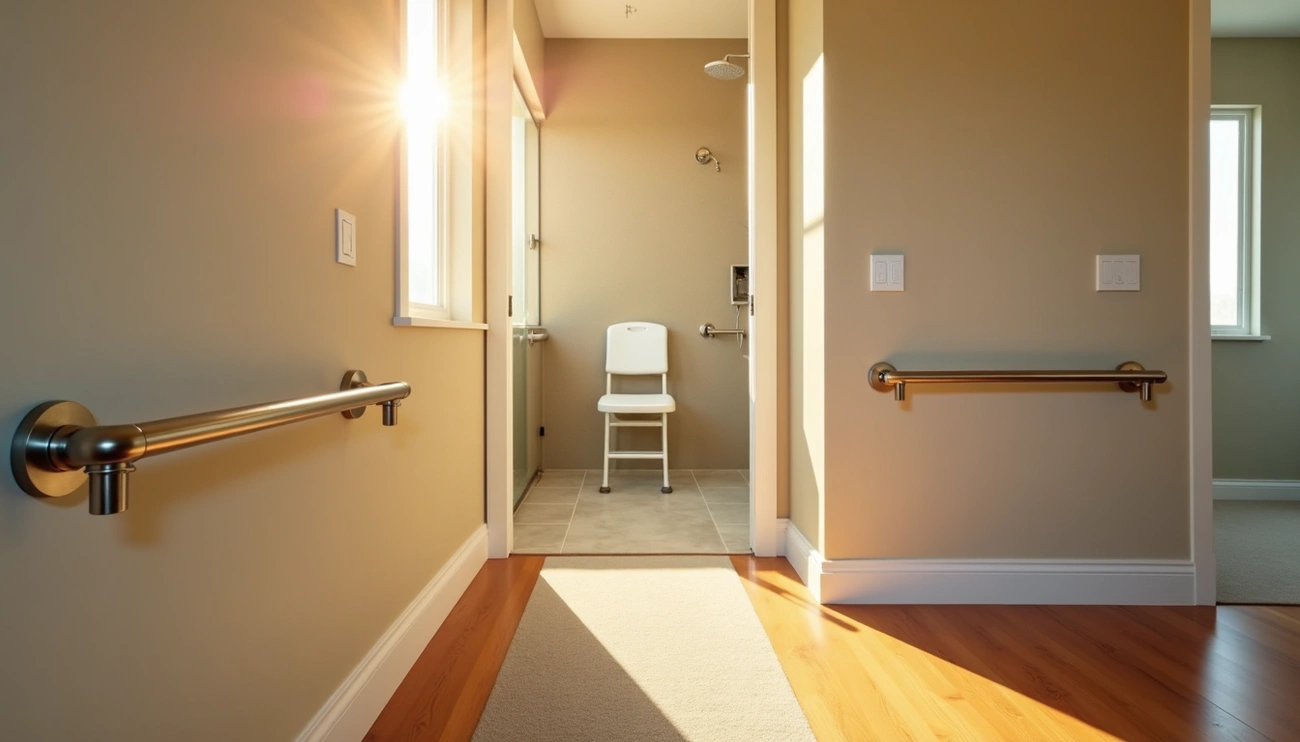
Bathrooms pose the greatest accident risk for dementia patients, according to safety specialists. Grab bars near toilets and in shower areas provide essential support when properly secured to hold a person’s weight. Towel racks cannot serve this purpose due to their design limitations. Non-slip mats in tubs and on bathroom floors help prevent falls.
Additional bathroom safety measures include:
- Raised toilet seats for easier transitions
- Flood and scald prevention plugs in sinks and tubs
- Mirror removal if reflections cause distress
Kitchen Safety Focuses on Fire and Injury Prevention
Kitchens contain multiple hazards from hot surfaces to sharp objects. Stove knob covers or complete knob removal when not in use prevent accidental fires. Automatic shut-off devices that turn stoves off after predetermined times offer additional protection. Safety protocols recommend storing knives, cleaning products, and small appliances in locked cabinets. Experts also suggest disconnecting garbage disposals and using picture-word labels on cupboards.
Bedroom Safety Emphasizes Nighttime Monitoring
Bedrooms require modifications that promote rest while preventing nighttime accidents. Bed or motion sensors alert caregivers when patients get up during the night. Portable space heaters present serious fire hazards and should be removed. Night lights or touch-operated bedside lamps improve visibility. Safety specialists recommend maintaining clutter-free floors and considering bed rails if fall risk exists.
Living Room Safety Targets Daily Activity Hazards
Living areas need modifications to prevent injuries during routine activities. Unstable furniture should be secured to prevent tipping, while sharp corners require protective covers. Furniture arrangement creates clear pathways while preserving familiar layouts. Safety experts recommend sturdy, stable pieces with rounded edges and seating at appropriate heights for easy sitting-to-standing transitions.
Assistive Technology Options Support Dementia Care
Assistive technology complements physical home modifications in supporting dementia patients. These devices help maintain daily functioning through memory assistance, communication support, and safety monitoring.
Specialized clocks and phones address temporal confusion
Dementia patients often struggle with time orientation and communication. Calendar-clocks with large displays show day, date, month, and time simultaneously. Day clocks feature sun and moon icons to distinguish between day and night periods. Auto-dimming features reduce nighttime confusion while maintaining visibility.
Modern dementia-specific clocks include multiple language options and automatic daylight saving time adjustments. Telephones designed for dementia patients feature large buttons and photo-dial capabilities. These phones eliminate the need to remember phone numbers by connecting calls when users press pictures of contacts.
Motion sensors and alert systems monitor safety
Nighttime wandering poses risks for dementia patients. Motion sensors placed in bedrooms and doorways alert caregivers when patients get up during the night. Remote alarm systems notify caregivers without startling patients. Some systems include two-way intercoms for remote communication.
Emergency medical alert bracelets provide first responders with immediate access to medical information through scanning technology. These systems connect to response centers staffed with personnel trained specifically for dementia emergencies.
Electronic dispensers and reminder devices manage medications
Electronic pill dispensers provide visual and audible alerts when medications are due. Some models connect to vibrating watch alarms for discreet reminders. These devices organize multiple medications safely while reducing dosing errors.
Voice-controlled reminder systems record personalized messages for daily tasks. Unlike complex smart assistants, dementia-specific devices operate without internet connectivity. These tools focus on maintaining independence through structured daily routines rather than advanced features.
Research Indicates Multiple Approaches Effective for Dementia Home Safety
Home environment modifications show promise for maintaining safety and independence for dementia patients. Research indicates that physical alterations, design changes, and assistive technology work together to address cognitive challenges in residential settings.
Safety modifications form the foundation of effective home adaptations. Clutter removal and proper lighting reduce fall risks, while contrasting colors help overcome visual processing difficulties common in dementia patients. The CDC’s fall prevention data supports the importance of these environmental changes for older adults.
Room-specific modifications address distinct safety concerns in different areas of the home. Bathroom grab bars and non-slip surfaces target the highest-risk areas for falls. Kitchen safety devices prevent fire hazards from cooking equipment. Bedroom monitoring systems alert caregivers to nighttime movement patterns.
Assistive technology supplements physical modifications with temporal orientation tools and safety monitoring systems. Large-display clocks help with time recognition difficulties, while motion sensors provide nighttime safety alerts. Electronic medication management systems support routine maintenance for those with memory impairments.
Environmental needs change as dementia progresses, requiring ongoing assessment and adaptation. Regular evaluation helps ensure modifications continue meeting patients’ evolving requirements. The most effective approaches balance necessary safety measures with familiar objects and routines that provide comfort and stability.
Implementation can begin with high-priority safety concerns before expanding to additional modifications. Small changes often produce measurable improvements in daily functioning and safety outcomes for dementia patients living at home.
FAQs
Q1. What are some key elements of a dementia-friendly environment? A dementia-friendly environment includes clear pathways, good lighting, contrasting colors for visibility, simple patterns, and clear labeling on doors and drawers. It’s also important to remove clutter and tripping hazards, and use memory aids like whiteboards for daily reminders.
Q2. How can I make the bathroom safer for someone with dementia? To improve bathroom safety, install grab bars near the toilet and in the shower area, use non-slip mats, consider a raised toilet seat, and remove mirrors if they cause distress. You can also add flood and scald prevention plugs in sinks and tubs.
Q3. What types of assistive technology can help dementia patients? Useful assistive technologies include clocks and phones with large displays, motion sensors for nighttime wandering, emergency alert systems, and medication reminder devices. These tools can help with temporal orientation, safety, and maintaining daily routines.
Q4. How can I reduce the risk of falls for someone with dementia? To reduce fall risks, remove throw rugs and clutter from walkways, ensure good lighting throughout the home, install night lights in key areas, use non-slip mats in bathrooms, and consider motion sensors to alert caregivers of nighttime movement.
Q5. What should I consider when modifying the kitchen for dementia safety? In the kitchen, use safety knobs on the stove or remove them when not in use, install automatic shut-off devices for appliances, store potentially dangerous items in locked cabinets, and label cupboards with pictures and words for easier identification. It’s also advisable to disconnect garbage disposals to prevent accidents.