
How to Get the Guaranteed Income Supplement: Easy Steps for Canadian Seniors
The Guaranteed Income Supplement (GIS) is a monthly, non-taxable top-up for low-income Canadian seniors who already receive Old Age Security, worth up to $1,123.17 a month in the July to September 2026 quarter. This guide covers who qualifies, what the income thresholds are, how automatic enrollment works, and how to apply if you were not enrolled automatically.

If you are getting by on a modest income in retirement, the Guaranteed Income Supplement (GIS) can add up to $1,123.17 to your budget every month, and it is money you never have to pay back.
The GIS is a monthly top-up for Canadian seniors who already collect Old Age Security and are living on a limited income. Two things decide whether you qualify: you have to be receiving OAS, and your annual income has to fall below the set limits. For the July to September 2026 quarter, the ceiling for a single, divorced, or widowed senior is $22,800 a year, while the thresholds for couples shift depending on whether your spouse receives OAS or other benefits. The Allowance for the Survivor, a separate benefit for widowed people aged 60 to 64, tops out at $1,702.34 a month in the same quarter.
To qualify for the Guaranteed Income Supplement (GIS), you must be eligible for the Old Age Security (OAS) pension. You also need to live in Canada and have an income below a certain amount. The specific income threshold depends on your marital status. For the July to September 2026 quarter, a single, widowed, or divorced senior must have an annual income under $22,800. If you have a spouse or common-law partner who receives the full OAS pension, your combined annual income must be under $30,096. If your spouse or common-law partner does not receive OAS, or receives the Allowance, the thresholds are different.
The GIS is built for seniors getting by on a limited income, but a handful of specific conditions decide whether you qualify.
Basic eligibility criteria
To receive the GIS, you must:
- Be 65 years of age or older
- Be a Canadian citizen or legal resident
- Currently receive the Old Age Security (OAS) pension
- Live in Canada and reside in the country for at least 6 months each year
- Have an annual income below the maximum threshold for your situation
Your income determines eligibility. For the July to September 2026 quarter, which is based on your 2025 income, a single, widowed, or divorced senior must have an annual income under $22,800. For couples, the combined income limit depends on whether your spouse receives the full OAS pension. If your spouse receives the full OAS pension, your combined income must be under $30,096. If your spouse does not receive OAS, the limit rises to $54,624.
If your spouse receives the Allowance benefit, your combined income must be below $42,144. The Allowance is for spouses or common-law partners aged 60 to 64 whose partners receive GIS.
Some situations affect your eligibility. If you've chosen to defer your OAS payments until age 70, you won't receive GIS until you start collecting OAS. Sponsored immigrants who have lived in Canada for less than 10 years after turning 18 usually cannot receive GIS unless they meet specific criteria.
Your eligibility is reassessed annually based on your income tax return. If you experience a significant income reduction, such as through retirement, Service Canada may determine your eligibility using your current year's estimated income.
Leaving Canada for more than 6 months or changes in your marital status can affect your GIS amount. Notify Service Canada promptly about any significant life changes.
How much can you receive from GIS?
What you actually receive depends on your circumstances. For the July to September 2026 quarter, the monthly amount turns on two things: your marital status and your income.
As a single, widowed, or divorced senior with an annual income below $22,800, you could receive up to $1,123.17 per month. If your spouse receives the full OAS pension and your combined income is under $30,096, you could receive up to $676.09 monthly. If your spouse receives the Allowance and your combined income is below $42,144, the maximum monthly GIS payment is also $676.09.
If your spouse doesn't receive OAS or the Allowance, you could qualify for up to $1,123.17 monthly with a combined income under $54,624.
Combined with OAS, a single low-income senior aged 65 to 74 could receive up to $1,875.14 per month in the July to September 2026 quarter, rising to $1,950.34 from age 75. Your own amount depends on your exact income and living situation.
The government reviews GIS benefit amounts quarterly (January, April, July, and October) to reflect increases in the cost of living. Your monthly payment will not decrease if the cost of living goes down.
Factors that might change your GIS amount include:
- Changes in marital status (marriage, separation, divorce, or death of a spouse)
- Leaving Canada for more than 6 consecutive months
- Income changes for you or your spouse
Your benefit amount will be recalculated each July based on your net income from the previous calendar year. Your payments may increase, decrease, or stop based on changes in your annual net income.
To get a personalized estimate of how much you might receive, use the Old Age Security Benefits Estimator available on the Service Canada website.
Applying for the Guaranteed Income Supplement
Many Canadian seniors receive their Guaranteed Income Supplement without paperwork through automatic enrollment. Service Canada identifies people it already has enough information about and mails them a letter the month after they turn 64, telling them they will be automatically enrolled for both Old Age Security and GIS when they turn 65.
However, you'll still need to apply manually if:
- You received a letter asking you to apply
- The information in the letter was incorrect
- You're already receiving OAS but have never received GIS
If you didn't receive any letter about GIS the month after turning 64, contact Service Canada to determine if you need to apply.
For those who must apply manually, you have two options:
Apply online. To use this method, you must:
- Be at least one month past your 64th birthday
- Not have a legal representative on your account
You'll need a My Service Canada Account (MSCA). If you don't have one, you can register and receive a personal access code to complete registration. Gather all necessary information before you start, because you cannot save your application and continue later. Your session expires after 20 minutes of inactivity.
Apply using a paper application. If applying for both OAS and GIS:
- Complete form ISP-3550 (Application for the Old Age Security Pension and the Guaranteed Income Supplement)
- Include certified true copies of required documents
- Mail to Service Canada or deliver in person
If applying just for GIS:
- Complete form ISP-3025 (Application for the Guaranteed Income Supplement)
- Include certified true copies of required documents
- Mail or deliver in person
Once you are enrolled in OAS benefits, you will be considered for GIS each year based on your household income information from your tax filings. Filing your taxes on time is important to get or keep these benefits.
While automatic enrollment has simplified the process for many, low-income seniors may still face barriers to tax filing, which could affect their access to benefits.
Conclusion
Stretching a fixed income through retirement is genuinely hard, and the Guaranteed Income Supplement exists to take some of that pressure off Canadian seniors who need it. The essentials come down to who qualifies, how much you can receive, and the steps for applying.
Eligible single seniors can receive up to $1,123.17 monthly, with the exact amount depending on marital status and income. Combined with OAS, that comes to as much as $1,875.14 a month for a single senior aged 65 to 74. Quarterly reviews keep the benefit in step with the rising cost of living.
One habit matters more than any other: file your taxes every single year. Service Canada re-checks your eligibility against your return, so a missed deadline can quietly interrupt your payments. Automatic enrollment now spares many seniors the paperwork, but others still need to apply on their own, either online or by mailing a paper form.
For seniors stretching a fixed income, this money matters. The steps above are all it takes to claim it, and the GIS is there for the people who need it most.
Sources
Primary sources for the figures and guidance on this page:
Old Age Security Act, R.S.C. 1985, c. O-9, Part II - Monthly Guaranteed Income Supplement (Justice Laws Canada) - The federal statute behind the GIS: the supplement is paid to Old Age Security pensioners, reduced as income rises, indexed quarterly to the Consumer Price Index, and never reduced when the cost of living falls (sections 10-12).
Service Canada - Form ISP-3025, Application for the Guaranteed Income Supplement - Confirms the paper application form number and title for seniors applying for GIS only, as described in this article's application steps.
Service Canada - Form ISP-3550, Application for the Old Age Security Pension and the Guaranteed Income Supplement - Confirms the combined OAS and GIS application form number and title for persons aged 65 or older, as described in this article's application steps.
Frequently asked questions
Get matched
Looking for senior care for someone you love?
Tell us what you're considering. We'll share independent matches and pricing directly with you. No phone calls until you ask for one.
- Takes about two minutes to complete.
- Pricing details emailed to you. No phone calls until you ask for one.
- Independent matching. We do not own the communities we list.
Loading the matching form…
Powered by SilverAssist. By submitting this form you agree to our privacy policy.
More from our editors
All articles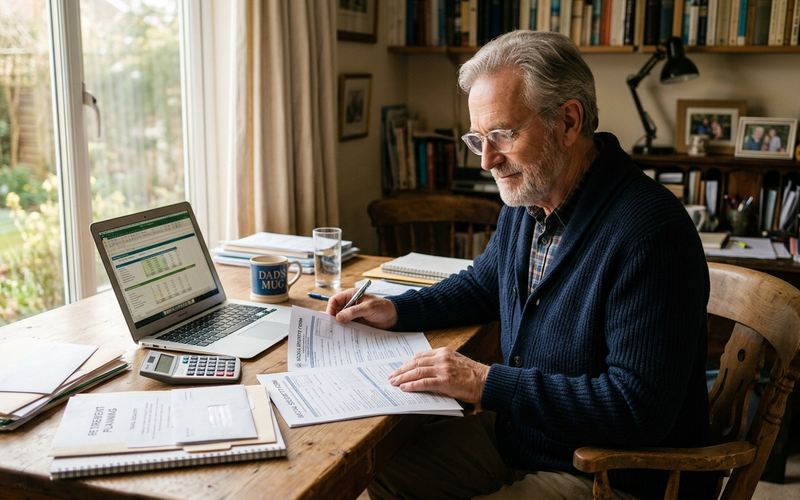
Social Security's Full Retirement Age Reaches 67 in 2027: What It Means for When You Claim
In 2027, the full retirement age for Social Security finishes its long climb to 67. People born in 1960 are the first group to reach a full retirement age of exactly 67. Here is what that changes, what it does not, and how the age you claim still moves your check by hundreds of dollars a month.
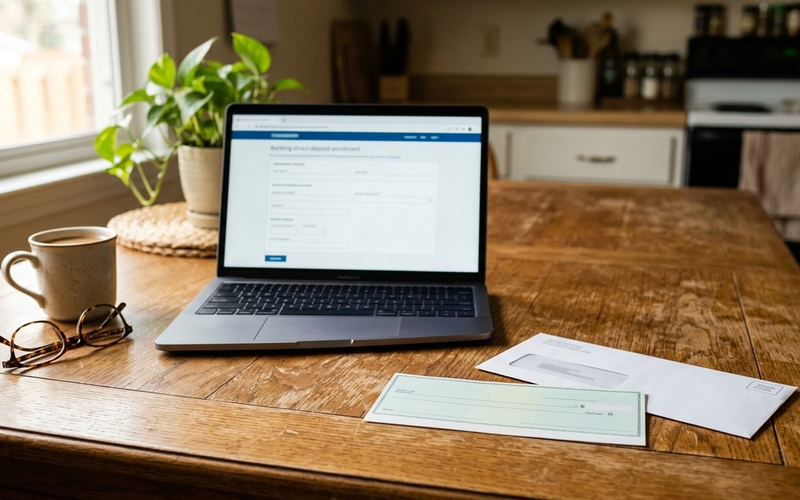
Social Security Is Phasing Out Paper Checks by the End of 2026: What to Do Now
The federal government has stopped mailing most paper checks, and Social Security wants every beneficiary on direct deposit or a Direct Express card by the end of 2026. Fewer than 1 percent of recipients still get a check in the mail. Here is who is affected, how to switch, and the narrow exceptions that let a few people keep paper.
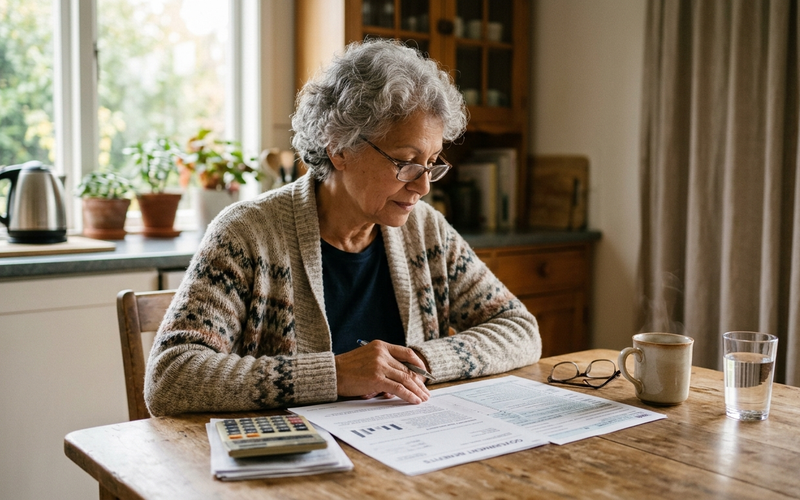
The Social Security Fairness Act Paid $17 Billion in Back Benefits. Now Comes the Tax Bill
The repeal of WEP and GPO restored Social Security for more than 3 million public-sector retirees, and the agency has paid about $17 billion in back benefits. But those lump sums are taxable, a surprise bill hit this filing season, and a proposal in Congress would change it. Here is where things stand.
Explore senior living options
Comparing care for yourself or a family member? Browse communities by care type and see what each option typically costs.
- Assisted livingHelp with daily activities, costs, and how to choose a community.
- Independent livingMaintenance-free communities for active older adults.
- Home careIn-home support for seniors aging in place.
- Nursing homesSkilled nursing care and Medicare star ratings.
- Senior apartmentsAge-restricted, budget-friendly rental housing.
- Cost of senior livingCompare typical monthly prices by care type and state.