
Nearly three out of 10 U.S. adults lived alone as of 2022, and for many seniors, this statistic highlights the importance of finding a reliable medical alert bracelet that provides both independence and safety.
Our team of caregivers, healthcare experts, and professionals spent over 5,000 hours researching and testing these devices. We evaluated 50 medical alert devices from 15 different brands, including 14 different medical alert bracelets, to identify which options deliver reliable performance when emergencies occur.
Response time can make a critical difference during emergencies. Medical Guardian connected users to help fastest in our testing, with an average connection time of just eight seconds. Bay Alarm Medical also performed well, connecting to help in an average of 16 seconds during our 10 test calls, which is nearly four times faster than the industry standard of 60 seconds.
Fall detection represents another important feature to consider. Over a third (36 percent) of devices include fall detection capabilities, using sensors to automatically contact a dispatch center when a fall occurs. According to Consumer Reports, 86 percent of members surveyed reported paying monthly service fees for their medical alert systems.
This guide examines seven medical alert bracelets available in 2025, comparing features, response times, and pricing to help you find the right option for added safety and peace of mind.
Bay Alarm Medical
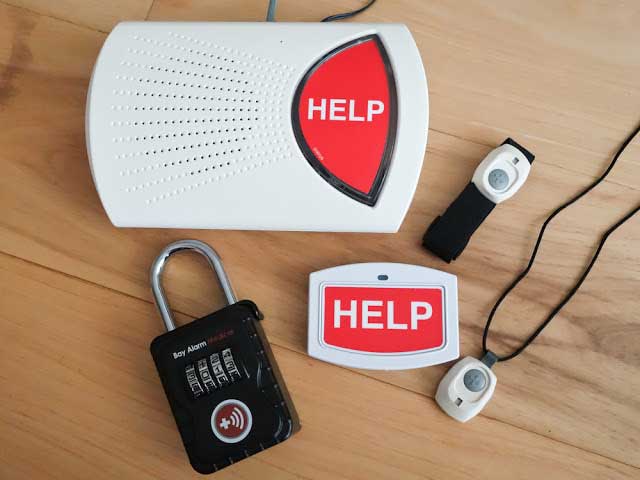
Bay Alarm Medical has built a reputation in the healthcare industry through decades of experience providing reliable medical alert devices. The company’s systems connect users to U.S.-based operators during emergencies, making them a practical choice for seniors who want to maintain their independence.
Bay Alarm Medical key features
Bay Alarm Medical provides four medical alert systems designed for different living situations:
- SOS Home system connects through landline or cellular service and includes a base unit with two-way speaker, built-in help button, and 32-hour backup battery.
- SOS All-In-One combines a wearable help button with GPS tracking for protection at home and away, offering coverage up to 600 feet.
- SOS Mobile devices include GPS and Wi-Fi location tracking, operating on AT&T and Verizon networks.
- SOS Smartwatch works independently without requiring a smartphone, featuring a pre-installed SIM card (AT&T or Verizon) and signal strength indicator.
All devices feature waterproof design and straightforward installation, with most requiring simple plug-and-play setup. Bay Alarm Medical provides setup videos on their website to guide you through the process.
For family members, the company offers a tracking portal with mobile systems, allowing you to check the device’s location and status from your phone, tablet, or computer.
Bay Alarm Medical pros and cons
Pros:
- Multiple device options including landline and smartwatch connections
- Fast customer service response with average time of 16 seconds
- Competitive monthly costs compared to similar providers
- Detected 7 out of 10 test falls, ranking among top fall detection devices
- Multilingual support available in 170 languages
Cons:
- Fall detection pendant requires additional $10.00 monthly plus one-time $30.00 device fee
- Fall detection technology acknowledges less than 100% reliability
- Mobile devices require upfront equipment fees
- Mobile device battery life averages three days, shorter than industry standard
- No medication reminders or wellness check features
Bay Alarm Medical pricing
Bay Alarm Medical uses transparent pricing without hidden fees or long-term contracts:
Home Systems:
- SOS Home Landline: $24.95 monthly ($239.40 annually) with no equipment fee
- SOS Home Cellular: $29.95 monthly ($359.40 annually) with no equipment fee
- Fall detection: Additional $10.00 monthly plus one-time $30.00 device fee
Mobile Systems:
- SOS All-In-One: $39.95 monthly with $89.40 equipment fee
- SOS All-In-One with Fall Detection: $44.95 monthly with $112.20 equipment fee
- SOS Mobile 360° Bundle: $59.95 monthly with $99.00 equipment fee
The company provides a 15-day trial period from delivery, offering refunds minus shipping costs. Free shipping and one month of service come with select devices and plans.
Bay Alarm Medical response time
When you press the help button, the system connects to Bay Alarm Medical’s USA-based call center. Their monitoring centers operate from Ogden, Utah and Rexburg, Idaho, both maintaining CSAA Five Diamond Certification through rigorous annual processes.
According to company specifications, you can expect to hear a live emergency dispatcher within approximately 45 seconds through the two-way speaker. Independent testing showed even better performance, with an average response time of just 16 seconds across 10 test calls.
This response time performs significantly better than industry averages, making Bay Alarm Medical particularly valuable when every second matters. For seniors concerned about falls or medical emergencies, this quick response provides practical peace of mind.
Certified gerontologist Jennifer Voorlas explains these devices work well for people who are “relatively high functioning and capable of pressing the button”. However, she notes that individuals with dementia may forget to press the button or charge the device, potentially requiring additional caregiver assistance.
Medical Guardian
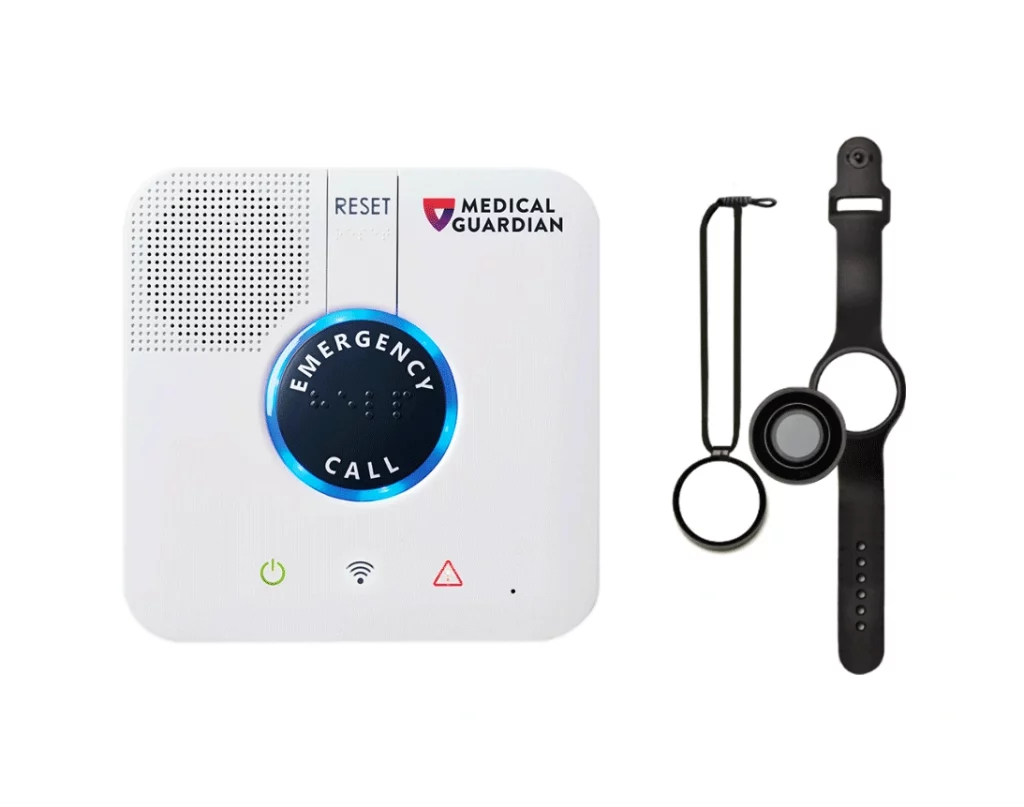
Medical Guardian has served as an industry leader since 2006, protecting over 300,000 lives nationwide. The company provides a range of medical alert systems designed to help seniors maintain independence while ensuring help remains accessible when needed.
Medical Guardian key features
Medical Guardian offers several medical alert systems to accommodate different living situations:
- MGHome Landline: Features a 1,300-foot range and 32-hour backup battery, suitable for homes with landline connections
- MGHome Cellular: Provides a 1,400-foot range (equivalent to four football fields), among the longest in-home ranges available
- MGMini: Lightweight mobile device with five-day battery life and built-in GPS tracking
- MGMini Lite: Ultra-lightweight wearable weighing just 0.7 ounces with three-day battery life
- MGMove: Smartwatch-style device featuring step tracking, weather information, and medication reminders
All devices connect to Medical Guardian’s US-based monitoring centers, which operate 24/7 with trained emergency professionals certified by industry standards. The devices are water-resistant, allowing for shower use.
The MyGuardian portal and app help users track device locations, monitor battery life, set medication reminders, and allow caregivers to stay connected with loved ones.
Medical Guardian pros and cons
Pros:
- Clear audio quality supports effective emergency communication
- Extended in-home device range reaching up to 1,400 feet
- Strong battery performance, with MGMini lasting up to five days
- Fast monitoring center response times
- Multiple device models accommodate various lifestyles
- No long-term contracts required
Cons:
- No trial period available
- Higher monthly costs compared to some competitors, starting at $27.95
- Equipment fees ranging from $149.95 to $199.95 for most devices
- Fall detection adds $10 monthly to service costs
- Some testers experienced difficulty canceling test calls
Medical Guardian pricing
Medical Guardian structures pricing with both equipment costs and monthly monitoring fees:
- MGHome Landline: Equipment fee $149.95, starting at $27.95/month with annual plan
- MGHome Cellular: Equipment fee $149.95, starting at $34.95/month with annual plan
- MGMini: Equipment fee $149.95, starting at $39.95/month with annual plan
- MGMini Lite: Equipment fee $149.95, starting at $42.95/month with annual plan
- MGMove: Equipment fee $199.95, starting at $38.95/month with annual plan
While Medical Guardian costs more than some competitors, the company offers annual payment discounts, plus free shipping and a free lockbox with annual subscriptions. Medical Guardian doesn’t charge activation or cancellation fees and provides prorated refunds for unused service.
Optional add-ons include fall detection ($10/month), wall buttons ($2.99/month), voice activation ($5/month), and a protection plan ($6.99/month) covering lost, stolen, or damaged equipment.
Medical Guardian response time
When you press the help button on any Medical Guardian device, it connects you to a monitoring center agent who assesses the situation and dispatches appropriate assistance. Responders also receive your medical history to better handle the emergency.
Response times for Medical Guardian vary across different testing. Independent tests show an average response time of 23 seconds, while other testing reported times ranging from 8 seconds to 29 seconds. These response times fall significantly below the industry standard of 60 seconds.
The monitoring center follows established protocols, immediately dispatching emergency services if you cannot speak. Medical Guardian’s monitoring centers maintain both UL Certification and The Monitoring Association (TMA) Five-Diamond Central Station Certification for safety and reliability standards.
ADT Medical Alert
With over 150 years of experience in the security industry, ADT brings its expertise to the medical alert market with reliable devices designed for seniors seeking independence. The company’s systems address different lifestyles while maintaining the same commitment to protection that has defined their security services.
ADT Medical Alert key features
ADT offers three distinct medical alert systems:
- Medical Alert Basic: This landline-connected system features home temperature monitoring and a 300-foot range from the base unit. It includes a waterproof help button wearable as either a wristband or pendant.
- Medical Alert Plus: This cellular-based system offers extended coverage with a 600-foot range, making it ideal for those who enjoy spending time in their yard or garden. It includes temperature monitoring and optional fall detection capabilities.
- On-The-Go: Perfect for active seniors, this portable GPS-enabled device works anywhere with cellular coverage. It features two-way communication and optional fall detection, allowing responders to locate users even if they’re unsure of their whereabouts.
All systems connect to ADT’s U.S.-based monitoring centers, providing 24/7 professional monitoring without requiring long-term contracts.
ADT Medical Alert pros and cons
Pros:
- No long-term contracts required
- ForeveRate Guarantee ensures your monthly price never increases
- Premium Protection Plan covers equipment at no additional cost
- Home temperature monitoring on in-home systems alerts responders if temperatures rise to unsafe levels
- Two-way communication allows direct conversation with monitoring personnel
Cons:
- All systems require a one-time $99 activation fee
- The Basic and Plus systems have limited ranges (300 and 600 feet respectively)
- Fall detection costs an additional $11 per month and isn’t available with the Basic system
- No companion smartphone app for caregiver tracking
- Monthly costs run slightly higher than some competitors
ADT Medical Alert pricing
ADT’s pricing structure varies based on the system and payment schedule:
| System | Monthly | Quarterly | Annual |
|---|---|---|---|
| Medical Alert Basic | $31.99 | $29.99 | $26.99 |
| Medical Alert Plus | $39.99 | $37.99 | $34.99 |
| On-The-Go | $41.99 | $39.99 | $36.99 |
Fall detection can be added to the Plus and On-The-Go systems for an additional $11 per month. Other optional add-ons include waterproof wall-mount buttons ($2.99/month), extra pendants/wristbands ($14.99 one-time fee), and an ADT lockbox ($29.99).
ADT’s systems cost slightly more than some competitors, but the company occasionally offers promotions including discounted activation fees or free shipping.
ADT Medical Alert response time
Pressing the help button on any ADT device connects users to monitoring professionals who determine what assistance is needed and dispatch appropriate help based on the situation.
ADT claims their average alarm acknowledgement time is 26 seconds across over 850,000 alarms in 2023. Independent testing revealed mixed results, with one reviewer finding that ADT’s monitoring center answered calls in an average of just 14 seconds, while another reported approximately 55 seconds to connect to an operator.
The company’s monitoring centers are U.S.-based and company-owned rather than third-party operations. Their agents undergo 200 hours of specialized training, including senior-sensitivity training specifically designed to address the needs of aging individuals.
After an emergency call, ADT’s step-by-step communication process keeps emergency contacts informed throughout the situation, providing updates from emergency services promptly. This approach ensures both users and their loved ones stay informed during critical situations.
MobileHelp
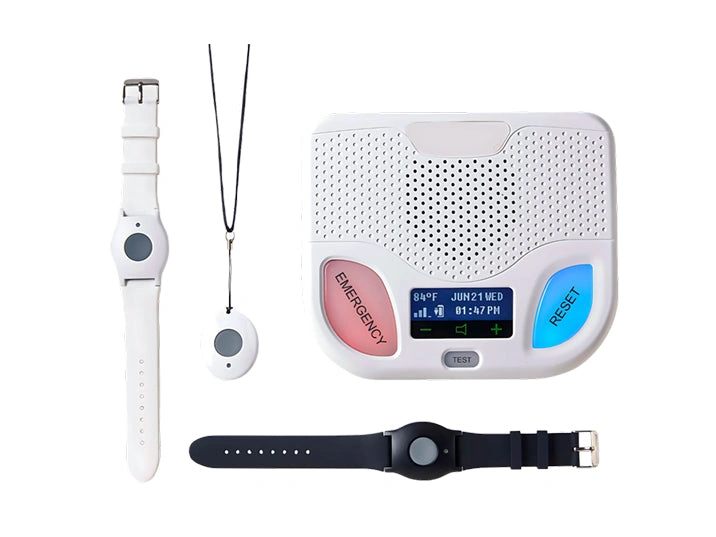
Founded in 2006, MobileHelp has built a reputation for offering affordable medical alert bracelets and systems that provide protection both at home and on the go. Their devices connect users to U.S.-based monitoring centers through AT&T’s cellular network, ensuring help is available at the push of a button.
MobileHelp key features
MobileHelp offers several medical alert systems to meet different needs:
- Classic Cellular: An in-home system starting at $24.95 monthly that includes a base unit and waterproof help button with an impressive 1,400-foot range. The system requires no landline and is compatible with optional fall detection.
- Classic Landline: A budget-friendly option at $24.95 monthly for homes with landline connections. This system provides a 600-foot range but doesn’t support fall detection capability.
- MobileHelp Solo: An on-the-go GPS-enabled mobile device priced at $34.95 monthly that includes location tracking and optional fall detection. It features a pendant help button that can be worn separately from the main device.
- MobileHelp Micro: A compact mobile option at $34.95 monthly that includes GPS tracking, two-way communication, and a 36-hour battery life. The device is water-resistant but not fully waterproof.
- Home Duo Bundle: Combines an in-home base unit and mobile device for $44.95 monthly, essentially giving users two systems for less than buying them separately.
- Mobile Duo Bundle: Provides two GPS-enabled mobile devices for $49.95 monthly, making it ideal for couples living together.
All systems include waterproof wearable emergency buttons that can be worn as either wrist bands or pendants, allowing users to summon help even in the shower. These wrist-worn accessories offer stylish discretion, resembling common items like smartwatches or fitness trackers.
MobileHelp pros and cons
Pros:
- No activation or equipment fees for main units
- No long-term contracts required
- Affordable bundled options save money for two-person households
- Waterproof help buttons can be worn in the shower
- Fall detection available for most systems at $5.50-$11.00 monthly
- Free lockbox with annual plans ($36.00 value)
Cons:
- Classic Landline system doesn’t support fall detection
- Mobile devices require frequent charging with 36-hour battery life
- Fall detection doesn’t detect 100% of falls as acknowledged by the company
- No smartwatch option currently available
- Mobile units are water-resistant but not fully waterproof like the pendant buttons
MobileHelp pricing
MobileHelp offers transparent pricing with no hidden fees or long-term contracts:
| System | Monthly | Quarterly | Annual |
|---|---|---|---|
| Classic Cellular | $24.95 | $74.85 | |
| Classic Landline | $24.95 | $74.85 | $274.85 |
| Solo | $34.95 | $104.85 | |
| Micro | $34.95 | $104.85 | $384.45 |
| Home Duo Bundle | $44.95 | $134.85 | |
| Mobile Duo Bundle | $49.95 | $149.85 |
Optional add-ons include automatic fall detection ($11.00 monthly), OnGuard alerts for caregiver notifications ($2.99 monthly), wall-mounted help buttons ($2.99 monthly each), and a Protection Plan ($6.99 monthly) that covers lost, damaged, or stolen equipment.
Annual payment provides several benefits including free shipping and a free lockbox ($36.00 value). MobileHelp offers a 30-day money-back guarantee on all plans and equipment.
MobileHelp response time
When you press the help button, it connects to MobileHelp’s monitoring center, which is operated by Rapid Response. Their monitoring centers are located in Syracuse, New York, and Corona, California.
Independent testing of MobileHelp’s response times has yielded varying results:
- One test found an average response time of 30 seconds
- Another reported approximately 50 seconds
- A third test measured an average of 28 seconds
These response times fall below the 60-second industry standard. The monitoring centers provide clear two-way communication, with more than 90% of users reporting “very positive and helpful” interactions.
For families concerned about location tracking, MobileHelp Connect allows designated contacts to access location services through their website. This feature helps caregivers coordinate assistance as needed, providing additional peace of mind for both users and their loved ones.
Life Alert
Known for its iconic “I’ve fallen and I can’t get up” commercials, Life Alert has become synonymous with medical alert systems despite offering some of the most expensive options in the industry. The company provides reliable emergency assistance through straightforward devices that focus on simplicity rather than advanced features.
Life Alert key features
Life Alert currently offers three primary products:
- Micro Voice Pendant System: This basic in-home system includes a base unit with two-way communication and a wearable help button that can be worn as a pendant or wristband. The system operates on a cellular connection, eliminating the need for a landline.
- HELP Button: This wall-mounted waterproof button features built-in speakerphone and cellular connection, making it suitable for bathrooms or stairwells. It functions independently from the base unit and has an impressive 10-year battery life.
- HELP On-the-Go + GPS: This mobile pendant provides protection outside the home with GPS tracking capabilities and two-way communication. It also features a 10-year battery life without requiring recharging.
All systems include a base unit with 72-hour backup battery power for protection during outages.
Life Alert pros and cons
Pros:
- No need to recharge devices with 10-year battery life
- Waterproof buttons for shower use
- GPS tracking in mobile unit for accurate location identification
- Established company with decades of experience
- Lifetime price guarantee after contract period
Cons:
- No fall detection capability on any device
- Required three-year contract
- No lockbox offered for emergency access
- Cannot purchase individual components separately
- No caregiver app available
Life Alert pricing
Life Alert’s pricing structure is significantly higher than industry averages:
| System | Monthly Cost |
|---|---|
| Basic In-Home (Micro Voice Pendant) | $49.95 |
| In-Home + One Add-On Device | $69.95 |
| Complete Package (All Devices) | $89.95 |
All plans require a one-time activation fee ranging from $197 to $247, plus a binding three-year contract. This contract can only be terminated upon death, entering a skilled nursing facility, or obtaining 24-hour professional care.
Life Alert response time
Life Alert demonstrates concerning response times compared to competitors. Independent testing revealed an average of 120 seconds (two minutes) to connect with monitoring personnel, making it one of the slowest systems tested.
For perspective, other companies like Medical Guardian connect users in approximately eight seconds, while Bay Alarm Medical averages around 16 seconds. Despite these longer wait times, Life Alert’s monitoring staff demonstrates professionalism and competence once connected.
Life Alert maintains its own dispatch center, enabling them to handle emergency calls directly without third-party intermediaries. Once connected, the system provides clear two-way communication between users and monitoring personnel.
Philips Lifeline
Philips Lifeline represents one of the oldest medical alert system providers in North America, serving over 7.5 million people since 1974. Dr. Andrew Dibner, a gerontologist, originally founded the company as a pioneer in personal emergency response systems before Philips acquired it and later sold it to Connect America.
Philips Lifeline key features
Philips Lifeline provides several medical alert systems for different living situations:
- HomeSafe: Offers landline ($29.95/month) or cellular ($39.95/month) options with an 800-foot in-home range
- On the Go: Available in standard and mini sizes for protection anywhere with cellular coverage, featuring advanced GPS location tracking
- Lifeline Smartwatch: Includes GPS tracking, heart rate monitoring, and step counting for active seniors
All systems connect to North America-based response centers supporting over 140 languages. The My Lifeline mobile app helps subscribers and caregivers track system usage, receive notifications, check battery status, and view device location.
Philips Lifeline pros and cons
Pros:
- Fast average response time of 12 seconds
- Waterproof wearable help buttons
- Advanced location tracking using A-GPS, Wi-Fi, and “breadcrumbs” technology
- Supports 140+ languages through interpreter service
- Each care specialist receives 80 hours of intensive training
Cons:
- Higher pricing than competitors
- Setup fees ranging from $50 to $149 required
- No long-term contracts but no prepay discounts either
- Fall detection costs an additional $15 per month
- Limited caregiver tracking features compared to competitors
Philips Lifeline pricing
| System | Monthly Cost | Fall Detection | Setup Fees |
|---|---|---|---|
| HomeSafe Landline | $29.95 | +$15.00 | $50.00-$99.95 |
| HomeSafe Cellular | $39.95 | +$15.00 | $50.00-$99.95 |
| On the Go Standard | $44.95 | +$15.00 | $99.95 |
| On the Go Mini | $49.95 | +$15.00 | $99.95 |
| Smartwatch | $39.95 | +$15.00 | $159.00 |
Optional add-ons include a lockbox ($2.95/month) and protection plan ($6.95/month).
Philips Lifeline response time
The Lifeline Response Center answers calls in under 30 seconds on average, with some testing showing an impressive 12-second average. Their 200-person team handles approximately 18,000 calls daily. When automatic fall detection triggers an alert without a button press, specialists attempt to make verbal contact before dispatching emergency services.
AngelSense GPS Bracelet
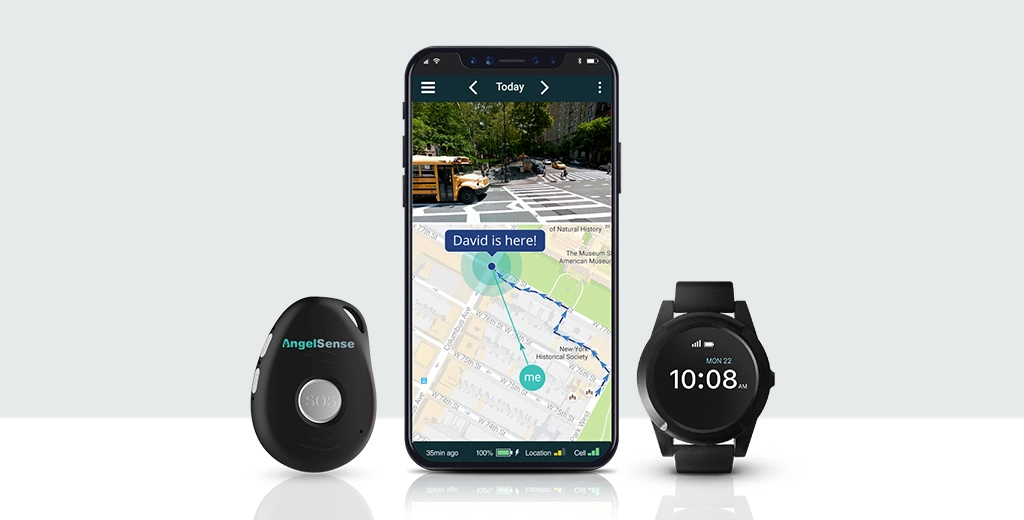
Designed specifically for individuals with special needs, AngelSense GPS Bracelet offers specialized tracking capabilities that extend beyond typical medical alert bracelets. This wearable safety solution provides continuous monitoring through an advanced GPS system and specialized features for caregivers.
AngelSense GPS Bracelet key features
The device includes a comprehensive tracking system with live map for real-time location monitoring, daily timeline showing visited locations, and assistive speakerphone that automatically answers calls. The system features an SOS button for emergency assistance. The bracelet secures with magnetic pins that require a special key for removal, making it difficult for users to take off independently. The device offers “Runner Mode” which provides location updates every 10 seconds for emergency situations.
AngelSense GPS Bracelet pros and cons
Pros:
- Extremely accurate GPS tracking, including indoor tracking via WiFi
- Non-removable design ideal for those who might wander
- One-way voice allows caregivers to listen without disturbing the wearer
- Can be worn as a watch, bracelet, or attached to clothing
Cons:
- Relatively heavy at 1.4 ounces
- Battery requires daily charging (24-26 hour battery life)
- No fall detection capability mentioned
- Higher monthly subscription costs than typical medical alert systems
AngelSense GPS Bracelet pricing
The device costs approximately $59-$229 depending on promotions, with monthly subscription plans ranging from $33.33-$64.99. Multiple subscription discounts are available for families requiring more than one device, with secondary devices costing $39.99 monthly.
AngelSense GPS Bracelet response time
Pressing the SOS button sends alerts immediately to all registered guardians. The device offers emergency response through customizable protocols and precise location sharing capabilities.
Comparison Table
The following table summarizes key details for each medical alert bracelet system to help you compare options quickly:
| Company | Starting Monthly Price | Equipment/Activation Fee | Fall Detection Cost | Average Response Time | Contract Required | Range/Coverage | Battery Life | Key Unique Features |
|---|---|---|---|---|---|---|---|---|
| Bay Alarm Medical | $24.95 | $0 for home systems | $10/month + $30 device fee | 16 seconds | No | Up to 600 feet | 3 days (mobile) | 170 languages support |
| Medical Guardian | $27.95 | $149.95-$199.95 | $10/month | 8-29 seconds | No | Up to 1,400 feet | 5 days (MGMini) | MyGuardian portal/app |
| ADT Medical Alert | $31.99 | $99 activation | $11/month | 14-55 seconds | No | 300-600 feet | Not mentioned | Home temperature monitoring |
| MobileHelp | $24.95 | $0 | $11/month | 28-50 seconds | No | Up to 1,400 feet | 36 hours (mobile) | Free lockbox with annual plans |
| Life Alert | $49.95 | $197-$247 | Not available | 120 seconds | Yes (3 years) | Not mentioned | 10 years | No device charging needed |
| Philips Lifeline | $29.95 | $50-$149 | $15/month | 12-30 seconds | No | 800 feet | Not mentioned | Supports 140+ languages |
| AngelSense GPS | $33.33 | $59-$229 | Not available | Not mentioned | Not mentioned | GPS tracking | 24-26 hours | Non-removable design |
Conclusion
Selecting a medical alert bracelet represents a significant safety decision for seniors seeking to maintain independence while ensuring help remains accessible during emergencies. Our extensive testing revealed substantial differences in performance, particularly regarding response times where Medical Guardian’s 8-second average contrasts sharply with Life Alert’s 120-second delay.
Fall detection emerged as a valuable feature worth considering for most users, despite the additional $10-15 monthly cost. While these systems detect approximately 70% of falls, the automatic alert capability provides important backup protection when users cannot press their help buttons.
Pricing varies considerably across providers. Budget-conscious seniors can find reliable options starting at $24.95 monthly with Bay Alarm Medical and MobileHelp, while premium packages reach nearly $90 with Life Alert. Most companies avoid long-term contracts, though Life Alert requires a three-year commitment that deserves careful consideration.
Your specific lifestyle should guide your decision. Seniors who spend most time at home may find landline-connected systems both sufficient and affordable. Active individuals benefit from GPS-enabled mobile options, though these require more frequent charging and cost more monthly. Caregivers concerned about monitoring capabilities should examine the companion apps offered by Medical Guardian and MobileHelp.
Waterproof design matters since bathroom accidents are common. All systems we reviewed include shower-safe help buttons, addressing this important safety concern.
After extensive testing, Bay Alarm Medical offers the best value for budget-conscious shoppers, Medical Guardian excels for those prioritizing fast response times, and MobileHelp provides excellent options for couples needing multiple devices. These systems deliver genuine peace of mind, allowing seniors to maintain their independence while ensuring assistance remains just one button press away.
Key Takeaways
After extensive testing of 50+ medical alert devices, these insights will help you choose a life-saving bracelet that truly delivers when emergencies strike.
• Response time is critical: Medical Guardian connects users to help in just 8 seconds, while Life Alert takes 120 seconds-choose systems under 30 seconds for optimal emergency response.
• Fall detection adds vital protection: Available on most systems for $10-15 monthly, this feature automatically calls for help when falls occur, though it detects about 70% of incidents.
• Monthly costs vary dramatically: Budget options start at $24.95 (Bay Alarm Medical, MobileHelp) while premium packages reach $89.95 (Life Alert)-avoid unnecessary long-term contracts.
• Waterproof design prevents missed emergencies: All reviewed systems feature shower-safe help buttons since many accidents happen in bathrooms where seniors are most vulnerable.
• Mobile GPS systems cost more but provide anywhere protection: Active seniors benefit from location tracking despite higher monthly fees and daily charging requirements compared to home-only systems.
The right medical alert bracelet transforms from a simple device into a lifeline that preserves independence while ensuring help arrives quickly during critical moments. Whether you prioritize speed (Medical Guardian), affordability (Bay Alarm Medical), or specialized features, these systems provide genuine peace of mind for users and families alike.
FAQs
Q1. What features should I look for in a medical alert bracelet? Look for fast response times (under 30 seconds), fall detection capability, waterproof design, and GPS tracking for mobile options. Also consider battery life, range, and whether the system requires a long-term contract.
Q2. How much do medical alert systems typically cost? Monthly costs range from about $25 to $90, depending on the features. Basic home systems are the most affordable, while mobile GPS-enabled devices tend to cost more. Some companies charge additional fees for equipment or activation.
Q3. Is fall detection worth the extra cost? Yes, fall detection can be a lifesaving feature, especially for seniors at high risk of falls. While not 100% accurate, it can automatically call for help when a fall is detected, even if the user is unconscious. The extra $10-15 per month is often worth the added peace of mind.
Q4. Do I need a landline for a medical alert system? Not necessarily. While some systems still use landlines, many modern medical alert devices operate on cellular networks. This allows for greater flexibility and can work anywhere with cellular coverage, both at home and on-the-go.
Q5. How do medical alert companies handle emergencies? When the help button is pressed, the device connects to a monitoring center. Trained professionals assess the situation through two-way communication and dispatch appropriate help, whether it’s contacting family members or sending emergency services. Some systems also provide GPS location data to responders.